Why Modi’s Solar Dream Is Faltering
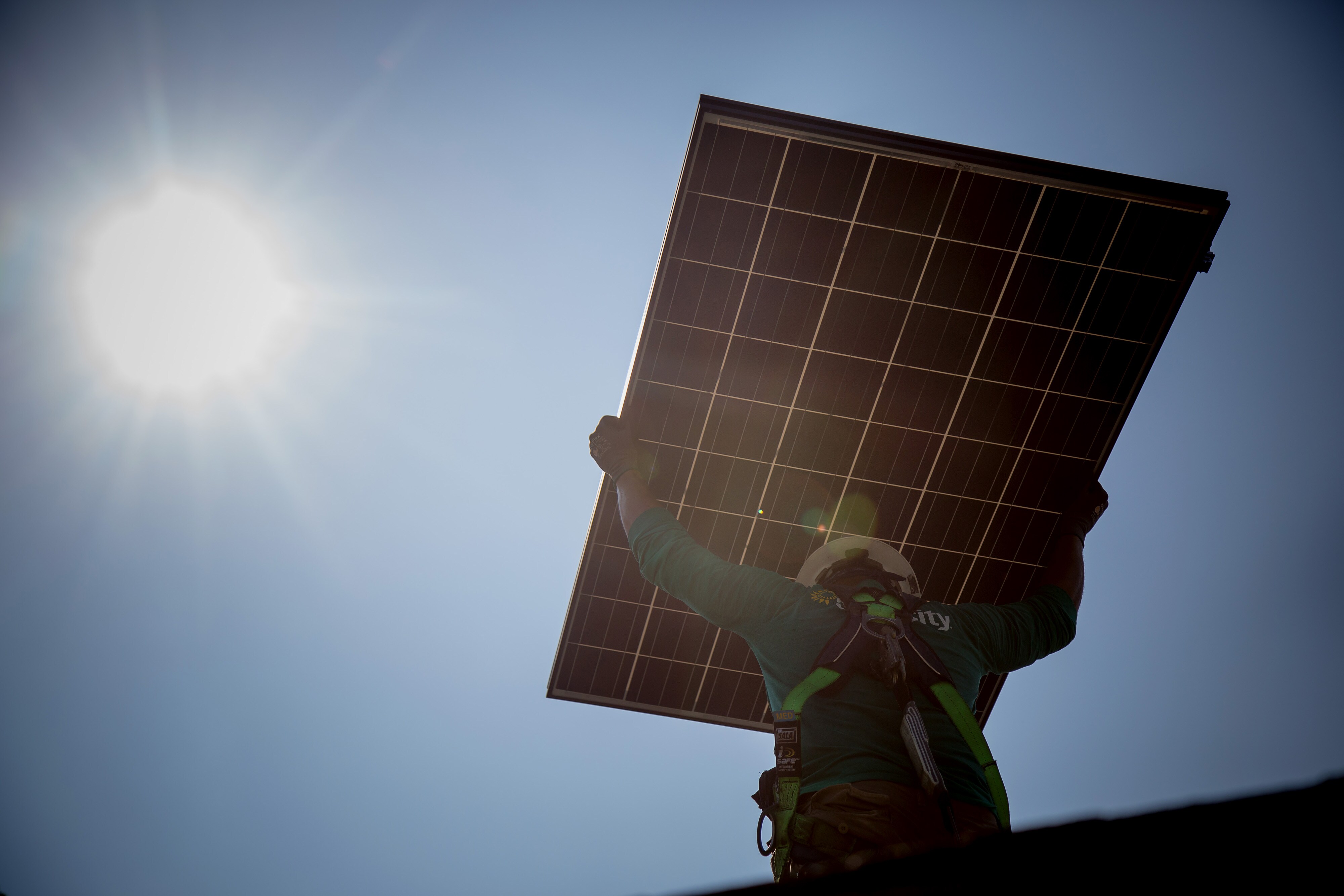
Prime Minister Narendra Modi's ambitious goal of building 100 gigawatts of solar capacity in India by 2022 is suffering as inconsistent government policies hurt solar developers' sentiments.
Crisil Research expects India to add 48-50 GW of solar power capacity up to financial year 2023. “The developers' sentiment has been negatively impacted by the lack of clarity on several policy issues and arbitrary bid cancellations,” it said in a report.
Solar capacity installed in India till January was a little over a quarter of Modi's 100-GW target, that he hopes to achieve in the next three years.
“The renewable energy domain is highly dependent on policy support and any uncertainty on that front can have negative consequences,” the report said. Crisil continues to monitor it and may raise its expectations once the regulatory risk is mitigated to an extent, according to the report.
The government tried to address some of the concerns, although not in line with the industry's expectations. That posed risks to future projects.
“There were frequent bid cancellations, lack of clarity on goods and service tax procedures, and cost pressure from the imposition of safeguard duty on imported cells and modules,” Crisil said.
In December, the Goods and Services Tax Council decided that 70 percent of a solar project's cost would be taxed at 5 percent, while 18 percent would be levied on the remaining contract value. That was higher than what the industry expected, it said.
“Similarly, the safeguard duty has turned out to be a double whammy, impacting costs of solar power projects and not resulting in any significant offtake for the domestic manufacturing sector,” the report said. That coupled with the cancellation of bids after auctions as state utilities found tariffs to be higher than expected, the report said.
Pricing Deadlock And Higher Taxes
The safeguard duty imposed by India on imported solar modules last year to kickstart its domestic manufacturing industry raised project costs by 10-15 percent. That meant higher bid tariffs.
The fresh bid allocations, factoring in higher costs, resulted in “much posturing” by state utility firms, Crisil said. The already allocated capacities were cancelled, lowering developer and investor confidence and discouraging participation in auctions.
As a result, there is a pile-up of tenders in the market with frequent delays in auctioning due to poor bid response. Consequently, the capacity addition pipeline turned weaker for fiscals 2019 and 2020 as commissioning is getting delayed.Crisil Research
The safeguard duty, currently at 25 percent, will come down to 20 percent by Jan. 29, 2020 and to 15 percent at the end of July in the same year. That would ease cost pressures in the long term. But as of now the duty has raised capital costs by 10-15 percent while also increasing bid tariffs in the range of Rs 2.7-2.9 per unit, Crisil said.
The GST Council's decision also means higher tax across all components required to develop a solar plant, Crisil said. “The final tax rate works out to be 8-9 percent instead of the earlier expected 5 percent, leading to an increase of 3-4 percent on final capital costs.”
Target Achievable, But Conditions Apply
Crisil said it remains “fairly positive” about the government achieving its target by fiscal 2022. “We expect that the duty trajectory, which outlines a decline in safeguard duty rates over a two-year period, would help in lowering cost pressure. But this again has to be coupled with regulatory support.”
Commissioning of projects would slow down in fiscal 2019 due to the duty and GST issue, it said. It, however, will pick up again from fiscal 2020. For all that to happen, Crisil said, policy coherence from the government is needed.
“A consistent regulatory support, adequate land availability, timely implementation of grid infrastructure, and the ability of players to raise low-cost funds are key risks which constrain the outlook.”

-
High US Salaries, No Green Card Certainty: The Financial Calculation Facing Indian H-1B Families

The suspension of PERM processing at eight technology employers does not cancel existing H-1B visas. What it does is force a question many Indian families have been avoiding: is the US salary worth tying your career and family plans to one employer?
-
Swiggy vs Eternal: Food Delivery's Two Rivals Are No Longer In The Same Race
Eternal is building a private AI assistant, dark.ai. Swiggy is still working out how to make Instamart pay, with an operating loss of Rs 895 crore in the July-September quarter while Blinkit stayed profitable.
-
Where You Live Shapes How You Get To Work | The Reason Why
Two-wheelers are the most popular way to get to work in India, accounting for nearly 43% of workplace commutes.
-
Unhedged Position: Can India See An Indonesia-Style Time Correction?
The Nifty is trading below levels it first clocked in 2024. Is there, then, as I have suggested in the headline, potential that the current time correction drags on painfully for the next three-five, even ten years?
-
Navigating Friction And Energy Realities: An Analysis Of Marco Rubio's October Visit To India
Occurring at a critical juncture marked by stalled trade negotiations and escalating geopolitical pressures over global energy supplies, the visit offers a profound window into modern US-India relations.
-
India Exports Capital. Why Not Export Trusteeship?
The big question, then, is whether India can build an institution that global borrowers, investors, banks, and lawyers can trust, even without an Indian connection.
-
France's Economy & Politics Are In Crisis | The Reason Why
Let's look at how the French economy and politics evolved under Nicolas Sarkozy, Franois Hollande and Emmanuel Macron.
-
You May Inherit The Business. You Must Earn Its Credibility.
Succession tests the founder's ability to share authority as much as it tests the next generation's readiness to assume it.
-
Signing Deals Is One Thing; Making Them Work Is Another | The Week In Whys
Sometimes, things don't turn out as planned. Indian companies have lost some bids to rivals, some projects won't produce until 2030.
-
FOMC Wall, PERM Suspension, Hospital Stocks | Talking Points This Week
A PERM suspension would directly affect green-card sponsorship rather than H-1B visas, so the near-term earnings impact could remain relatively limited. The key question is whether this marks a new phase in US scrutiny of Indian IT.









