"Exactly": Elon Musk's One-Word Advice For All Cryptocurrency Investors
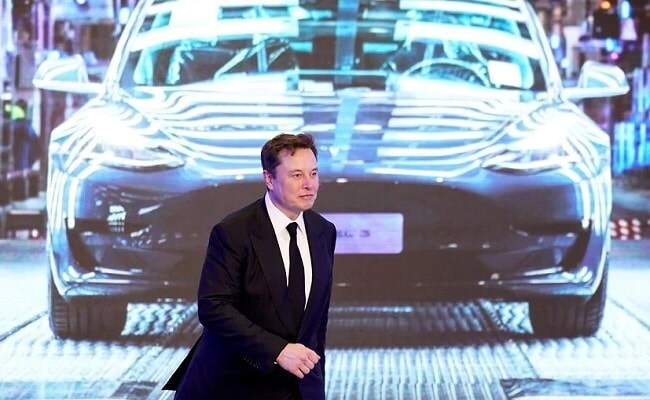
Tech billionaire Elon Musk has often made it a point to prove he is a cryptocurrency supporter, tweeting his support to virtual coins. So when he speaks about the crypto industry the world pays attention to him. In his latest tweet, the SpaceX and Tesla CEO has offered caution and advice to all cryptocurrency investors wrapped in a single word.
Bill Lee, the founding partner at West Coast Holdings, who is an investor in some of Musk's ventures, responded to a tweet that talked about reducing dependence on crypto trading platforms, saying an investor cannot claim assets in their digital wallet until they own the keys to the wallet. Musk doubled down on the suggestion, with only one word “exactly”.
Exactly
November 24, 2021The advice came after MyDogeWallet, a crypto gateway, tweeted about its vision to “break the dependence on CEXs like Binance and Robinhood and let Shibes take custody of their own coins”. The word “Shibes” here refers to the followers of the Shiba Inu mascot that has become synonymous with Dogecoin.
To this, Bill said, “Not your keys, not your crypto”. And Musk commented on the thread, “Exactly”.
All digital wallets use a pair of digital signatures, called keys, for every transaction. One of these cryptographic keys is private while the other is public. These keys help track ownership, receive or spend cryptocurrencies. A public key allows other crypto users to make payments to a particular wallet from which the key is derived. And a private key enables the wallet owner to spend the cryptocurrency.
If a user loses their private key, they can no longer access the wallet to make transactions like spending, withdrawing, or transferring coins. It is, therefore, wise to keep the private key in a secure location and not lose it.
Also, not owning the private keys could mean the wallet owner has entrusted a third party to keep their assets safe. In this sense the expression “not your keys, not your crypto” was likely used by Bill and supported by Musk.

-
A New Samvat Wishlist: Inclusive Prosperity And Human Development

India has strengthened its economic foundations through infrastructure, digital access and enterprise. Its next growth chapter must deepen productivity, create better livelihoods and widen participation in prosperity.
-
Love, Sex Aur Dhokha: The Audacious Plot To Spy On Jensen Huang
A Taipei dinner, a Singapore chip buyer and a suspected Chinese asset: inside the alleged spy operation that got close to NVIDIA's Jensen Huang.
-
Ten Things I Learnt This Samvat
Patience can be a trap. Cheap stocks can stay cheap. Leverage can wipe you out. What did Samvat 2082 teach us? Niraj Shah writes on 10 lessons from the year gone by.
-
Talking Points This Week: Tech Nerves, FII Buying, And A Faraway Banking Shock
The global markets are not shining this Diwali. The exception in the large markets is, India.
-
Midterm Rally Lasted A Day. The Hard Reality Of A Divided US May Last Two Years | Opinion
Between a contested AI boom, a debt ceiling that arrives in 2027 and a president with every incentive to act alone, the next two years may prove more volatile than the first day's rally suggests.
-
Blue Wave Will Derail the AI Trade but Won't Dismantle the AI Era | Unhedged Position
The Democrats' sweep of the US Congress will see politics collide with economic forces both over the long and short term.
-
It's Time To Take The GST Council's Bet On Trust Global
Payment records can prove India's services exports, and clear, proportionate rules can bring foreign digital sellers into the tax net.
-
Opinion | India at 38: From Innovation Overperformer to Innovation Powerhouse
India now has 453 VC-backed deep science startups, 18 of them late-stage, after 117 percent growth since 2020. Laurus Labs, at USD 9.3 billion, is the most valuable deep science company in any middle-income economy outside China.
-
Navigating Energy Crossroads: S Jaishankar's Call For Diversified Supply Chains At G20 Ministerial Meeting
As geopolitical fault lines continue to test maritime trade routes and commodity flows, Jaishankar's message remains pertinent: true economic resilience requires open markets, protected transit lines, and a genuine commitment to multilateral cooperation rather than coercion.









