Why 5G Is The Next Headache For Some Of India's Billionaires
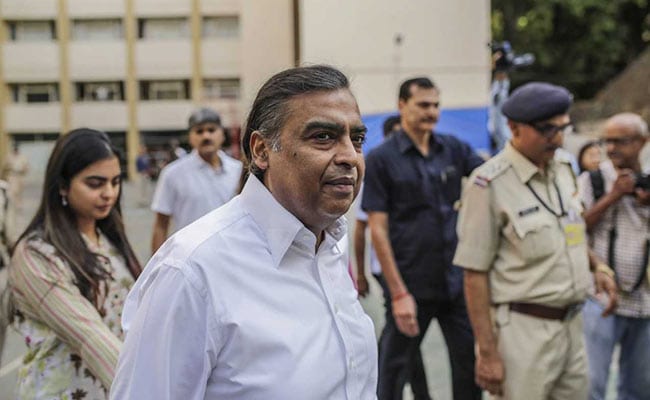
After racking up $59 billion of net debt to survive a brutal war in the world's second-biggest phone-services market, some of country's billionaires are bracing for more as their next battle looms: 5G.
India seeks to raise $84 billion this year from a sale of airwaves -- most of it for the latest technology tipped to revolutionize connectivity -- posing a conundrum for the carriers controlled by tycoons including Mukesh Ambani, Asia's wealthiest man. Investment would mean more borrowings, but the reward could be revenue streams never seen before.
Operators may soon decide how much more pain they can endure for a high-speed wireless network that can offer better user experience in streaming, gaming and entertainment in a market where Netflix to Amazon.com are making inroads. With applications ranging from manufacturing to education and health care, 5G could be the catalyst for India's digital economy that has the potential to reach $1 trillion by 2025, according to a report by Deloitte.
'Competitive Parity'
"Any player missing on the 5G service offering is likely to see erosion of market share," said Alok Shende, a Mumbai-based principal analyst for telecom at Ascentius Insights. "There's all the more case for maintaining competitive parity to remain in the game. Offering a forward path to customers is important."
Bharti Airtel and Vodafone Idea, the two biggest carriers, didn't respond to request for comments on their 5G plans, while Ambani's Reliance Industries said it won't comment on the spectrum auction.
While 5G offers potential in augmented reality, virtual reality, connected cars, autonomous drones, smart homes and cities, the real promise for a country like India lies in rural areas, said Prashant Singhal, global head of telecommunications at Ernst & Young.
The technology could address some of the basic challenges due to lack of infrastructure in health care and education. For instance, an experienced surgeon in a major urban hospital can advise an in-theater doctor in a small town to perform a surgery over a real-time 5G connection or a holographic image of a teacher could be beamed to a classroom in a village, he said.
Most of Asia's largest wireless carriers are in the process testing 5G networks, with plans to introduce them commercially in 2020.
World's First
South Korea's SK Telecom unveiled its 5G network for public use in April, calling it the world's first such full commercial roll out. China issued 5G licenses to its three main operators earlier this month, raising the prospect of services starting as early as this year. India plans to deploy its own next year.
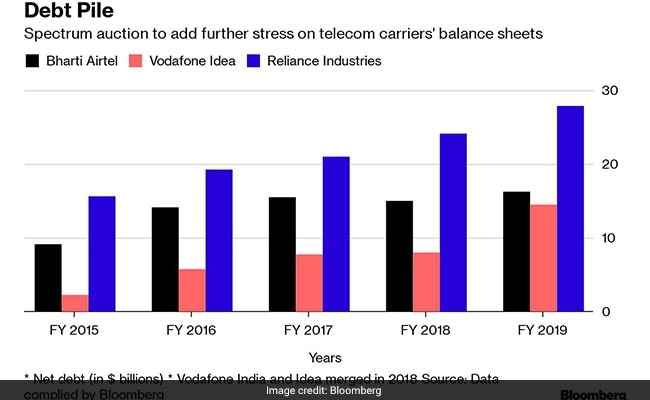
The immediate challenge in India would be the investment needed for the network, which the Telecom Regulatory Authority of India estimates could be as much as $70 billion. That amount will further dent the finances of operators that are in the midst of efforts to pare debt piled over the past decade.
Deferred Purchase
In India, successive governments running chronic budget deficits have relied on airwave auctions to replenish their coffers. If authorities don't garner enough demand for the airwaves, they usually cut the price by as much as 40% in the subsequent round, according to Deepti Chaturvedi, an analyst at CLSA India Pvt. The preferred option may be to defer the purchase, she wrote in a note earlier this month.
Despite a market with more than 1.1 billion subscribers, competition has driven data tariffs to less than a dollar for 1 GB -- the cheapest in the world. The monthly average revenue per mobile user is also among the lowest, at about $2, compared with about $8 in China and at least $40 in the US.
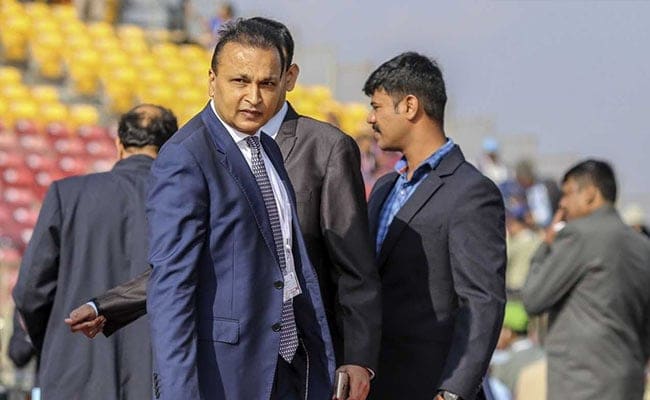
The environment got tougher after Mr Ambani, 62, as part of his empire expansion, unleashed Reliance Jio Infocomm in 2016 with free calls and even cheaper data. As a result, many incumbents retreated or merged. Reliance Communications, run by Ambani's younger brother, is now facing bankruptcy. The consolidation has left three non-state carriers still standing, from about 10 four years ago: Jio, Bharti Airtel and Vodafone Idea.
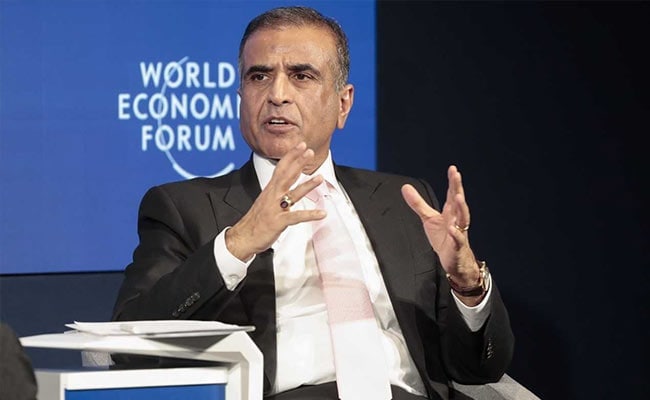
Bruised by Jio, which rolled out its network aggressively to acquire more than 30 crore customers within three years, billionaire Sunil Mittal's Bharti Airtel has run up a net debt of about $16 billion, while shoring up profits with one-time gains for at least four quarters in a row.
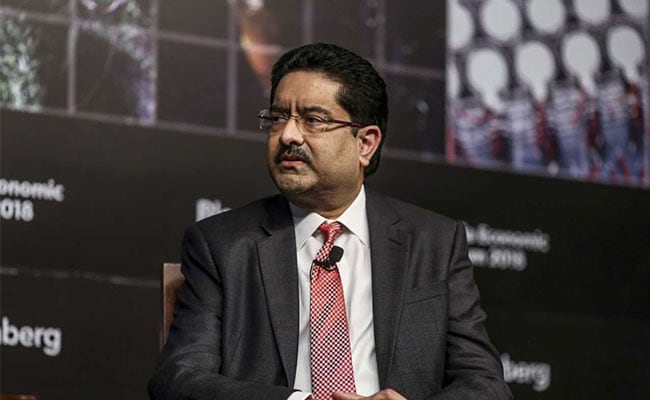
Vodafone Idea, country's largest carrier by users after Vodafone Group Plc's local unit merged with tycoon Kumar Mangalam Birla's Idea Cellular, has reported losses in every quarter since the deal was announced in 2017. Both Bharti Airtel and Vodafone Idea top the list of Asian peers with highest borrowings, according to data compiled by Bloomberg.
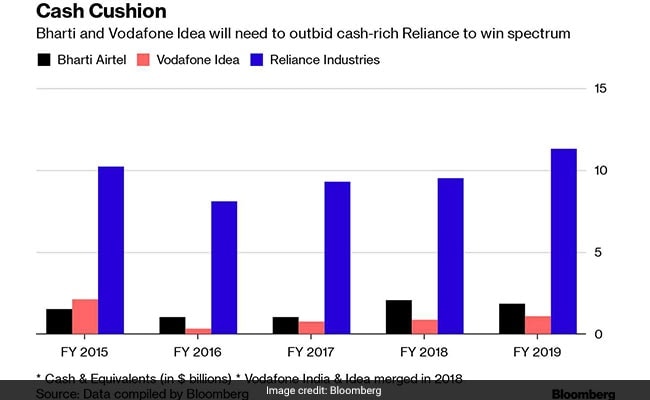
However, unlisted Jio thrived, supported by the deep pockets of Mr Ambani's energy-to-retail conglomerate that has spent more than $36 billion to build the telecom unit. But the group's net debt of almost $28 billion is also backed by cash and equivalents of $11.3 billion. In January, Mr Ambani, said in a speech that his network is "fully 5G ready," signaling spending will be relatively less.
Globally, 5G spectrum auctions have witnessed "robust" participation, said Ernst & Young's Singhal. Germany raised 6.55 billion euros ($7.3 billion) this month, more than the government's highest estimate of 5 billion euros, while Italy got $7.6 billion last year, more than twice what authorities expected. If that trend is any indication, India's auction may well turn out to be a success, given the growing demand for data.
"The prognosis for 5G in India is positive given the growing appetite for data, increasing digital transformation and the need to quickly adopt new technologies," said Singhal. "It has the potential to transform lives and play a key role in socio-economic development."

-
High US Salaries, No Green Card Certainty: The Financial Calculation Facing Indian H-1B Families

The suspension of PERM processing at eight technology employers does not cancel existing H-1B visas. What it does is force a question many Indian families have been avoiding: is the US salary worth tying your career and family plans to one employer?
-
Swiggy vs Eternal: Food Delivery's Two Rivals Are No Longer In The Same Race
Eternal is building a private AI assistant, dark.ai. Swiggy is still working out how to make Instamart pay, with an operating loss of Rs 895 crore in the July-September quarter while Blinkit stayed profitable.
-
Where You Live Shapes How You Get To Work | The Reason Why
Two-wheelers are the most popular way to get to work in India, accounting for nearly 43% of workplace commutes.
-
Unhedged Position: Can India See An Indonesia-Style Time Correction?
The Nifty is trading below levels it first clocked in 2024. Is there, then, as I have suggested in the headline, potential that the current time correction drags on painfully for the next three-five, even ten years?
-
Navigating Friction And Energy Realities: An Analysis Of Marco Rubio's October Visit To India
Occurring at a critical juncture marked by stalled trade negotiations and escalating geopolitical pressures over global energy supplies, the visit offers a profound window into modern US-India relations.
-
India Exports Capital. Why Not Export Trusteeship?
The big question, then, is whether India can build an institution that global borrowers, investors, banks, and lawyers can trust, even without an Indian connection.
-
France's Economy & Politics Are In Crisis | The Reason Why
Let's look at how the French economy and politics evolved under Nicolas Sarkozy, Franois Hollande and Emmanuel Macron.
-
You May Inherit The Business. You Must Earn Its Credibility.
Succession tests the founder's ability to share authority as much as it tests the next generation's readiness to assume it.
-
Signing Deals Is One Thing; Making Them Work Is Another | The Week In Whys
Sometimes, things don't turn out as planned. Indian companies have lost some bids to rivals, some projects won't produce until 2030.
-
FOMC Wall, PERM Suspension, Hospital Stocks | Talking Points This Week
A PERM suspension would directly affect green-card sponsorship rather than H-1B visas, so the near-term earnings impact could remain relatively limited. The key question is whether this marks a new phase in US scrutiny of Indian IT.









