Plunging Inflation Opens Door To Monetary Easing By RBI
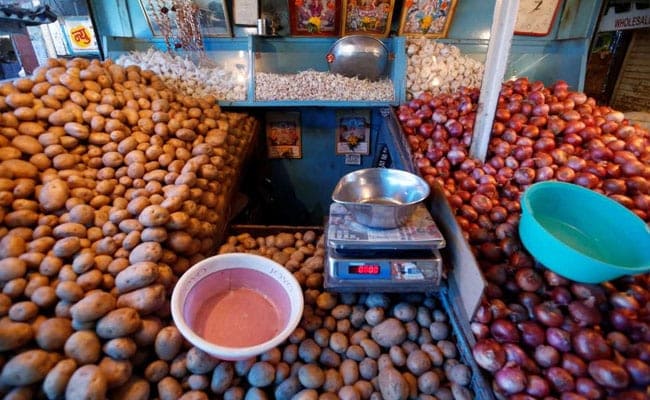
Annual retail inflation rate dropped to an 18-month low of 2.19 per cent in December, strengthening views of some economists that the central bank could ease monetary policy next month as prices for many food items fell and the nation faces a manufacturing slowdown.
Annual retail price inflation last month declined to its lowest level since June 2017, as food prices fell for third straight month, government data showed on Monday.
The outcome was lower than the 2.33 per cent recorded in November and broadly in line with a 2.20 per cent increase forecast by economists in a Reuters poll. The rate has now plummeted from 5.07 per cent in January 2018.
The CPI figures followed release of data earlier in the day showing the annual wholesale inflation rate eased to an eight-month low of 3.80 per cent in December. Figures released on Friday showed that industrial output growth declined to 0.5 per cent in November.
The economy is slowing, dragged down by reduced growth in consumer spending and weak growth in the farm sector.
The economic weakness is a problem for Prime Minister Narendra Modi, who has already been struggling to meet ambitious job creation targets ahead of national elections to be held by May.
(Also read: Five economic challenges faced by government for Budget 2019)
The Reserve Bank of India's Monetary Policy Committee (MPC), which mainly monitors retail inflation data and kept interest rates unchanged last month, will have leeway to soften its monetary stance at its February 7 meeting, economists said.
Arun Thukral, CEO of Axis Securities, said given that inflation had trended down for the past six months, the central bank had room to ease its monetary stance to neutral initially, and then cut its benchmark repo rate by 25 basis points.
"Probably, at its February 2019 meet, RBI would mellow its stance to neutral and wait for April 2019 meet for reducing the rates," he said.
Less hawkish tone
With inflation easing to near 2 per cent, the lower end of RBI's 2-6 per cent target, there is room for the central bank to change its currently hawkish tone.
However, economists said the RBI could wait for the signal on federal spending in the annual budget to be presented on February 1, as a substantial hike in spending ahead of the election could push up prices.
"Any fiscal slippage at the central or state level will have a bearing on the inflation outlook," said Mr Thukral, adding that the government could announce some populist measures, such as a basic income system for those in rural areas or an input support scheme for farmers and landless labourers in the budget.
Retail food prices in December were down 2.51 per cent from a year earlier, compared with a 2.61 per cent fall a month earlier. The figures indicate that rural incomes remain under pressure while consumers benefit from easing inflation.
Anger among farmers contributed to the defeat of PM Modi's Bharatiya Janata Party in three key state elections late last year.
One example of spending weakness is cars. In December, passenger vehicle sales fell 0.43 per cent to 238,692 units from a year earlier, data from the Society of Indian Automobile Manufacturers (SIAM) showed.
Still, big moves in fuel and food costs in recent months may be masking what is happening to prices in the wider economy. Three economists spoken to by Reuters after the CPI figures were released said they on average estimated India's core inflation rate, excluding food and fuel costs, was 5.7 per cent in December, unchanged from the previous month.
Recently, cooling inflation expectations have also been driven by lower oil prices and a rupee currency that has managed to stabilise after a steep sell-off.
Crude oil prices are down more than 30 per cent since October 3, when they hit the highest in almost four years, and the rupee bounced nearly 6 per cent after touching an all-time low of 74.48 on October 11.

-
High US Salaries, No Green Card Certainty: The Financial Calculation Facing Indian H-1B Families

The suspension of PERM processing at eight technology employers does not cancel existing H-1B visas. What it does is force a question many Indian families have been avoiding: is the US salary worth tying your career and family plans to one employer?
-
Unhedged Position: Can India See An Indonesia-Style Time Correction?
The Nifty is trading below levels it first clocked in 2024. Is there, then, as I have suggested in the headline, potential that the current time correction drags on painfully for the next three-five, even ten years?
-
Navigating Friction And Energy Realities: An Analysis Of Marco Rubio's October Visit To India
Occurring at a critical juncture marked by stalled trade negotiations and escalating geopolitical pressures over global energy supplies, the visit offers a profound window into modern US-India relations.
-
India Exports Capital. Why Not Export Trusteeship?
The big question, then, is whether India can build an institution that global borrowers, investors, banks, and lawyers can trust, even without an Indian connection.
-
France's Economy & Politics Are In Crisis | The Reason Why
Let's look at how the French economy and politics evolved under Nicolas Sarkozy, Franois Hollande and Emmanuel Macron.
-
You May Inherit The Business. You Must Earn Its Credibility.
Succession tests the founder's ability to share authority as much as it tests the next generation's readiness to assume it.
-
Signing Deals Is One Thing; Making Them Work Is Another | The Week In Whys
Sometimes, things don't turn out as planned. Indian companies have lost some bids to rivals, some projects won't produce until 2030.
-
FOMC Wall, PERM Suspension, Hospital Stocks | Talking Points This Week
A PERM suspension would directly affect green-card sponsorship rather than H-1B visas, so the near-term earnings impact could remain relatively limited. The key question is whether this marks a new phase in US scrutiny of Indian IT.
-
Everything, Everywhere, All At Once: Dalal Street's Week To Forget | Joining The Dots
Visa curbs, a Starlink spat and cancer drug caps: what connects this week's shocks for Indian markets
-
India Is Going Abroad For Critical Minerals. But It May Take Years To Pay Off | The Reason Why
Although India's steps are in the right direction, they remain modest compared with India's growing dependence.









