Who Gets The House Under Modi’s Rural Homes Plan?
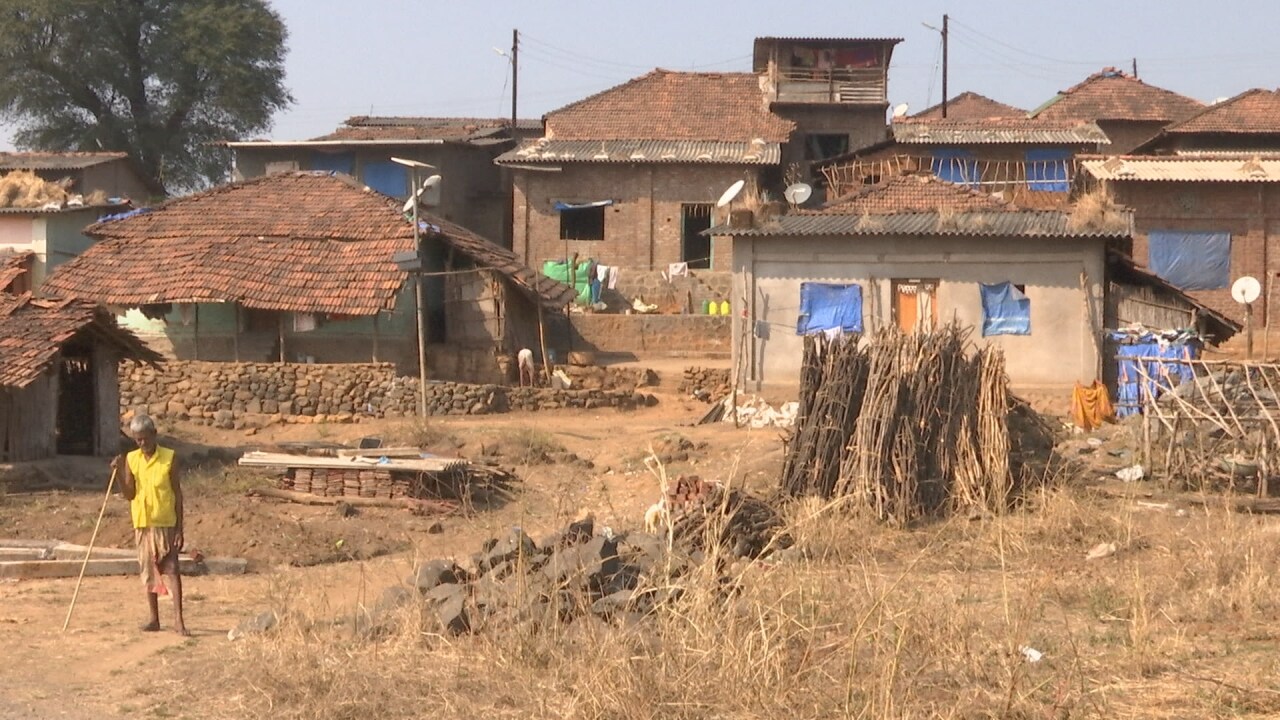
Till a few months ago, Laxman Mehangal lived with his family of four in a mud-and-thatch house in Borgaon, Khalapur, some 70 kilometres southeast of Mumbai. His home now is a bare brick-and-concrete structure less than half the size of a squash court.
Mehangal, 34, who travels about 40 kilometres every day to Matheran to eke out a living as a labourer, built it from the first instalment of funds he got under Prime Minister Narendra Modi's rural housing plan. It provides poor families Rs 1.2 lakh to make 25-square-metre houses.
“I am grateful for the house,” he said, packing the tiffin for his four-year-old daughter Deepu. “We now have more space and a better shelter,” he said, as the girl hopped off to school.

He is among 576 such beneficiaries from 120 villages of the Khalapur taluka. The Pradhan Mantri Awas Yojana-Gramin targets one crore homes for people like him—homeless or living in kuccha houses. Since the launch in November last year, it has built 10 lakh. Which means, the first target of 51 lakh by March looks unlikely. But the Ministry of Rural Development is confident of beating that by building 10 lakh a month.
Also Read: Needed: 10 Lakh Homes A Month To Meet PM's Rural Housing Target
Beneficiaries are identified by panchayats based on the 2011 Socioeconomic and Caste Census. “We conduct a gram sabha (village meet) to identify the beneficiaries,” said KB Patil, gram sevak (village council worker) of Borgaon. “We check the ration cards and then send the list to the panchayat for another round of verification.”
It's then vetted by an external contractor, said Sanjay Bhoye, block development officer, panchayat samiti, Khalapur. “Our officer visits individual villages to verify the beneficiaries and funds are released once they are approved.”

For every house, the grant is Rs 1.2 lakh and that's transferred directly to accounts. Since most such homes are constructed by the beneficiaries, they also receive Rs 18,000 as part of the rural jobs guarantee scheme and another Rs 12,000 to build toilets.
Mehangal's got Rs 90,000 so far. He plans to complete plastering and tiling work once he gets the remaining Rs 30,000. That would take another month or two, he said.
Ashok Sambre's home is ready and painted bright pink. It took him two months to build. He's not happy though. “There is no water. I still have to fill pots of water from a nearby well,” Sambre, 35, who earns about Rs 200 a day as a labourer, told BloombergQuint.
The Borgaon panchayat has 14 villages with around 450 houses—a mix of under-construction and kuccha homes. Patil said about 103 people were selected under the housing scheme and about 30 houses have been completed in the last six months. The target is to build the rest in the next six months.
In entire Khalapur taluka, Bhoye said 289 houses were completed in 2016-17 and the remaining 286 should be ready by March.

Lakhu Dhai, who lives with her two teenaged children, won't be among those who would move into those houses. Her name doesn't feature on the list of beneficiaries. “We didn't receive any response despite submitting our claim.”
Some people not on the 2011 list are separately verified by the gram sabha and then their claims are passed on to the panchayat samiti, Bhoye said. They are approved only after verification from the district officials and that process is on, he said.
Vasudev Khadke, 29, awaits his grant and he hopes to get the money in 15 days. “I would have to put in some extra,” he said. “If I am building my first house, I want it to be nice and big.”
For Mehangal, the look and size of the house wasn't a priority. He is happy with what he has. “At least, my children will lead a better life.”

-
Why Amazon And Flipkart Are Struggling To Beat Meesho In India's Smaller Cities

With 274 million users and lowest-cost logistics, Meesho is defending its value commerce crown against giants like Amazon and Flipkart.
-
High US Salaries, No Green Card Certainty: The Financial Calculation Facing Indian H-1B Families
The suspension of PERM processing at eight technology employers does not cancel existing H-1B visas. What it does is force a question many Indian families have been avoiding: is the US salary worth tying your career and family plans to one employer?
-
Swiggy vs Eternal: Food Delivery's Two Rivals Are No Longer In The Same Race
Eternal is building a private AI assistant, dark.ai. Swiggy is still working out how to make Instamart pay, with an operating loss of Rs 895 crore in the July-September quarter while Blinkit stayed profitable.
-
Where You Live Shapes How You Get To Work | The Reason Why
Two-wheelers are the most popular way to get to work in India, accounting for nearly 43% of workplace commutes.
-
Unhedged Position: Can India See An Indonesia-Style Time Correction?
The Nifty is trading below levels it first clocked in 2024. Is there, then, as I have suggested in the headline, potential that the current time correction drags on painfully for the next three-five, even ten years?
-
Navigating Friction And Energy Realities: An Analysis Of Marco Rubio's October Visit To India
Occurring at a critical juncture marked by stalled trade negotiations and escalating geopolitical pressures over global energy supplies, the visit offers a profound window into modern US-India relations.
-
India Exports Capital. Why Not Export Trusteeship?
The big question, then, is whether India can build an institution that global borrowers, investors, banks, and lawyers can trust, even without an Indian connection.
-
France's Economy & Politics Are In Crisis | The Reason Why
Let's look at how the French economy and politics evolved under Nicolas Sarkozy, Franois Hollande and Emmanuel Macron.
-
You May Inherit The Business. You Must Earn Its Credibility.
Succession tests the founder's ability to share authority as much as it tests the next generation's readiness to assume it.
-
Signing Deals Is One Thing; Making Them Work Is Another | The Week In Whys
Sometimes, things don't turn out as planned. Indian companies have lost some bids to rivals, some projects won't produce until 2030.










