What Urjit Patel Must Do To Save RBI's Dented Reputation
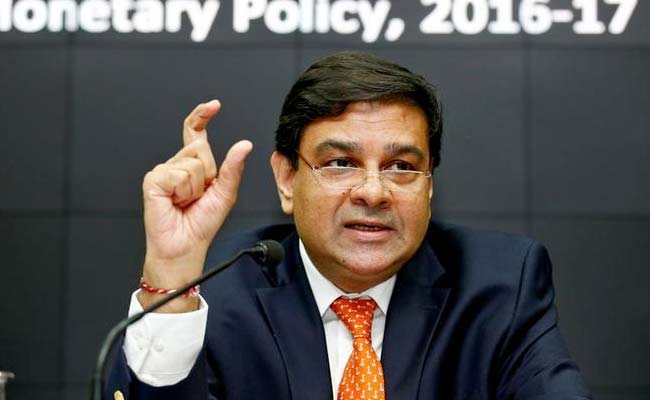
The Indian government's abrupt decision to withdraw high-value notes from circulation has hurt a great many people and sectors of the economy. But the institution that's been injured the most is the Reserve Bank of India. Since demonetization was announced on Nov. 8, India's austere and technocratic central bank has become the butt of online jokes. Soft-spoken Governor Urjit Patel has endured intrusive protests. The central bank employees' union wrote him a letter saying staff were "humiliated" by the RBI's "operational mismanagement" and warning that the bank's "autonomy and image have been dented beyond repair." One former RBI governor said that in Patel's position, he'd resign.
Patel is clearly feeling the heat: Last week, he "literally started running" out the back door of an auditorium in order to avoid a phalanx of reporters. But he should have one and only one concern now: to rebuild trust in the central bank's competence and independence as quickly as possible.
As the union's letter noted, the RBI's implementation of the demonetization policy has gravely damaged such faith. Even the program's strongest supporters generally agree that its rollout has been bungled. For many Indians, this incompetence has been captured most visibly by the RBI's endless and sometimes contradictory orders to banks, which have kept both banks and ordinary citizens in a state of perpetual confusion. At some point, most people stopped counting the number of new RBI decrees (the opposition Congress party claims to have recorded at least 126 changes in just a few weeks).
Other wounds have been equally self-inflicted. The bank, for instance, suddenly stopped issuing weekly data on how much money was being returned when opponents of demonetization pointed out that the proportion was much larger than expected. Even previously-released data mysteriously vanished from the RBI website. Various officials leaked different estimates of the returns, all of which sounded awfully high. So the RBI was forced into an official denial, saying it was "still counting" the number of notes returned.
Patel has yet to answer far too many questions about the conception and planning of demonetization. When was the idea broached? How long was it planned? Was the RBI's board given enough time to consider it? (It looks like it was given just a few hours.) What were the RBI's assumptions about money supply and velocity when it took the decision, and why have these gone wrong? Was the decision unanimous?
A well-functioning central bank would have released much of this information by now. But not only has the RBI not done so, the bank is stonewalling freedom of information requests, citing national security. Little wonder that it's being seen in some quarters as a rubber stamp for the central government.
It's important to remember that the law that governs India's central bank doesn't actually allow for true independence; its Raj-era authors wanted to ensure that the then-colony's monetary policy would continue to be drafted in Whitehall. Independent India adopted that logic in toto, as it did with other colonial legal codes. The section on monetary management in the RBI's governing statute still begins by granting blanket powers to the government: "The Central Government may from time to time give such directions to the Bank as it may, after consultation with the Governor of the Bank, consider necessary in the public interest."
Building up, extending and preserving the RBI's autonomy has been a difficult and sometimes delicate task, pursued over decades by successive governors. Most had to stand up to government bullying at some point. Thanks to their work, India's bank now has a reputation as an inflation-fighter and as a competent regulator. This keeps inflation low, and lends interest rates a stability that helps attract investment.
However difficult the task, repairing this reputation is critical - particularly at a time when Indian private sector investment is slumping. Patel must swiftly demonstrate that he is his own man. One good place to start: The RBI governor should release all the data about how many old bills have been returned, and explain why it took so long for him to do so. Next, he should lay out a timetable for when replacement currency notes will reach the market, as well as a description of the level at which the RBI expects money supply will eventually stabilize.
Sure, transparent and credible data will likely reveal that demonetization has been a foolhardy exercise in pointlessness. But Patel's job is to protect the RBI's reputation, not the government's. He'd be wise to start acting like it.
This column does not necessarily reflect the opinion of the editorial board or Bloomberg LP and its owners.
Mihir Sharma is a Bloomberg View columnist. He was a columnist for the Indian Express and the Business Standard, and he is the author of “Restart: The Last Chance for the Indian Economy.”
To contact the author of this story: Mihir Sharma at m.s.sharma@gmail.comTo contact the editor responsible for this story: Nisid Hajari at nhajari@bloomberg.net
© 2017 Bloomberg L.P
(Except for the headline, this story has not been edited by NDTV staff and is published from a syndicated feed.)

-
High US Salaries, No Green Card Certainty: The Financial Calculation Facing Indian H-1B Families

The suspension of PERM processing at eight technology employers does not cancel existing H-1B visas. What it does is force a question many Indian families have been avoiding: is the US salary worth tying your career and family plans to one employer?
-
Unhedged Position: Can India See An Indonesia-Style Time Correction?
The Nifty is trading below levels it first clocked in 2024. Is there, then, as I have suggested in the headline, potential that the current time correction drags on painfully for the next three-five, even ten years?
-
Navigating Friction And Energy Realities: An Analysis Of Marco Rubio's October Visit To India
Occurring at a critical juncture marked by stalled trade negotiations and escalating geopolitical pressures over global energy supplies, the visit offers a profound window into modern US-India relations.
-
India Exports Capital. Why Not Export Trusteeship?
The big question, then, is whether India can build an institution that global borrowers, investors, banks, and lawyers can trust, even without an Indian connection.
-
France's Economy & Politics Are In Crisis | The Reason Why
Let's look at how the French economy and politics evolved under Nicolas Sarkozy, Franois Hollande and Emmanuel Macron.
-
You May Inherit The Business. You Must Earn Its Credibility.
Succession tests the founder's ability to share authority as much as it tests the next generation's readiness to assume it.
-
Signing Deals Is One Thing; Making Them Work Is Another | The Week In Whys
Sometimes, things don't turn out as planned. Indian companies have lost some bids to rivals, some projects won't produce until 2030.
-
FOMC Wall, PERM Suspension, Hospital Stocks | Talking Points This Week
A PERM suspension would directly affect green-card sponsorship rather than H-1B visas, so the near-term earnings impact could remain relatively limited. The key question is whether this marks a new phase in US scrutiny of Indian IT.
-
Everything, Everywhere, All At Once: Dalal Street's Week To Forget | Joining The Dots
Visa curbs, a Starlink spat and cancer drug caps: what connects this week's shocks for Indian markets
-
India Is Going Abroad For Critical Minerals. But It May Take Years To Pay Off | The Reason Why
Although India's steps are in the right direction, they remain modest compared with India's growing dependence.









