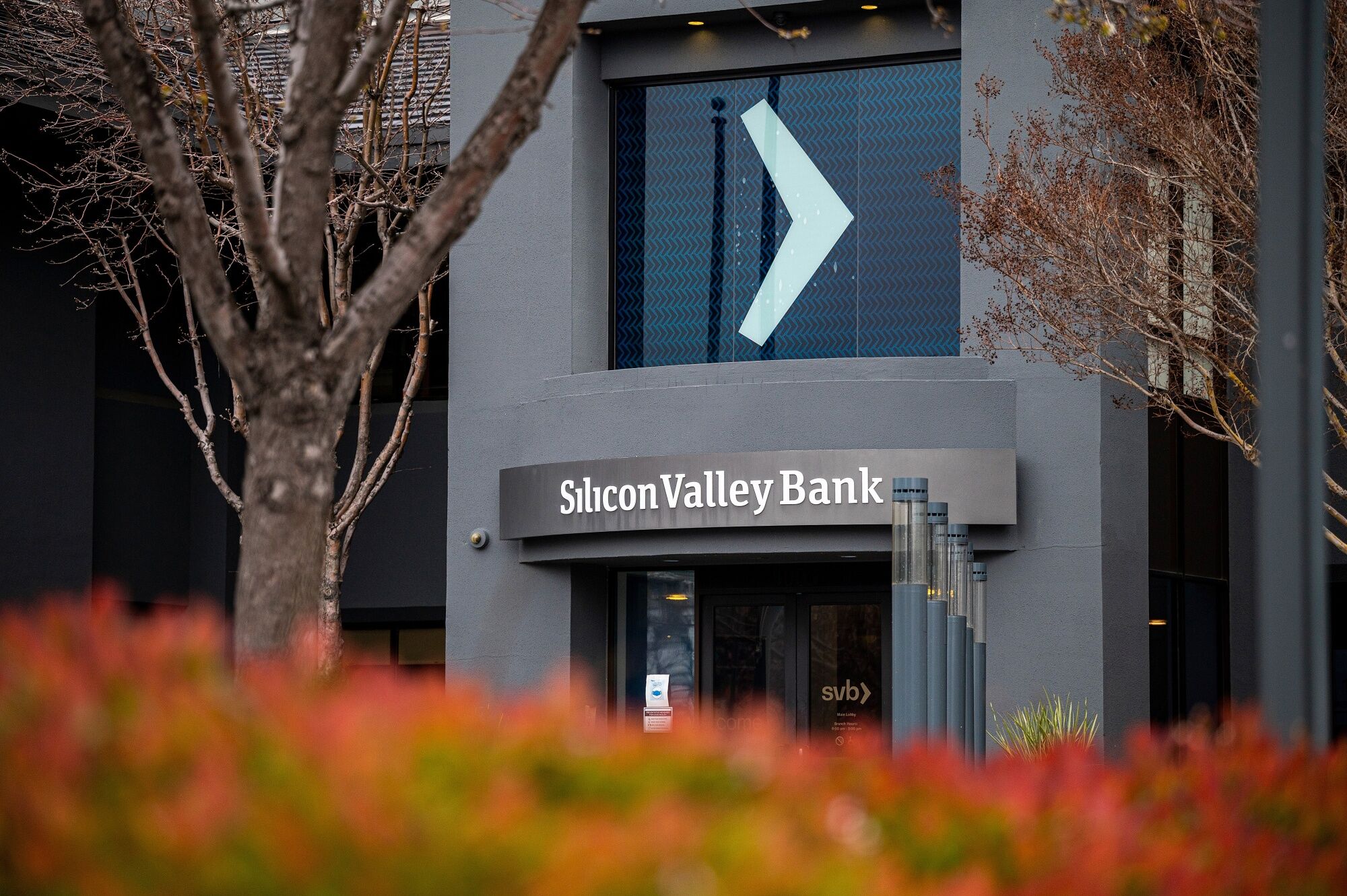
(Bloomberg) -- The collapse of a lender little-known outside of Silicon Valley is reverberating around the startup world and deepening uncertainty within the financial industry.
On Friday, California regulators closed Silicon Valley Bank and sent it into receivership. That was after an attempted share sale by the company failed and startups began pulling their funds at the urging of venture capital firms.
Follow live updates on the SVB collapse.
So what did SVB do and why did it spark unease? Here's everything we know right now — and what could happen next:
Did SVB fail?
Yes, The California Department of Financial Protection and Innovation took over the bank and cited inadequate liquidity and insolvency. It named the Federal Deposit Insurance Corp. as a receiver.
What is FDIC receivership?
The FDIC can protect your money if a bank that it has insured — like SVB — fails. Receivership typically means a bank's deposits will be assumed by another, healthy bank or the FDIC will pay depositors up to the insured limit, which is $250,000.
The FDIC said that SVB's insured depositors would have access to their funds by no later than Monday morning. Uninsured depositors will get a receivership certificate for the remaining amount of their uninsured funds, the regulator said, adding that it doesn't yet know the amount.
What happened at SVB?
Santa Clara-based SVB's ordeal began after its parent company, SVB Financial Group, announced that it sold $21 billion of securities from its portfolio and said it was holding a $2.25 billion share sale to shore up finances. The move was prompted by high deposit outflows at the bank due to a broader downturn in the startup industry, analysts say. SVB also forecast a sharper decline in net interest income.
All of that spooked a number of prominent venture capitalists, including Peter Thiel's Founders Fund, Coatue Management and Union Square Ventures, who, according to sources, instructed portfolio businesses to limit exposure and pull their cash from the bank. Other VC firms asked portfolio companies to at least shift some of their cash away from the bank, while a number indicated they would stand by SVB.
SVB's stock plunged 60% Thursday and its bonds posted record declines. SVB Chief Executive Officer Greg Becker held a conference call with the bank's clients, including venture capital investors, urging them to “stay calm” in a bid to avoid a run on the bank.
But on Friday, the company's share sale had failed and it was seeking a rescue as the stock was halted following a deep plunge.
How did SVB's woes spread?
SVB's problems coincided with the abrupt shutdown of Silvergate Capital Corp., with the twin shocks sending ripples through the banking industry and pushing stocks lower. On Thursday, the KBW Bank Index — a benchmark of banking stocks — sank 7.7%, the most in nearly three years.
Who were SVB's clients?
SVB was deeply embedded in the US startup scene, as the only publicly-traded bank focused on Silicon Valley and tech startups. According to its website, it did business with nearly half of all US venture capital-backed startups, and 44% of US venture-backed tech and health-care companies that went public last year.
It lists Pinterest Inc., Shopify Inc. and cybersecurity firm CrowdStrike Holdings Inc. among the bigger household names it has served.
What's the worst-case scenario?
The risk is contagion — that this failure will create stress on the financial system, spark broader instability in the industry and lead more institutions to collapse. Prominent Wall Street figures say that this is unlikely, but investors on Friday sold off equities looking for safer investments.
(Updates with information about collapse and FDIC throughout.)
More stories like this are available on bloomberg.com
©2023 Bloomberg L.P.
Essential Business Intelligence, Continuous LIVE TV, Sharp Market Insights, Practical Personal Finance Advice and Latest Stories — On NDTV Profit.