What Is Ailing India’s Most Profitable Ship Builder
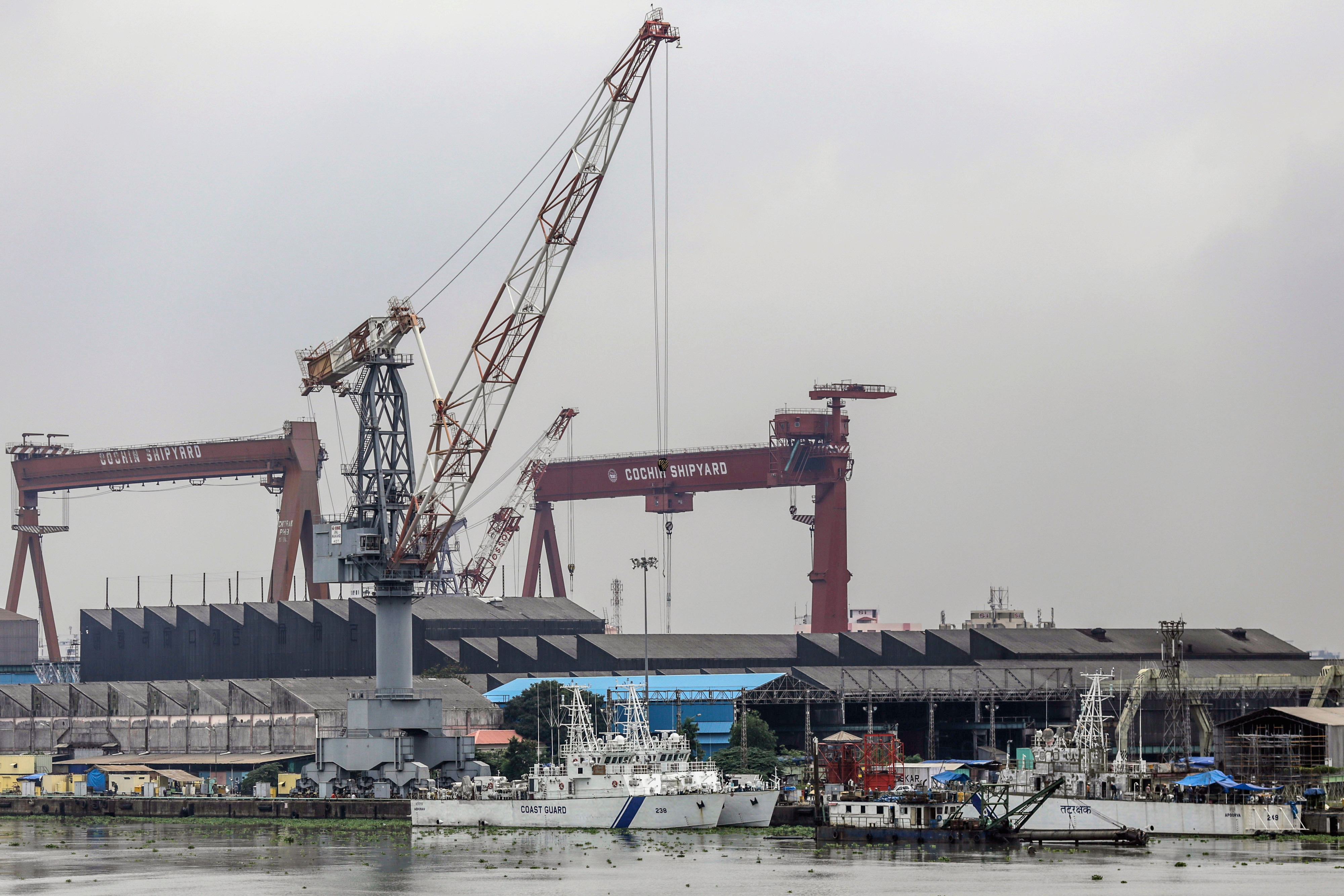
Shares of Cochin Shipyard Ltd., which listed in August last year, have eroded all gains in the last month to trade below the issue price as a weaker rupee increased costs of the state-run shipbuilder.
Cochin Shipyard's stock has fallen more than 20 percent so far this year. Till Aug. 11, a year after making its market debut, the stock commanded a 23 percent premium over the initial public offering price. It has since lost all gains and is trading at a discount of 3 percent to the IPO price.

Rupee Slide A Concern
The company—which specializes in ship building and repairing—reported weak numbers in the quarter ended June, in part due to high raw material costs. Revenue rose 18 percent and margins slipped by 300 basis points to 17.5 percent.
The rupee depreciated 13 percent against the U.S. dollar and 10 percent against the euro this year. With most of Cochin Shipyard's purchases made or denominated in these currencies, its cost of future capital expenditure is set to rise.
Cochin Shipyard has an order book of around Rs 2,300 crore which gives a revenue visibility for one year. The company was declared the lowest bidder for an order worth Rs 5,400 crore by the Indian Navy, the final contracts for which are to be signed.
Conversion of this order into an executable order is very critical for the company's revenue visibility, said Kotak Securities. “We perceive this as a political risk for the company,” the brokerage said.
Cochin Shipyard has been no outlier as the shares of most defence-related public-sector undertakings declined this year.

Chokkalingam G, founder of Equinomics Research & Advisory Pvt. Ltd., attributed this weakness to the upcoming election season and policy changes. “Investors are shying away from PSUs in general because of the government's guidelines on margin cut down on orders to Bharat Electronics Ltd.,” Chokkalingam said. “The weak sentiment… for defence PSUs could lead to further delays in orders.”
Despite the concerns, analysts are bullish on Cochin Shipyard on the back of strong medium-term visibility on defence orders, the upcoming ship-repairing opportunity and its track record of executing large orders.
Amar Kedia, an analyst with the Japanese brokerage Nomura, said he expects the company's ship-building order book to rise to around Rs 17,600 crore by the end of the ongoing fiscal, giving revenue visibility for the next five years. All seven analysts tracking Cochin Shipyard have a ‘Buy' rating on the stock with a consensus upside potential of 45 percent over the next 12 months, Bloomberg data showed.

-
Ten Things I Learnt This Samvat

Patience can be a trap. Cheap stocks can stay cheap. Leverage can wipe you out. What did Samvat 2082 teach us? Niraj Shah writes on 10 lessons from the year gone by.
-
Talking Points This Week: Tech Nerves, FII Buying, And A Faraway Banking Shock
The global markets are not shining this Diwali. The exception in the large markets is, India.
-
Midterm Rally Lasted A Day. The Hard Reality Of A Divided US May Last Two Years | Opinion
Between a contested AI boom, a debt ceiling that arrives in 2027 and a president with every incentive to act alone, the next two years may prove more volatile than the first day's rally suggests.
-
Blue Wave Will Derail the AI Trade but Won't Dismantle the AI Era | Unhedged Position
The Democrats' sweep of the US Congress will see politics collide with economic forces both over the long and short term.
-
It's Time To Take The GST Council's Bet On Trust Global
Payment records can prove India's services exports, and clear, proportionate rules can bring foreign digital sellers into the tax net.
-
Opinion | India at 38: From Innovation Overperformer to Innovation Powerhouse
India now has 453 VC-backed deep science startups, 18 of them late-stage, after 117 percent growth since 2020. Laurus Labs, at USD 9.3 billion, is the most valuable deep science company in any middle-income economy outside China.
-
Navigating Energy Crossroads: S Jaishankar's Call For Diversified Supply Chains At G20 Ministerial Meeting
As geopolitical fault lines continue to test maritime trade routes and commodity flows, Jaishankar's message remains pertinent: true economic resilience requires open markets, protected transit lines, and a genuine commitment to multilateral cooperation rather than coercion.
-
Indians Are Travelling, But Not Every Journey Is A Holiday | The Week In Whys
Pilgrims, patients and working women are the real travellers, and the system hasn't quite caught up with them.
-
Getting To Work Costs Women More | The Reason Why
It is not just about women paying more than men. It is about women paying much more in cities than in villages.









