What India’s Removal of 2,000 Rupee Notes Means for the Economy
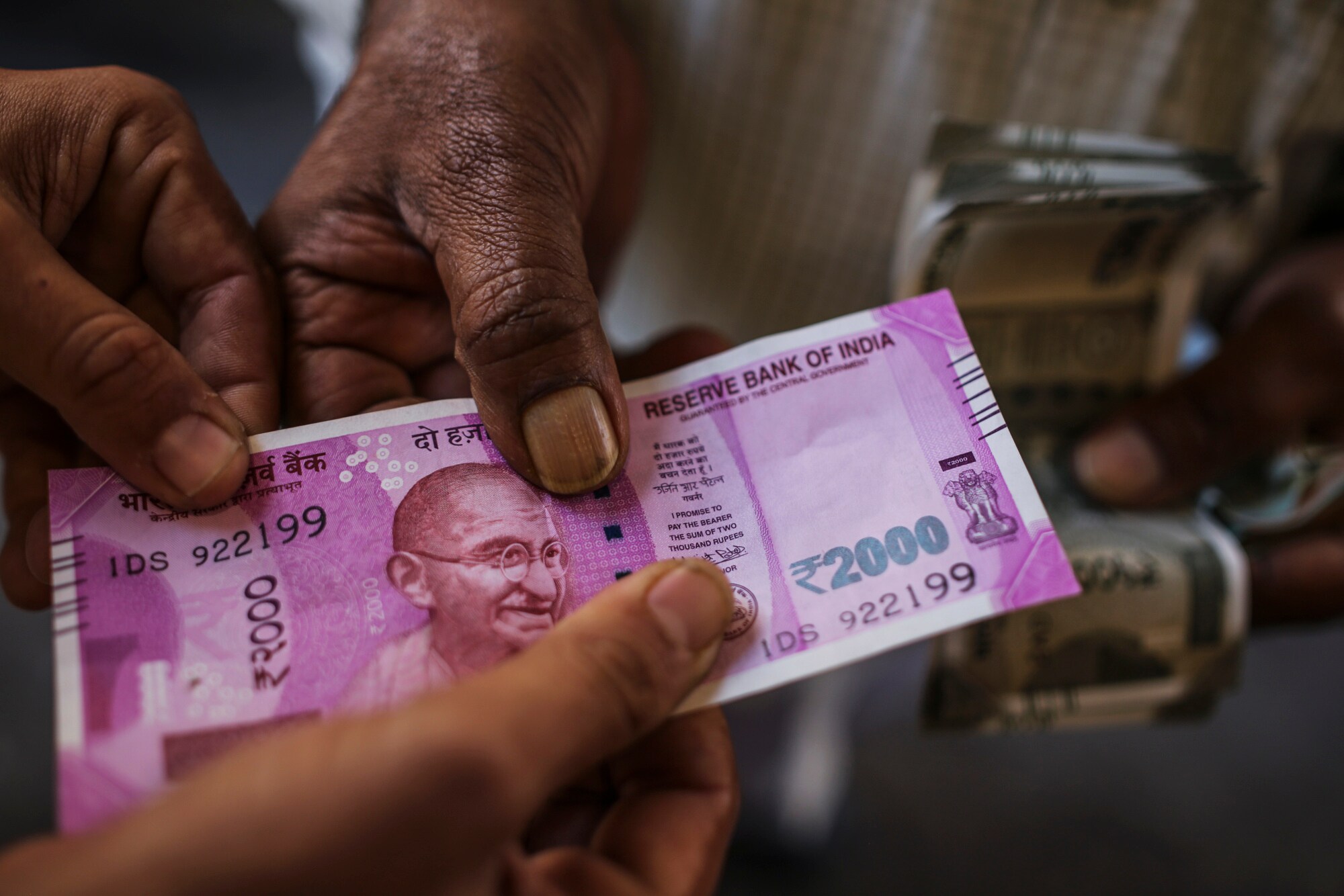
(Bloomberg) -- India is withdrawing its highest value currency note from circulation, giving consumers and businesses a four-month deadline to exchange or deposit the legal tender, a move reminiscent of a shock demonetization exercise in 2016.
Announcing the move late Friday, the Reserve Bank of India said the 2,000 rupee ($24) notes had reached the end of their estimated life span. While these banknotes account for only about a tenth of the total currency in circulation, the RBI decision triggered confusion and memes on social media while local newspapers reported a rush to jewelery shops to exchange the notes for gold.

However, the extent of the recent action is a far cry from 2016, where 86% of India's currency was invalidated overnight, leading panicked citizens to line up at banks and ATM machines across the country. There were reports of dozens of people who collapsed or even died as they waited in queues for hours at a stretch.
Why remove 2,000 rupee notes?
The central bank introduced the 2,000 rupee bill to top up the currency notes in circulation after Prime Minister Narendra Modi's 2016 move removed 500 and 1,000 rupee notes as legal tender.
Printing of the notes — the largest denomination currency in use — was stopped in 2018-2019 as larger volumes of other denominations were made available and there was a shift to digital transactions. The bank note was often hoarded and there were reports of high quality, counterfeits in circulation.

Is the move linked to elections?
The 2016 demonetization announcement came weeks before a key state election and was seen by Modi's critics and opposition parties as a clampdown on spending by political rivals. This time around, there are at least five large state polls toward the end of the year and India will head to a national vote next summer.
The central bank in the past has said cash in circulation usually increases around elections. The 2,000 rupee note is often the preferred choice for black or unaccounted money deals and corruption given the higher denomination.
READ: Mystery $9 billion in Extra Cash Perplexes India
What happens to Indian consumers?
Unlike in 2016, when the announcement led to chaos, analysts believe this time the impact will be muted. “We see no panic but a lot will depend on how prepared the banks are to deal with the crowd,” said Yuvika Singhal, economist at QuantEco Research.
The central bank has advised people to deposit or exchange these notes by September 30, unlike seven years ago when 500 and 1,000 rupee notes ceased to have value overnight. There's also no daily limit on the amount that can be exchanged.

How about businesses?
Consumers are likely to use their 2,000 rupee notes to snap up high-value household items, precious metals and even property, boosting these sectors and supporting consumption in Asia's third largest economy for a while.
READ: India Removing 2,000 Rupee Note May Spur Gold, Property Rush
People's reluctance to disclose their likely unaccounted cash may lead to an “initial surge in conspicuous spending,” said Samiran Chakraborty, an economist with Standard Chartered Bank.
On the flip side, cash-oriented sectors, including small retailers and manufacturers, might be reluctant to accept these notes because of the hassle of having to swap them later, said Radhika Rao of DBS Bank. But that disruption isn't likely to be “prolonged” as the notes are still legal tender, she added.
What's the impact on banks?
The liquidity boost will ease some pressure on Indian lenders to raise deposit rates to meet growing credit demand. Banks have been reporting double-digit credit growth in recent months as firms ramped up activity to meet growing domestic demand despite the RBI raising benchmark rates by 250 basis points since May last year.
Economists from QuantEco Research and Kotak Mahindra Bank Ltd estimate as much as 1 trillion rupees ($12.1 billion) may be added to India's financial system, driving a rally in rupee and government securities.
READ: India's Plan to Remove Rupee Notes From Circulation Boosts Bonds
--With assistance from Anup Roy.
More stories like this are available on bloomberg.com
©2023 Bloomberg L.P.

-
Navigating Energy Crossroads: S Jaishankar's Call For Diversified Supply Chains At G20 Ministerial Meeting

As geopolitical fault lines continue to test maritime trade routes and commodity flows, Jaishankar's message remains pertinent: true economic resilience requires open markets, protected transit lines, and a genuine commitment to multilateral cooperation rather than coercion.
-
Indians Are Travelling, But Not Every Journey Is A Holiday | The Week In Whys
Pilgrims, patients and working women are the real travellers, and the system hasn't quite caught up with them.
-
Getting To Work Costs Women More | The Reason Why
It is not just about women paying more than men. It is about women paying much more in cities than in villages.
-
AI Bias In Investing Cannot Be Eliminated, But It Can Be Governed
Framing is a particularly important example as identical financial information presented in terms of gains rather than losses can lead an LLM to reach a different assessment.
-
Joining The Dots | Dark Skies, Steady Diya: Why Hope Holds This Diwali
With war, a weak rupee and foreign outflows weighing on sentiment, policymakers at the NDTV World Summit and market veterans at NDTV Profit Ignite: Diwali Edition offered the same advice: stay invested and filter out the noise.
-
The Curious Case of Equitas Small Finance Bank And A CEO Who Quit For Stock
PN Vasudevan believes persistent investor concerns over a perceived conflict of interest had become a governance overhang on Equitas Small Finance Bank's stock, even as the lender improved profitability and asset quality.
-
Talking Points This Week: AI Cash Burn, A Tiger Comeback And An India That Still Finds Its Own Path
India is not immune to higher oil or tighter global liquidity, yet its earnings base is broader, its domestic policy levers are still available.
-
Foreign Investors Own Half Of HDFC Bank and ICICI Bank. An LTCG Cut Could Matter Most Here
Foreign portfolio investors have US$115 billion parked in HDFC Bank, ICICI Bank. If the government cuts long-term capital gains tax, Jefferies says returning foreign money could land here first.
-
'Never Seen This Level Of Negativity': Sandeep Tandon Says The Next Rally May Be Closer Than You Think
Veteran investor Sandeep Tandon says foreign selling is easing, large-caps are due a comeback and mid-caps are crowded, while he turns positive on gold, power and pharma this Diwali.










