What Government Can Do With Rs 1.76 Lakh Crore Windfall From RBI
The Reserve Bank of India's record Rs 1.76 lakh crore ($24.4 billion) payout to the government will give authorities more fiscal options, including possibly reducing its borrowing or boosting spending to spur economic growth.
The RBI's board approved the transfer on Monday, which includes a dividend of Rs 1.23 lakh crore and Rs 52,640 crore from its surplus capital, according to a statement. The dividend payment includes Rs 28,000 crore already transferred to the government in February.
The transfer -- which rivals the stimulus that some Group of 20 nations pumped into their economies during the global financial crisis -- comes amid a slowdown in country's growth to a five-year low, depressed consumer spending and reports of tens of thousands of job losses in the auto industry.
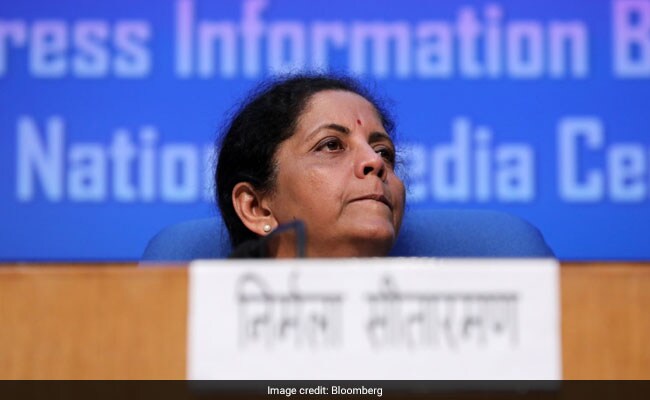
Finance Minister Nirmala Sitharaman last week announced various measures to spur growth, including hastening the capital infusion into state-run lenders. At the same time, she's trying to stick to a narrower fiscal deficit goal of 3.3 per cent of gross domestic product for this year.
The Finance Ministry is keen to use the transfer to cut its budgeted borrowings rather than fund a stimulus package, though it's yet to make a final decision on how to spend the amount, people with knowledge of the matter said.
Ms Sitharaman said the ministry hasn't yet decided on the end-use of the money from the RBI. A decision will be communicated when it's made, she said in Pune on Tuesday.
The government could cut its planned borrowings if it uses the funds to plug a revenue shortfall in its budget, helping Ms Sitharaman keep the deficit under control. Or it could use the money to finance new spending, like a stimulus package, to help lift growth that's decelerated to 5.8 per cent in the three months to March.
Sonal Varma and Aurodeep Nandi, economists at Nomura Holdings Inc., estimate India has a tax revenue shortfall of Rs 1 lakh crore, or 0.5 per cent of GDP.
"Gains from excess RBI dividends are likely to be utilized to bridge the revenue shortfall rather than engage in stimulus measures," they said in a report.
Bonds rallied initially on the news of the RBI payout, but erased gains at close as a closer analysis proved that the payout isn't that big. The yield on the benchmark 10-year note rose five basis points to 6.53 per cent after dropping as low as 6.35 per cent earlier.
The RBI pays dividends to the government every year, based on the profits from its investments and printing of notes and coins. A snapshot of its balance sheet is due later this week, when the central bank will release its annual report.
Over the past couple of years, the Finance Ministry has been seeking higher payouts from the RBI, arguing the central bank is holding more capital than it needs. It was a source of contention between the government and the former Governor Urjit Patel, who quit in December.
A panel, led by former Governor Bimal Jalan, was set up to study the central bank's capital framework. Its recommendation, accepted by the RBI's board on Monday, was that the central bank should hold realized equity of between 5.5 per cent to 6.5 per cent of its balance sheet, compared with the current 6.8 per cent. The board decided to maintain the realized equity level at 5.5 per cent, the central bank said.
The combined payout far exceeds the government's budgeted estimate of Rs 90,000 crore as dividend from the RBI this year.
What Bloomberg's Economists Say
The Reserve Bank of India's transfer of Rs 1.76 lakh crore to the government should offset any revenue shortfall from lower tax buoyancy amid slower growth this year, allowing more room to boost spending. It will also make it easier for the government to meet its budget deficit target of 3.3 per cent of GDP for fiscal 2020.
-- Abhishek Gupta, India economist
Samiran Chakraborty and Baqar M Zaidi, analysts at Citigroup Inc. said the government had two options: it can immediately spend part of the amount to stimulate the economy or it can wait for some clarity to emerge on the potential revenue shortfall before spending the money.
Since the government has shown "stellar resolve" in maintaining" fiscal targets, "our bias is to think that the government will follow the latter approach," they wrote in a note.
Ms Sitharaman said last week the government will immediately inject Rs 70,000 crore of fresh capital into state-run banks to spur lending.
The banking crisis has weighed on India's economy, the third-largest in Asia. Data on Friday will likely show growth weakened further to 5.7% in the quarter ended June.
The windfall will probably be pumped into banks, which should help reduce lending rates, Bank of America Merrill Lynch economists Indranil Sen Gupta and Aastha Gudwani said in a note. That would be a "game changer" for the economy, they said.

-
Where You Live Shapes How You Get To Work | The Reason Why

Two-wheelers are the most popular way to get to work in India, accounting for nearly 43% of workplace commutes.
-
High US Salaries, No Green Card Certainty: The Financial Calculation Facing Indian H-1B Families
The suspension of PERM processing at eight technology employers does not cancel existing H-1B visas. What it does is force a question many Indian families have been avoiding: is the US salary worth tying your career and family plans to one employer?
-
Unhedged Position: Can India See An Indonesia-Style Time Correction?
The Nifty is trading below levels it first clocked in 2024. Is there, then, as I have suggested in the headline, potential that the current time correction drags on painfully for the next three-five, even ten years?
-
Navigating Friction And Energy Realities: An Analysis Of Marco Rubio's October Visit To India
Occurring at a critical juncture marked by stalled trade negotiations and escalating geopolitical pressures over global energy supplies, the visit offers a profound window into modern US-India relations.
-
India Exports Capital. Why Not Export Trusteeship?
The big question, then, is whether India can build an institution that global borrowers, investors, banks, and lawyers can trust, even without an Indian connection.
-
France's Economy & Politics Are In Crisis | The Reason Why
Let's look at how the French economy and politics evolved under Nicolas Sarkozy, Franois Hollande and Emmanuel Macron.
-
You May Inherit The Business. You Must Earn Its Credibility.
Succession tests the founder's ability to share authority as much as it tests the next generation's readiness to assume it.
-
Signing Deals Is One Thing; Making Them Work Is Another | The Week In Whys
Sometimes, things don't turn out as planned. Indian companies have lost some bids to rivals, some projects won't produce until 2030.
-
FOMC Wall, PERM Suspension, Hospital Stocks | Talking Points This Week
A PERM suspension would directly affect green-card sponsorship rather than H-1B visas, so the near-term earnings impact could remain relatively limited. The key question is whether this marks a new phase in US scrutiny of Indian IT.
-
Everything, Everywhere, All At Once: Dalal Street's Week To Forget | Joining The Dots
Visa curbs, a Starlink spat and cancer drug caps: what connects this week's shocks for Indian markets









