What Does The New Debit, Credit Card Rule Mean To Users?
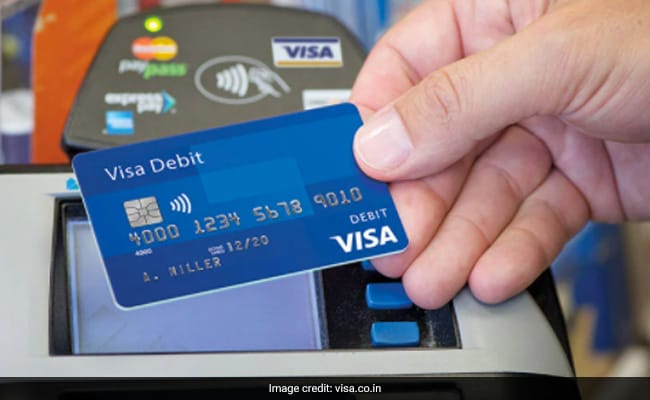
The Reserve Bank of India (RBI) has made it mandatory for all credit and debit card data used in online, point-of-sale, and in-app transactions to be replaced with unique tokens by September 30 this year. This added layer of security by way of tokenisation is expected to enhance users' digital payment experience.
The deadline was extended by three months starting July so that the additional time period may be utilised by the industry in facilitating all stakeholders to be ready for handling tokenised transactions. On June 24, RBI said about 19.5 crore tokens were created.
The extension was also given for creating public awareness about the process of creating tokens and using them to undertake transactions.
Currently, many entities, including merchants, involved in an online card transaction chain store card data like card number, expiry date, etc. citing cardholder convenience and comfort for undertaking transactions in future.
While this practice does render convenience, the availability of card details with multiple entities increases the risk of card data being stolen or misused and there have been instances where such data stored by merchants have been compromised.
"Given the fact that many jurisdictions do not mandate Additional Factor of Authentication (AFA) for authenticating card transactions, stolen data in the hands of fraudsters may result in unauthorised transactions and resultant monetary loss to cardholders. Within India as well, social engineering techniques can be employed to perpetrate frauds using such data," RBI had earlier said.
In reaction, the RBI initially mandated that after December 31, 2021, entities other than card networks and card issuers cannot store card data.
What is tokenisation?
As per the RBI, tokenisation refers to the replacement of actual card details with an alternate code called the "token".
Following are some of the frequently asked questions about card tokenisation:
What is the benefit of tokenisation?
A tokenised card transaction is considered safer as the actual card details are not shared with the merchant during the processing of the transaction.
How can the tokenisation be carried?
-The cardholder can get the card tokenised by initiating a request on the app provided by the token requestor. The token requestor will forward the request to the card network which, with the consent of the card issuer, will issue a token corresponding to the combination of the card, the token requestor, and the device.
Who can perform tokenisation?
- Tokenisation can be performed only by the authorised card network and the list of authorised entities is available on the RBI website.
What are the charges that the customer needs to pay for availing of this service?
- The customer need not pay any charges for availing of this service.
What are the use cases (instances/scenarios) for which tokenisation has been allowed?
- Tokenisation has been allowed through mobile phones and/or tablets for all use cases/channels (e.g., contactless card transactions, payments through QR codes, apps etc.)
Is tokenisation of a card mandatory for a customer?
- No, a customer can choose whether or not to let his / her card tokenised. Those who do not wish to create a token can continue to transact as before by entering card details manually at the time of undertaking the transaction.
(Except for the headline, this story has not been edited by NDTV staff and is published from a syndicated feed.)

-
High US Salaries, No Green Card Certainty: The Financial Calculation Facing Indian H-1B Families

The suspension of PERM processing at eight technology employers does not cancel existing H-1B visas. What it does is force a question many Indian families have been avoiding: is the US salary worth tying your career and family plans to one employer?
-
Swiggy vs Eternal: Food Delivery's Two Rivals Are No Longer In The Same Race
Eternal is building a private AI assistant, dark.ai. Swiggy is still working out how to make Instamart pay, with an operating loss of Rs 895 crore in the July-September quarter while Blinkit stayed profitable.
-
Where You Live Shapes How You Get To Work | The Reason Why
Two-wheelers are the most popular way to get to work in India, accounting for nearly 43% of workplace commutes.
-
Unhedged Position: Can India See An Indonesia-Style Time Correction?
The Nifty is trading below levels it first clocked in 2024. Is there, then, as I have suggested in the headline, potential that the current time correction drags on painfully for the next three-five, even ten years?
-
Navigating Friction And Energy Realities: An Analysis Of Marco Rubio's October Visit To India
Occurring at a critical juncture marked by stalled trade negotiations and escalating geopolitical pressures over global energy supplies, the visit offers a profound window into modern US-India relations.
-
India Exports Capital. Why Not Export Trusteeship?
The big question, then, is whether India can build an institution that global borrowers, investors, banks, and lawyers can trust, even without an Indian connection.
-
France's Economy & Politics Are In Crisis | The Reason Why
Let's look at how the French economy and politics evolved under Nicolas Sarkozy, Franois Hollande and Emmanuel Macron.
-
You May Inherit The Business. You Must Earn Its Credibility.
Succession tests the founder's ability to share authority as much as it tests the next generation's readiness to assume it.
-
Signing Deals Is One Thing; Making Them Work Is Another | The Week In Whys
Sometimes, things don't turn out as planned. Indian companies have lost some bids to rivals, some projects won't produce until 2030.
-
FOMC Wall, PERM Suspension, Hospital Stocks | Talking Points This Week
A PERM suspension would directly affect green-card sponsorship rather than H-1B visas, so the near-term earnings impact could remain relatively limited. The key question is whether this marks a new phase in US scrutiny of Indian IT.









