What Ails Bengaluru? Politics, Rains And Flood Of Misgovernance
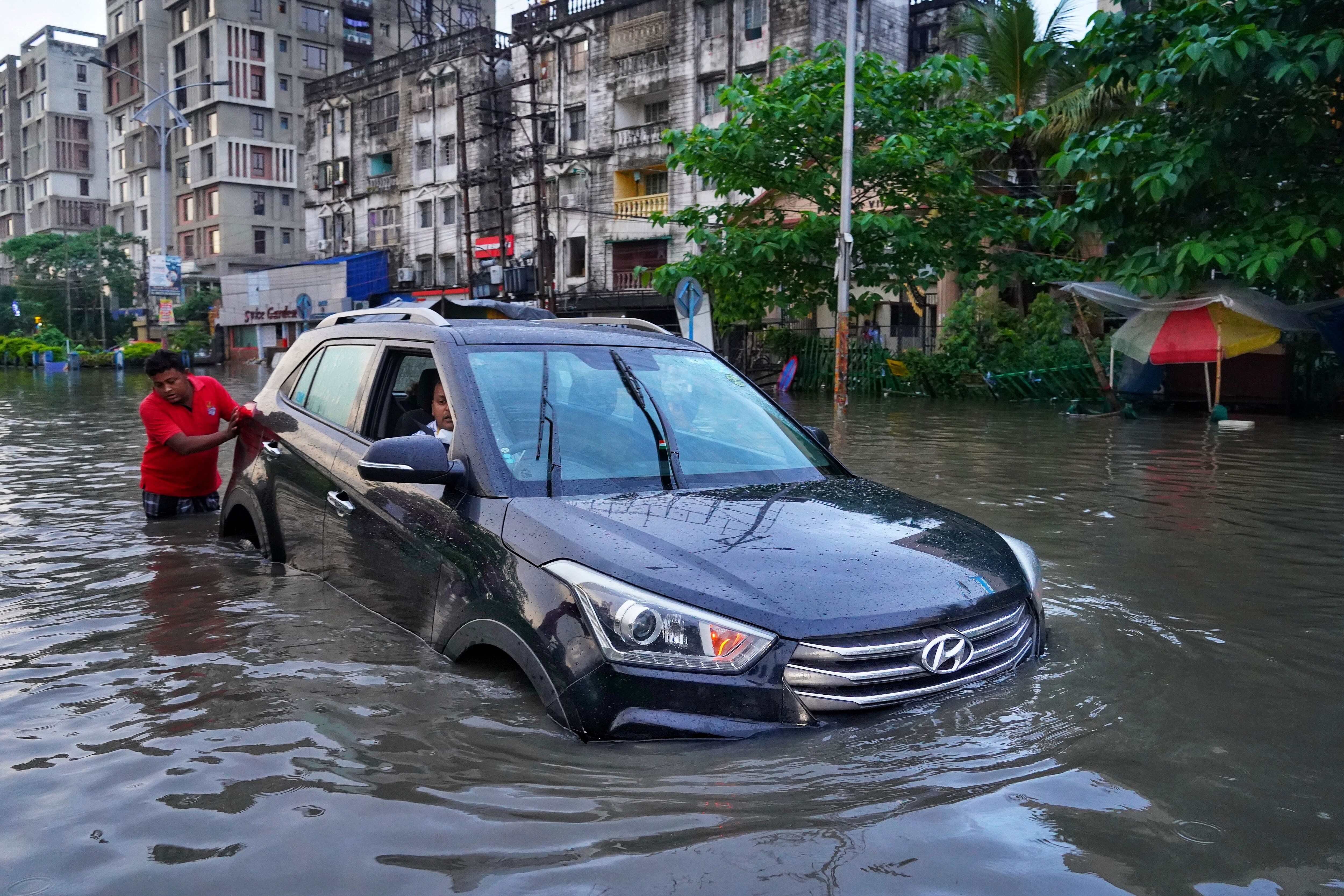
Why does it flood so much in Bengaluru? There are technical reasons and political ones. One set of people desperately wishes that somehow, someone will address the technical reasons and things will get better. Another set, which was small to begin with but which is increasingly growing in number, argues that unless we fix our politics, the decisions needed for the technical fixes will never be made.
Let's take an example. The shoulder drains on most roads have been built to collect and transport rainwater. But they're badly designed, and it's debatable whether we need to be transporting so much water, especially since they're steered by gravity to low-lying areas. Which then leads to the question—why do we choose bad designs, as well as policies that do more harm than good?
The answer is simple, but a lot of people have a hard time accepting it. Too many of our elected representatives have contested and won elections not to serve the public, but to loot public funds. They make choices that enable them and their allies to make off with as much money as possible during the time they're in office. And in this, they've enlisted the help of many officials too. Once we recognise this, the rest is easy, but until we see this for what it is, we'll get distracted with all sorts of other explanations.
In school, around the time that we started learning physics as a separate subject rather than just a part of science class, we were taught that water flows much better in a cylinder than in a rectangular drain. But our shoulder drains are almost all rectangular. Why is it that something that even children in school know is not embraced by the municipal authorities when they contract public works?
The answer is, they're not trying to build drains using the best technologies and construction companies. They are trying to steer money towards very specific contractors. Those people often don't have much equipment, and they have very little skill in building drains. They don't run engineering companies that can build cylinders. All they know is to put iron rods together in a patchwork and bind them using poured concrete.
Why do the elected representatives and the municipality choose these contractors? One very plausible answer, given the poor quality of our politics, is that such contractors provide kickbacks to those making the choices. They are not really independent bidders; they're agents of the elected corporators who are merely going through the public bidding process, confident that it is rigged in their favour.
There are more design errors. The drains gather water from the roads, so on roads with footpaths, the drains should be adjacent to the roads. But throughout the city, we see that the footpaths are adjacent to the roads, and the drains are adjacent to the properties. The water and sewage lines run below the footpaths and now need to be connected to each property by cutting across the drains—where they end up becoming obstacles to the flow of water.
Some years ago, a broad push to fix all this emerged from a number of civil society groups. New designs that corrected such mistakes, and also added other fixes needed from a transport perspective, were bundled together into projects on a dozen or so roads. But the city has more than 13,000 roads, so fixing a few is too little. Even after approving the new designs, the municipality has continued to construct all the other roads using its old designs.
Why? Because of politics. The kickback alliance can afford to tolerate a few roads being done differently, and by professional engineering firms. But a wholesale change in the city to this approach would mean the end of the cosy arrangement now in place. Therefore, despite showcasing the new roads as marvels of urban thinking, the city hasn't moved to learn any of the lessons from them.
Again and again, it comes down to the same thing. It's the politics that is broken, and everything else stems from that. It seems implausible that things can be so brazen, and that we voters have actually contributed to all this by putting the wrong people in office. And perhaps for those reasons, we tend to look for reasons and explanations besides politics. But there isn't one.
Social and political problems cannot be fixed by technical and managerial interventions. Trying to do that is like writing physics answers to questions in a biology exam. What we have is a flood of misgovernance, which reaches everywhere and destroys many aspects of the city. When we begin to fix that—and only then—we can expect things to improve.
Ashwin Mahesh is an urbanist, journalist, politician and climate scientist based in Bengaluru.
The views expressed here are those of the author, and do not necessarily represent the views of BQ Prime or its editorial team.

-
Opinion | India at 38: From Innovation Overperformer to Innovation Powerhouse

India now has 453 VC-backed deep science startups, 18 of them late-stage, after 117 percent growth since 2020. Laurus Labs, at USD 9.3 billion, is the most valuable deep science company in any middle-income economy outside China.
-
Navigating Energy Crossroads: S Jaishankar's Call For Diversified Supply Chains At G20 Ministerial Meeting
As geopolitical fault lines continue to test maritime trade routes and commodity flows, Jaishankar's message remains pertinent: true economic resilience requires open markets, protected transit lines, and a genuine commitment to multilateral cooperation rather than coercion.
-
Indians Are Travelling, But Not Every Journey Is A Holiday | The Week In Whys
Pilgrims, patients and working women are the real travellers, and the system hasn't quite caught up with them.
-
Getting To Work Costs Women More | The Reason Why
It is not just about women paying more than men. It is about women paying much more in cities than in villages.
-
AI Bias In Investing Cannot Be Eliminated, But It Can Be Governed
Framing is a particularly important example as identical financial information presented in terms of gains rather than losses can lead an LLM to reach a different assessment.
-
Joining The Dots | Dark Skies, Steady Diya: Why Hope Holds This Diwali
With war, a weak rupee and foreign outflows weighing on sentiment, policymakers at the NDTV World Summit and market veterans at NDTV Profit Ignite: Diwali Edition offered the same advice: stay invested and filter out the noise.
-
The Curious Case of Equitas Small Finance Bank And A CEO Who Quit For Stock
PN Vasudevan believes persistent investor concerns over a perceived conflict of interest had become a governance overhang on Equitas Small Finance Bank's stock, even as the lender improved profitability and asset quality.
-
Talking Points This Week: AI Cash Burn, A Tiger Comeback And An India That Still Finds Its Own Path
India is not immune to higher oil or tighter global liquidity, yet its earnings base is broader, its domestic policy levers are still available.
-
Foreign Investors Own Half Of HDFC Bank and ICICI Bank. An LTCG Cut Could Matter Most Here
Foreign portfolio investors have US$115 billion parked in HDFC Bank, ICICI Bank. If the government cuts long-term capital gains tax, Jefferies says returning foreign money could land here first.










