WeWork Plans To Cut 4,000 Jobs: Report
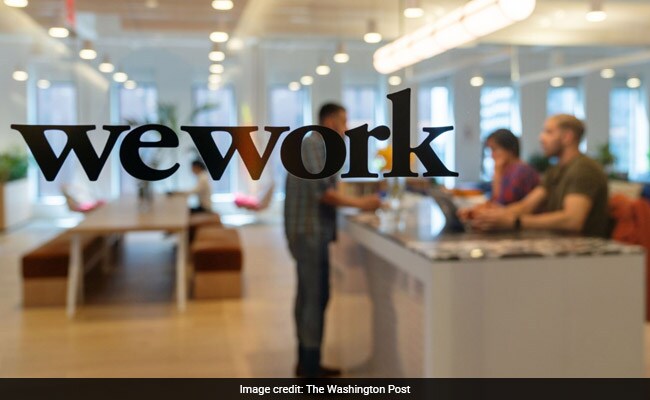
WeWork could lay off thousands of employees as the company tries to recover from a disastrous attempt to go public.
About 4,000 employees could leave WeWork through a combination of layoffs, divestitures of the company's ancillary businesses and transfers to a contractor, according to a person familiar with the matter. That means WeWork could lose about a third of the 12,500-person head count it had in June according to a company filing.
WeWork executive chairman Marcelo Claure told employees that layoffs would begin this week, according to an email obtained by The Washington Post. Claure said the layoffs would be "difficult" but necessary to create "more efficient, more focused and even more customer-centric organization."
In a year of disappointing tech IPOs, WeWork stood out for its meteoric rise and fall before the company ever went public. WeWork was valued at $47 billion in January, according to Pitchbook. Last month, SoftBank announced a $9.5 billion deal to take control of WeWork.
WeWork's spectacular combustion has become a cautionary tale from a summer of underwhelming IPOs, particularly when it comes to job creation and employee wealth. Uber, which went public in May and has seen stock price fall by about 36% since becoming publicly traded, has laid off about a thousand employees in recent months.
Tech firms have long been criticized for generating a smaller number of jobs than traditional corporate giants as firms automate more tasks and create technology to replace humans, despite their huge streams of revenue.
Still, some have been critical of WeWork's marketing of itself as a tech startup at all, instead saying it's closer to a real estate company - and should have always been valued that way.
The company's core business is converting leased buildings into co-working spaces that offer perks such as yoga classes and kombucha taps. Earlier this year it created a parent company called We Co. and expanded into apartment rentals, data analytics and education. It filed publicly for an IPO in August.
The plans to go public disintegrated after investors questioned the company's valuation as well as the leadership of former CEO Adam Neumann. Neumann stepped down as CEO in September and was replaced by two co-CEOs: Artie Minson, formerly the company's co-president and chief financial officer; and Sebastian Gunningham, who was vice chairman.
Without the infusion of Softbank cash last month, WeWork would have run out of money this month. Neumann became a board observer and was given an exit package worth as much as $1.2 billion. The company's board obtained control of his voting shares.
The news of the job cuts was reported earlier by The New York Times, which said WeWork's plan involved laying off 2,000 to 2,500 people from the company's core real estate business. Another 1,000 employees would leave as the company sells or closes its other businesses including a private school, and 1,000 building maintenance workers would be transferred to a contractor, The Times reported.
WeWork declined to comment on the number of layoffs.
WeWork, like other "unicorn" startups including Uber, Lyft and Slack, was one of the many companies investors and employees hoped would generate wealth on the public markets this year. The debuts were especially crucial for tech workers, for whom stock is typically a major component of total compensation, and who have fewer opportunities to sell their shares.

-
Why Amazon And Flipkart Are Struggling To Beat Meesho In India's Smaller Cities

With 274 million users and lowest-cost logistics, Meesho is defending its value commerce crown against giants like Amazon and Flipkart.
-
High US Salaries, No Green Card Certainty: The Financial Calculation Facing Indian H-1B Families
The suspension of PERM processing at eight technology employers does not cancel existing H-1B visas. What it does is force a question many Indian families have been avoiding: is the US salary worth tying your career and family plans to one employer?
-
Swiggy vs Eternal: Food Delivery's Two Rivals Are No Longer In The Same Race
Eternal is building a private AI assistant, dark.ai. Swiggy is still working out how to make Instamart pay, with an operating loss of Rs 895 crore in the July-September quarter while Blinkit stayed profitable.
-
Where You Live Shapes How You Get To Work | The Reason Why
Two-wheelers are the most popular way to get to work in India, accounting for nearly 43% of workplace commutes.
-
Unhedged Position: Can India See An Indonesia-Style Time Correction?
The Nifty is trading below levels it first clocked in 2024. Is there, then, as I have suggested in the headline, potential that the current time correction drags on painfully for the next three-five, even ten years?
-
Navigating Friction And Energy Realities: An Analysis Of Marco Rubio's October Visit To India
Occurring at a critical juncture marked by stalled trade negotiations and escalating geopolitical pressures over global energy supplies, the visit offers a profound window into modern US-India relations.
-
India Exports Capital. Why Not Export Trusteeship?
The big question, then, is whether India can build an institution that global borrowers, investors, banks, and lawyers can trust, even without an Indian connection.
-
France's Economy & Politics Are In Crisis | The Reason Why
Let's look at how the French economy and politics evolved under Nicolas Sarkozy, Franois Hollande and Emmanuel Macron.
-
You May Inherit The Business. You Must Earn Its Credibility.
Succession tests the founder's ability to share authority as much as it tests the next generation's readiness to assume it.
-
Signing Deals Is One Thing; Making Them Work Is Another | The Week In Whys
Sometimes, things don't turn out as planned. Indian companies have lost some bids to rivals, some projects won't produce until 2030.










