Welcome To The Crazy World Of China’s Lithium Mine Auctions
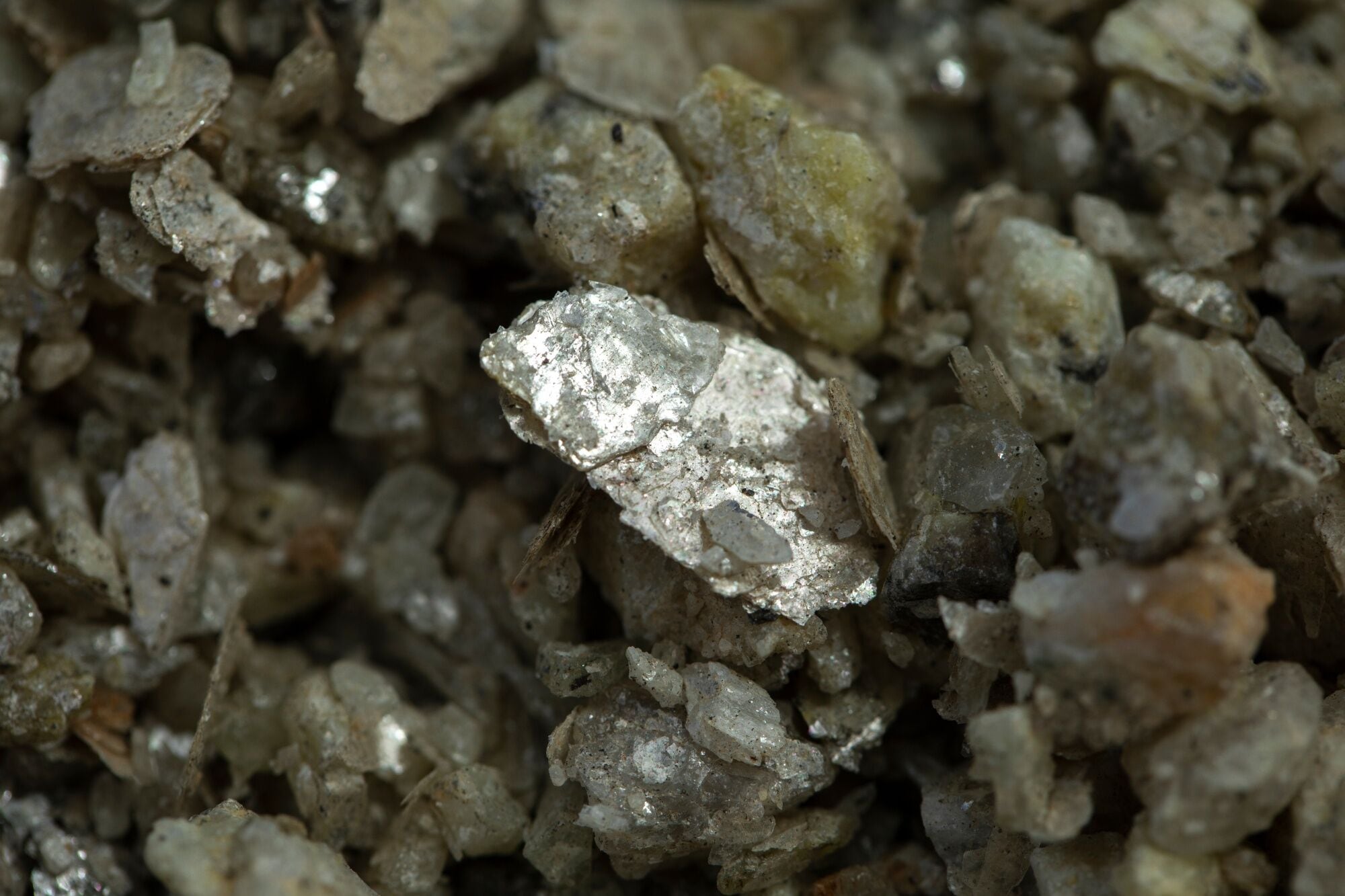
(Bloomberg) -- Welcome to the world of China's lithium auctions, where vast numbers of bids are placed, firms end up spending over a thousand times the opening price, and buyers promising hundreds of millions of dollars have walked without paying.
China is the biggest producer of electric vehicles and lithium is a key element in the batteries that power them. But the country holds just a fraction of the world's identified reserves, which means it has to import over half of what it needs.
The latest sales of licenses to mine the critical mineral will take place in the southwestern province of Yunnan next month. The local government has put five-year exploration rights to two projects in the cities of Kunming and Yuxi up for grabs, underscoring Beijing's determination to accelerate the domestic development of one of the most crucial resources for the global transition away from fossil fuels.
The auctions will be closely watched after heated competition drove up the price of two mines in neighboring Sichuan in August. A unit of Inner Mongolia Dazhong Mining Co. won the rights to the province's Barkam mine with a winning bid of 4.2 billion yuan ($580 million), which was over 1,300 times the starting price. The auction drew more than 11,000 bids. The second mine in Jinchuan county fetched 1 billion yuan, with a subsidiary of Sichuan Energy Industry Investment Group paying nearly 1,800 times the opening price.

Sotheby's might sniff at how the auctions were conducted. The sales in Sichuan were “hot in the sense that there are so many bids,” Daiwa Capital Markets' analysts Dennis Ip and Leo Ho said in an email. But that's partly explained by the low opening price and the tiny increment — just 100,000 yuan — at which the bids proceeded, which inflated their number, according to the analysts.
In addition, some firms entered the contest to ensure their future eligibility for other auctions, they said.
But even if some of the drama surrounding the auctions seems concocted, it shouldn't mask Beijing's serious intent when it comes to marshaling the resources necessary to feed its world-leading electric car and battery industries.
“China has put more emphasis on the exploration and development of domestic lithium resources,” said Susan Zou, an analyst at Rystad Energy. It wants to expand both mining and processing as a dual insurance policy to counter geopolitical risks and protectionist moves around the world to secure the supply of critical minerals.

There's a growing urgency for China to defend its dominance of the supply chain. The US has stepped up efforts to build its own networks with allies like Canada and Australia. Some nations are also seeking to keep more revenue at home by adding processing plants that can raise the value of their lithium exports.
Some Chinese firms that have expanded their global footprint — snapping up resources from Argentina to Zimbabwe — have started to meet setbacks due to political tensions and resource nationalism. In recent weeks, Ganfeng Lithium Group Co.'s joint venture in Mali was ordered to suspend some operations while nine of its lithium concessions were canceled by Mexico. Last year, Canada ordered three Chinese companies to divest stakes in firms listed in Toronto under tougher rules for foreign investment.
The backdrop is a roller-coaster in prices. Lithium carbonate, a refined form of the metal, has collapsed to 189,500 yuan a ton after a two-year rally took it to a record of 597,500 yuan in November. Still, it remains about four times higher than the historic low hit in 2020. Global demand, meanwhile, is expected to grow nearly five times by the end of the decade, according to BloombergNEF.
The plunge in prices may have accounted for the failure of an earlier auction in February, when a unit of Xinjiang Zhite New Materials Co. won the exploration rights to a mine in the autonomous region for 6 billion yuan, but then failed to follow through with payment.
Prices probably fell too far for the project to be economical, according to Daiwa's analysts.
And a sale in May last year for a firm with a controlling stake in another lithium mine in Sichuan initially fell through after the winner didn't pay its 2 billion yuan bid. But the auction did attract nearly 1 million online viewers over the course of its five days.
The upcoming sales in Yunnan will require bidders to place deposits once offers reach a certain level to avoid a repeat of the failed auctions.
The Week's Diary
(All times Beijing unless noted.)
Wednesday, Sept. 13
- China water resources ministry briefing, 15:00
- CCTD's weekly online briefing on Chinese coal, 15:00
- China Silicon Industry Conference in Baotou, Inner Mongolia, day 3
Thursday, Sept. 14
- Nothing major scheduled
Friday, Sept. 15
- China sets monthly medium-term lending rate, 09:20
- China's new home prices for August, 09:30
- China industrial output for August, including steel & aluminum; coal, gas & power generation; and crude oil & refining. 10:00
- Retail sales, fixed assets investment, property investment, residential sales, jobless rate
- China weekly iron ore port stockpiles
- Shanghai exchange weekly commodities inventory, ~15:30
- Global Geothermal Congress in Beijing, day 1
- Global Geothermal Congress in Beijing, day 2
- Global Geothermal Congress in Beijing, day 3
Saturday, Sept. 16
Sunday, Sept. 17
On the Wire
China is looking to stock up on liquefied natural gas for winter, returning to the spot market in a move that risks reducing supply to other importers.
More stories like this are available on bloomberg.com
©2023 Bloomberg L.P.

-
Why Amazon And Flipkart Are Struggling To Beat Meesho In India's Smaller Cities

With 274 million users and lowest-cost logistics, Meesho is defending its value commerce crown against giants like Amazon and Flipkart.
-
High US Salaries, No Green Card Certainty: The Financial Calculation Facing Indian H-1B Families
The suspension of PERM processing at eight technology employers does not cancel existing H-1B visas. What it does is force a question many Indian families have been avoiding: is the US salary worth tying your career and family plans to one employer?
-
Swiggy vs Eternal: Food Delivery's Two Rivals Are No Longer In The Same Race
Eternal is building a private AI assistant, dark.ai. Swiggy is still working out how to make Instamart pay, with an operating loss of Rs 895 crore in the July-September quarter while Blinkit stayed profitable.
-
Where You Live Shapes How You Get To Work | The Reason Why
Two-wheelers are the most popular way to get to work in India, accounting for nearly 43% of workplace commutes.
-
Unhedged Position: Can India See An Indonesia-Style Time Correction?
The Nifty is trading below levels it first clocked in 2024. Is there, then, as I have suggested in the headline, potential that the current time correction drags on painfully for the next three-five, even ten years?
-
Navigating Friction And Energy Realities: An Analysis Of Marco Rubio's October Visit To India
Occurring at a critical juncture marked by stalled trade negotiations and escalating geopolitical pressures over global energy supplies, the visit offers a profound window into modern US-India relations.
-
India Exports Capital. Why Not Export Trusteeship?
The big question, then, is whether India can build an institution that global borrowers, investors, banks, and lawyers can trust, even without an Indian connection.
-
France's Economy & Politics Are In Crisis | The Reason Why
Let's look at how the French economy and politics evolved under Nicolas Sarkozy, Franois Hollande and Emmanuel Macron.
-
You May Inherit The Business. You Must Earn Its Credibility.
Succession tests the founder's ability to share authority as much as it tests the next generation's readiness to assume it.
-
Signing Deals Is One Thing; Making Them Work Is Another | The Week In Whys
Sometimes, things don't turn out as planned. Indian companies have lost some bids to rivals, some projects won't produce until 2030.










