Wealthy Collectors in Isolation Switch to Buying Art Online
(Bloomberg) -- Michael Sherman can't stop buying art.
The Hollywood producer spent more than $100,000 on a dozen works by emerging artists since March, even as the coronavirus pandemic resulted in closed galleries, postponed auctions and canceled fairs.
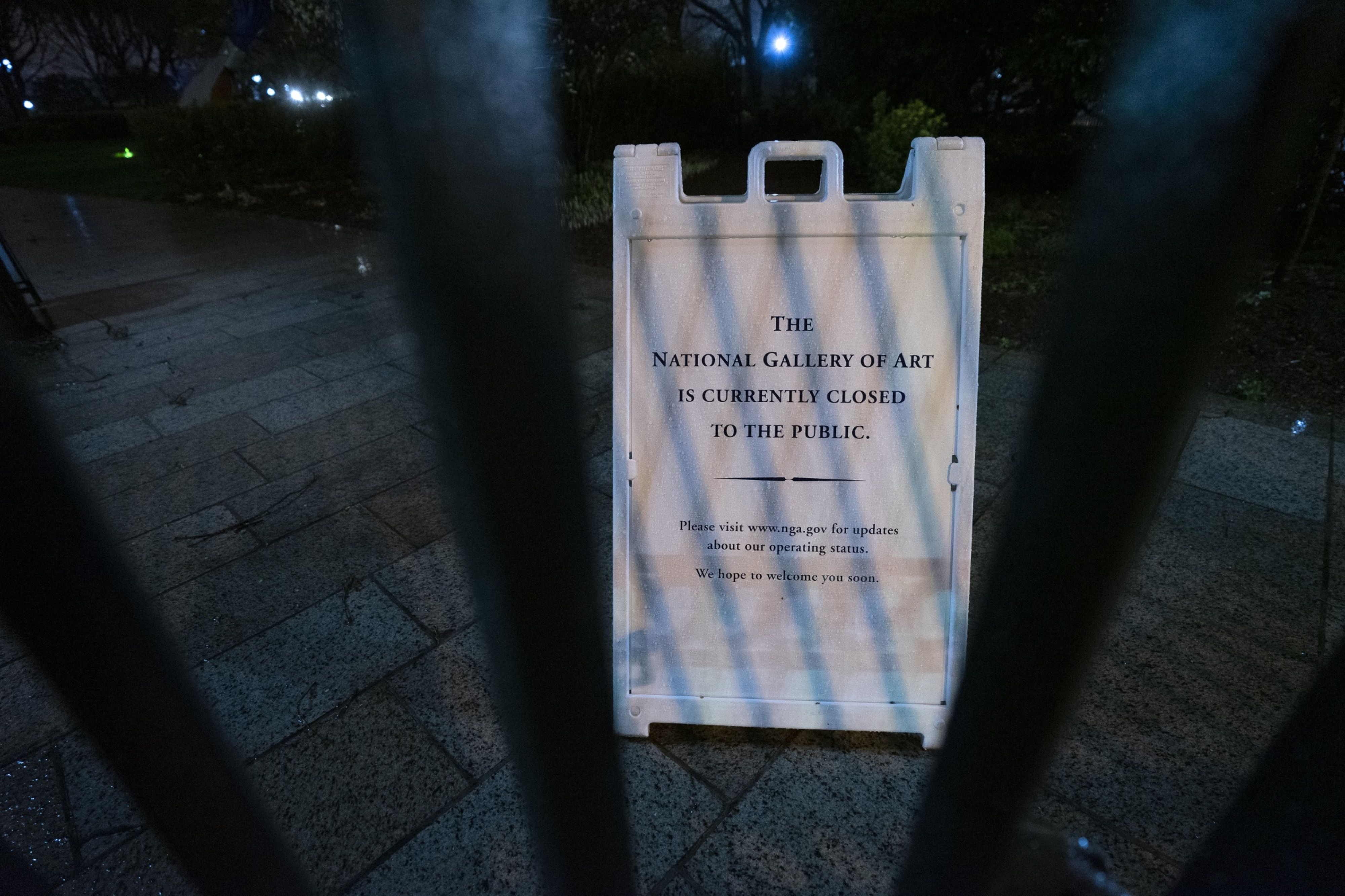
He did so by tapping into online viewing rooms, which galleries worldwide hope will help mitigate massive revenue shortfalls that are making it harder to cover rent and pay staff. About a third of 236 international galleries don't expect to survive the crisis, according to a survey last month by the Art Newspaper and economist Rachel Pownall.
“I thought it was important for someone like myself to help out younger artists and small galleries,” said Sherman, who's been collecting since 2012. “People are struggling.”
Collectors have been bombarded in recent weeks with offers from dealers, auction specialists and fair organizers seeking to keep clients hooked on art. This month is going to be even busier, starting with the online edition of Frieze New York and several commercial and charity auctions.
Artlogic, which builds online viewing rooms for galleries, said inquiries have increased 60% since mid-March and plans to launch 45 viewing rooms in the next month, with public and private spaces as well as VIP-like events and bespoke design. About 40,000 unique visitors flock to its platforms daily.
Some results have been encouraging. A Swiss collector bought “Homage to the Square” by Josef Albers after the $1.8 million painting appeared on David Zwirner gallery's digital platform for secondary-market works. Buyers pounced on eight new drawings by Rashid Johnson, offered online by Hauser & Wirth, with prices ranging from $45,000 to $75,000. Gagosian gallery's weekly spotlights of one work by an artist -- including Stanley Whitney and Jennifer Guidi -- totaled almost $900,000 in the past month.
Auction houses also have been stepping up their online presence. Sotheby's said it sold $60 million of art and collectibles in March and April, including a George Condo painting for $1.3 million in an online auction.
“It's one big poker game at the moment,” said Jean-Paul Engelen, deputy chairman and worldwide co-head of 20th century and contemporary art at Phillips. “Online is great and the works are selling well, but it's not nearly the volume we are used to.”
Still, that's better than nothing.
“It's all we've got,” said James Barron, who found a buyer for “Mimi,” a 1955 Alice Neel portrait, during the online edition of the Dallas Art Fair in April. It sold at a discount to the $700,000 asking price.
There are limits to buying art sight-unseen. Collectors' confidence often depends on their familiarity with an artist's work, the person selling it and the price. Sherman said he was comfortable spending $3,500 to $25,000 per work, including an $18,000 painting by Woody De Othello from Jessica Silverman Gallery.
He bought from the galleries he knew or those he discovered on Platform, a digital initiative by Zwirner to highlight newer galleries in New York, London and Los Angeles.
But seeking fresh talent without the imprimatur of a blue-chip gallery might be tougher.
“I am not looking at any viewing rooms except for the artists I know and follow,” said Alain Servais, a Brussels-based collector.
Baird Allis, a Chicago attorney who collects Old Masters, had been skeptical of buying works online.
“Pictures always look great in the catalog,” he said. “When you see the painting in person, it often doesn't look the same.”
But then his Sotheby's contact told him about the online sale of the works amassed by Old Master dealer Rafael Valls. He viewed high-resolution images and received detailed condition reports before bidding on a few lots. He won a small Dutch landscape painted in 1627.
“It's a charming, little, decorative painting,” Allis said. “I had a nice spot for it in my office, and the final price was under $10,000.”
More expensive works are a different story.
“For anything more than $25,000,” he said, “I'll get on a plane and see it.”
©2020 Bloomberg L.P.

-
Ten Things I Learnt This Samvat

Patience can be a trap. Cheap stocks can stay cheap. Leverage can wipe you out. What did Samvat 2082 teach us? Niraj Shah writes on 10 lessons from the year gone by.
-
Talking Points This Week: Tech Nerves, FII Buying, And A Faraway Banking Shock
The global markets are not shining this Diwali. The exception in the large markets is, India.
-
Midterm Rally Lasted A Day. The Hard Reality Of A Divided US May Last Two Years | Opinion
Between a contested AI boom, a debt ceiling that arrives in 2027 and a president with every incentive to act alone, the next two years may prove more volatile than the first day's rally suggests.
-
Blue Wave Will Derail the AI Trade but Won't Dismantle the AI Era | Unhedged Position
The Democrats' sweep of the US Congress will see politics collide with economic forces both over the long and short term.
-
It's Time To Take The GST Council's Bet On Trust Global
Payment records can prove India's services exports, and clear, proportionate rules can bring foreign digital sellers into the tax net.
-
Opinion | India at 38: From Innovation Overperformer to Innovation Powerhouse
India now has 453 VC-backed deep science startups, 18 of them late-stage, after 117 percent growth since 2020. Laurus Labs, at USD 9.3 billion, is the most valuable deep science company in any middle-income economy outside China.
-
Navigating Energy Crossroads: S Jaishankar's Call For Diversified Supply Chains At G20 Ministerial Meeting
As geopolitical fault lines continue to test maritime trade routes and commodity flows, Jaishankar's message remains pertinent: true economic resilience requires open markets, protected transit lines, and a genuine commitment to multilateral cooperation rather than coercion.
-
Indians Are Travelling, But Not Every Journey Is A Holiday | The Week In Whys
Pilgrims, patients and working women are the real travellers, and the system hasn't quite caught up with them.
-
Getting To Work Costs Women More | The Reason Why
It is not just about women paying more than men. It is about women paying much more in cities than in villages.









