India’s Power Sector ‘Held Hostage’ By Weak Electricity Providers, Vinayak Chatterjee Says
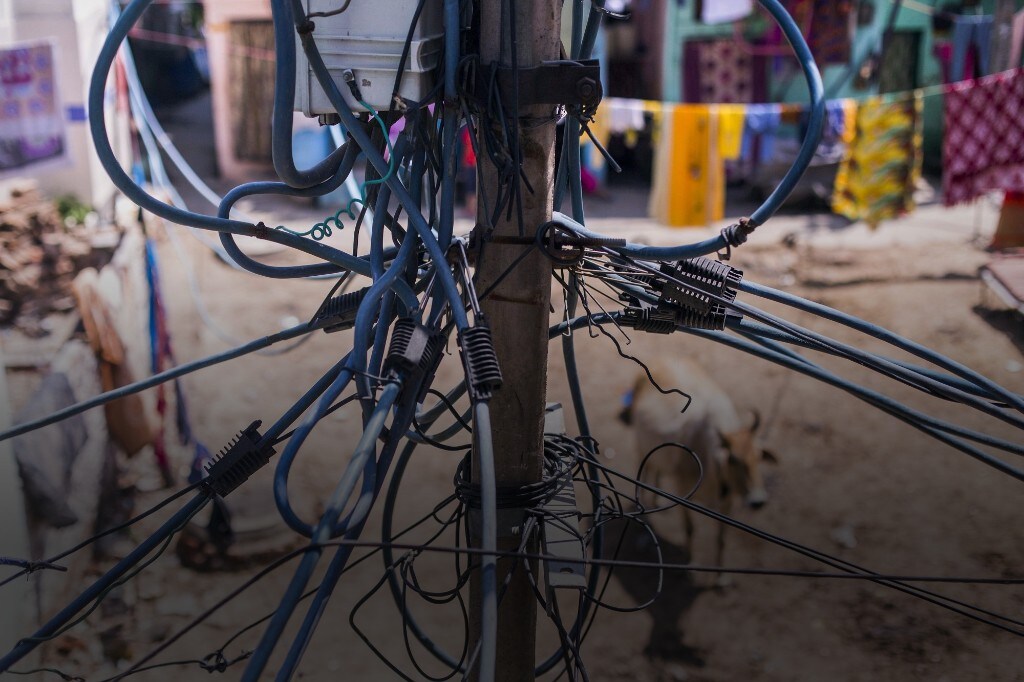
Government-run power distributors in India continue to hold the sector "hostage" as there has been little improvement in their operations despite multiple attempts over the years, Vinayak Chatterjee, chairman of Feedback Infra, told BloombergQuint in an interview. Unless the operational side of these discoms is set right, the country's power generators—whether coal or renewable energy—will continue to face stress, Chatterjee said.
The power sector is a point of stress for the economy and the Indian banking sector. Power accounts are a significant proportion of large stressed assets, which are being resolved through the Insolvency and Bankruptcy code. Analysts have noted that finding buyers and investors for stressed power assets may be difficult. Chatterjee agrees.
Until something drastic is done to actually address, in a surgical strike mode, the distribution sector in the country, I'm afraid that the pessimism on the traditional power sector in terms of power generators will continue to remain.Vinayak Chatterjee, Chairman, Feedback Infra
Stress on power generators often stems from the poor financials of distribution companies who resort to unfair practices, such as renegotiation of power purchase agreements (PPAs). In recent months, some states tried to renegotiate PPAs as merchant power rates had briefly fallen below rates agreed upon as part of long term agreements. Bankers feared that this could lead to another Rs 1.5 lakh crore in loans given to power projects turning bad, BloombergQuint reported in August.
In 2015, the central government launched the UDAY (Ujwal DISCOM Assurance Yojana) scheme for the financial turnaround and revival of electricity distribution companies. This led to a transfer in liabilities from the books of distribution companies to state governments. However, it has not managed to address the operational concerns at distribution companies, Chatterjee said.
Also Read: 34 Stressed Thermal Power Projects Have Rs 1.8 Lakh-Crore Debt
Elaborating on a model that he has suggested to policymakers, Chatterjee said that the private sector should be allowed to run distribution circles. He also recommends setting up a fully-funded National Power Procurement and Distribution Company.
“This institution should pick up the stranded and unutilised capacity of all power plants and distribute it to central government entities such as railway, ports, government buildings and anyone who wants to buy the power,” said Chatterjee. The National Procurement and Distribution Company could also act as a regulator of the discoms - a strict need for the sector, he added.
India's discoms have monopolies in the states they operate in, giving them a stronger hand in getting lower tariffs and renegotiating PPAs. Moreover, these discoms do not fall under the umbrella of the Competition Commission of India which means that there are few checks and balances on their decisions.
Commenting on the recent trend of falling tariffs in the wind and solar energy segments, Chatterjee cautioned on using an approach where the lowest bid is always favored. This can lead to distortions in the market, Chatterjee said.
Wind power tariffs hit a record low of Rs 2.64 per unit in an auction held earlier this month after the auction methodology moved towards competitive bidding. This resulted in a 24 percent drop in tariffs compared to the previous bid tariff of Rs. 3.46 per unit. While the lower tariffs are positive for states, they may prove to be negative for wind turbine generator producers, said brokerage house CLSA in a note on October 6. Wind power tariffs have fallen to levels comparable with solar power tariffs, which are holding at record lows.
Chatterjee suggests moving to a framework where the median bid is taken into account in bidding for infrastructure projects. This, he believes, will help keep irrational pricing at bay.
“We need to move to the median bidding, which automatically reduces the temptation of people to bid at extremes. Forget this business of lowest bid. It is killing many, many sectors. I think you will get a rational market, which optimizes the middle path between the discovery of the lowest bid and keeping sectoral economics in balance,” Chatterjee said.
Also Read: States' Efforts To Renegotiate Tariffs May Hurt Renewable Power Sector

-
Navigating Energy Crossroads: S Jaishankar's Call For Diversified Supply Chains At G20 Ministerial Meeting

As geopolitical fault lines continue to test maritime trade routes and commodity flows, Jaishankar's message remains pertinent: true economic resilience requires open markets, protected transit lines, and a genuine commitment to multilateral cooperation rather than coercion.
-
Indians Are Travelling, But Not Every Journey Is A Holiday | The Week In Whys
Pilgrims, patients and working women are the real travellers, and the system hasn't quite caught up with them.
-
Getting To Work Costs Women More | The Reason Why
It is not just about women paying more than men. It is about women paying much more in cities than in villages.
-
AI Bias In Investing Cannot Be Eliminated, But It Can Be Governed
Framing is a particularly important example as identical financial information presented in terms of gains rather than losses can lead an LLM to reach a different assessment.
-
Joining The Dots | Dark Skies, Steady Diya: Why Hope Holds This Diwali
With war, a weak rupee and foreign outflows weighing on sentiment, policymakers at the NDTV World Summit and market veterans at NDTV Profit Ignite: Diwali Edition offered the same advice: stay invested and filter out the noise.
-
The Curious Case of Equitas Small Finance Bank And A CEO Who Quit For Stock
PN Vasudevan believes persistent investor concerns over a perceived conflict of interest had become a governance overhang on Equitas Small Finance Bank's stock, even as the lender improved profitability and asset quality.
-
Talking Points This Week: AI Cash Burn, A Tiger Comeback And An India That Still Finds Its Own Path
India is not immune to higher oil or tighter global liquidity, yet its earnings base is broader, its domestic policy levers are still available.
-
Foreign Investors Own Half Of HDFC Bank and ICICI Bank. An LTCG Cut Could Matter Most Here
Foreign portfolio investors have US$115 billion parked in HDFC Bank, ICICI Bank. If the government cuts long-term capital gains tax, Jefferies says returning foreign money could land here first.
-
'Never Seen This Level Of Negativity': Sandeep Tandon Says The Next Rally May Be Closer Than You Think
Veteran investor Sandeep Tandon says foreign selling is easing, large-caps are due a comeback and mid-caps are crowded, while he turns positive on gold, power and pharma this Diwali.










