Watch: "We Will Be Lucky If We Get 5% Growth Next Year," Says Raghuram Rajan
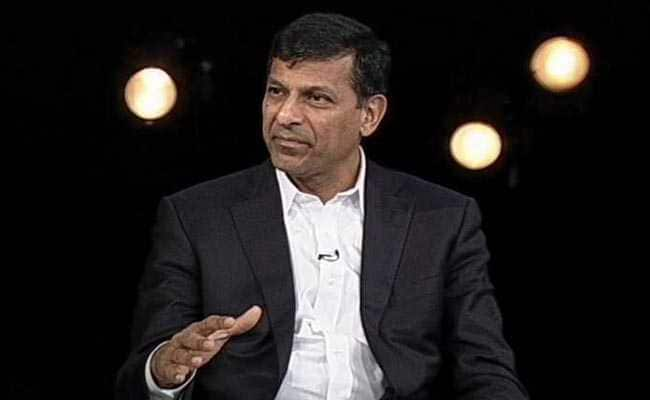
Former Governor of Reserve Bank of India Raghuram Rajan has said he believes the country will be lucky if it achieves 5 per cent growth next year.
The former governor also said next year is going to be more difficult than this one. "Of course, this one had a lot of difficulties with the war and all that. Growth is going to slow in the world. People are raising interest rates that bring down growth," he said.
While talking with Congress leader Rahul Gandhi, the former governor of the Reserve Bank of India said, "India is also going to be hit. India's interest rates have also gone up but Indian exports have been slowing quite a bit."
पूर्व आरबीआई गवर्नर रघुराम राजन ने कहा सरकार आंकड़ों की बाज़ीगरी कर रही है। विकास दर गिरेगी और अगला साल देश के लिए मुश्किल भरा होने वाला है। राहुल गांधी ने उनसे की विभिन्न मुद्दों पर बातचीत।https://t.co/4XyXDD9UOP #BharatJodoYatra pic.twitter.com/0CHnzXJEBc
December 14, 2022"India's inflation problem is more about commodities inflation problem, vegetables' inflation problem. That is also going to be negative for the growth," he said on Wednesday in a candid talk with Rahul Gandhi.
The economist said, "I think we will be lucky if we do 5 per cent next year."
The problem with the growth numbers is that you have to understand what you are measuring with respect to, he said. "We had a terrible quarter last year. And, you measure with respect to that you look very good. So ideally what you do is look before the pandemic in 2019 and look at now."
He said, "If you look at 2022 vis-a-vis 2019, it's about 2 per cent a year. It's too low for us."
While being asked what he attributes this to by Rahul Gandhi, he said, "Pandemic was part of the problem but we were slowing before the pandemic. We had gone from 9 to 5. And, we haven't really generated reforms which will generate growth."
Rahul Gandhi had asked him: "There is one thing happening, 4-5 persons are getting rich and they could go into any businesses and the rest of the people have remained backward. Farmers, the poor have formed a new Bharat. These 4-5 persons' dreams are fulfilled while those of the rest are dashed. What should we do with this inequality?
"This is a big problem. This is not about industries," the economist said, adding, "The upper middle class have gained because they could work during the pandemic whereas the poor would have to go to factories and the factories were closed during the pandemic," he said. "This divide has grown during the pandemic," he said further.
Economist Raghuram Rajan said, "The poorest could get ration. They get everything. These rich didn't suffer any difficulties. Those in between -- the lower middle class -- had to lose a lot. They lost their jobs. Joblessness went up. Debts went up. We should look at them. Because they have suffered a lot."
On the subject of the concentration of wealth among the industrialists, he said we should also look at them. He said, "We couldn't be against capitalism. But we should be fighting for competition. We could be up against monopoly. Monopoly is not good for the country."
He said India's issue was that our exports will also go down and growth would also decrease. "Technological support is needed, credit loans, there should be certainty about policies."
He said there could be change. "If banks know that sales of small businesses are good and the steady revenue stream, they can lend but we need that information to be collected and made available. That is happening now. They are starting to think about all these in the fintech revolution right now. But in India, it needs to be 10 times," he added.
Too many of our small companies don't grow big. They need a path to grow, he said.
"Here is the problem, they get used to some of the benefits of staying small. If you don't pay taxes, officers won't come to them. They stay under the radar scan of the government instead of being helped by the government."
He said, "You (company) stay under the radar until you get a revenue stream. Once your business grows, it should be like I'm going to look at you, I'm going to help you. I'm not going to tax you or make your life miserable. We need that situation."
He added as soon as these businesses get better, the government take away those benefits. "There is no incentive to grow bigger. Why not say, if you grow bigger, you will get these incentives for five years? By the time they are big, they don't care," the economist added.
(Except for the headline, this story has not been edited by NDTV staff and is published from a syndicated feed.)

-
High US Salaries, No Green Card Certainty: The Financial Calculation Facing Indian H-1B Families

The suspension of PERM processing at eight technology employers does not cancel existing H-1B visas. What it does is force a question many Indian families have been avoiding: is the US salary worth tying your career and family plans to one employer?
-
Unhedged Position: Can India See An Indonesia-Style Time Correction?
The Nifty is trading below levels it first clocked in 2024. Is there, then, as I have suggested in the headline, potential that the current time correction drags on painfully for the next three-five, even ten years?
-
Navigating Friction And Energy Realities: An Analysis Of Marco Rubio's October Visit To India
Occurring at a critical juncture marked by stalled trade negotiations and escalating geopolitical pressures over global energy supplies, the visit offers a profound window into modern US-India relations.
-
India Exports Capital. Why Not Export Trusteeship?
The big question, then, is whether India can build an institution that global borrowers, investors, banks, and lawyers can trust, even without an Indian connection.
-
France's Economy & Politics Are In Crisis | The Reason Why
Let's look at how the French economy and politics evolved under Nicolas Sarkozy, Franois Hollande and Emmanuel Macron.
-
You May Inherit The Business. You Must Earn Its Credibility.
Succession tests the founder's ability to share authority as much as it tests the next generation's readiness to assume it.
-
Signing Deals Is One Thing; Making Them Work Is Another | The Week In Whys
Sometimes, things don't turn out as planned. Indian companies have lost some bids to rivals, some projects won't produce until 2030.
-
FOMC Wall, PERM Suspension, Hospital Stocks | Talking Points This Week
A PERM suspension would directly affect green-card sponsorship rather than H-1B visas, so the near-term earnings impact could remain relatively limited. The key question is whether this marks a new phase in US scrutiny of Indian IT.
-
Everything, Everywhere, All At Once: Dalal Street's Week To Forget | Joining The Dots
Visa curbs, a Starlink spat and cancer drug caps: what connects this week's shocks for Indian markets
-
India Is Going Abroad For Critical Minerals. But It May Take Years To Pay Off | The Reason Why
Although India's steps are in the right direction, they remain modest compared with India's growing dependence.









