Walmart’s South Africa Retailer Drops As It Flags Wider Loss
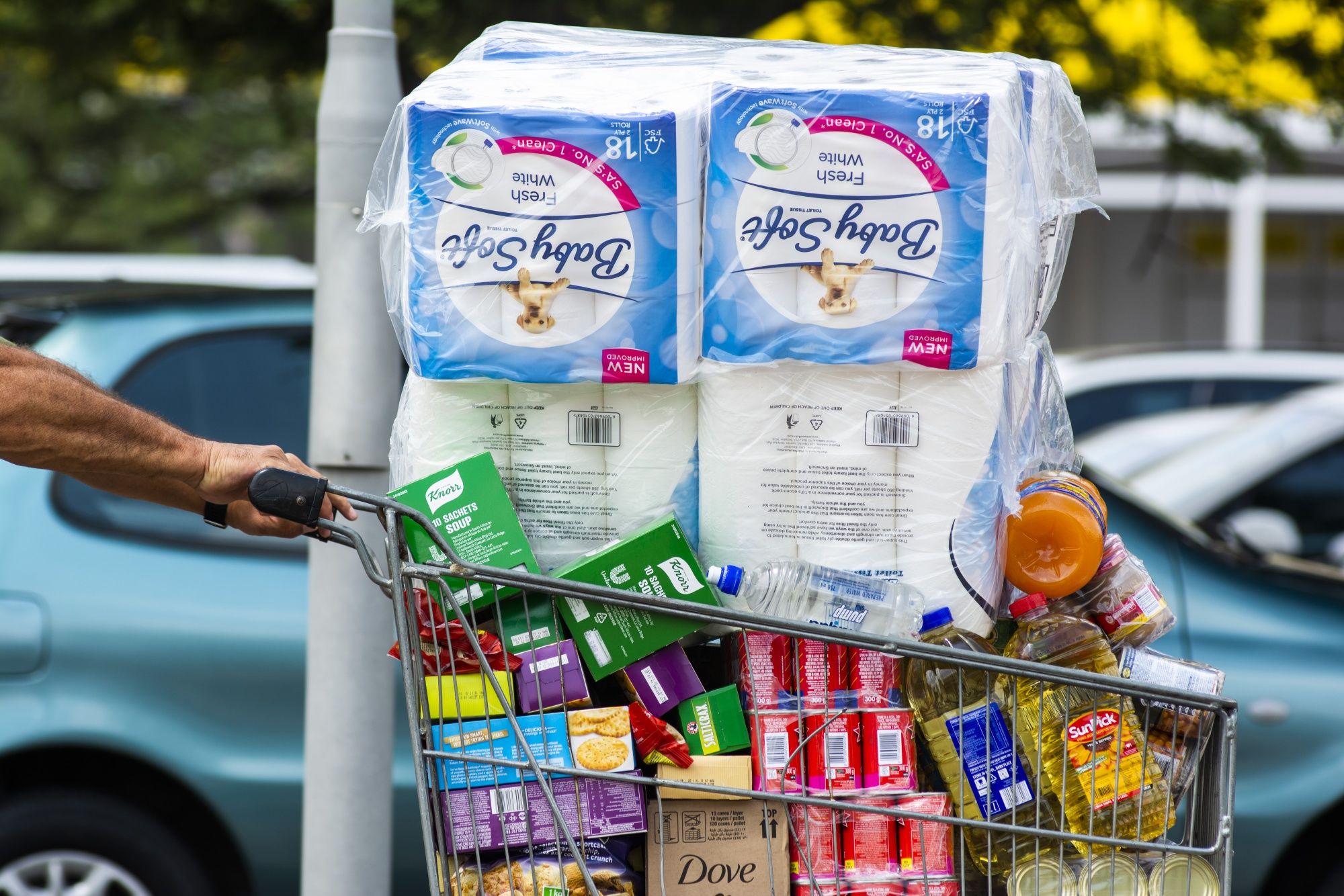
(Bloomberg) -- Massmart Holdings Ltd. fell the most in more than two months in Johannesburg after the Walmart Inc.-owned South African retailer said its first-half loss widened.
Walmart expects to report a headline loss per share, which strips out certain one-time items, of as much as 450.3 South African cents (27 cents) for the six months ended June 26, compared with a loss of 298.8 cents a year earlier, when it announces full results later this month, the company said in a trading update Tuesday.
Chief Executive Officer Mitchell Slape, the Walmart veteran tasked in 2019 to turn around the Johannesburg-based household goods specialist, has faced a string of difficulties ranging from pandemic-induced supply chain problems to a week of deadly South African riots a year ago.
Consumer spending is under pressure from rising interest rates, with the central bank hiking aggressively to counter inflation that hit a 13-year high in June, while frequent nationwide power cuts have slowed economic growth. Slape has already slimmed down the retailer and introduced broad cost cuts. Still, Massmart's Game chain is struggling as cash-strapped shoppers buy fewer high-margin products such as fridges and washing machines.
“The consumer has not had anything like a decent wage increase, bond costs have gone up, food has gone up and the petrol price is 50% higher than what it was a year ago,” Syd Vianello, an independent analyst, said by phone from Johannesburg. “With Massmart's product mix, the higher margin discretionary spend items are affected more. This is the problem the CEO faces on top of trying to fix Game. It couldn't have come at a worse time.”
The stock slumped as much as 9.9%, the biggest intraday drop since May 19, and was 3.5% lower by 12:57 p.m. local time. That brings the decline this year to 42%, compared to the 10-member FTSE/JSE Retailers Index's 7.6% retreat. Massmart also flagged increased finance costs and a one-time lease exit settlement charge during the first six months.
(Updates share prices. An earlier version of this story was corrected to show that full results are due later this month.)
More stories like this are available on bloomberg.com
©2022 Bloomberg L.P.

-
High US Salaries, No Green Card Certainty: The Financial Calculation Facing Indian H-1B Families

The suspension of PERM processing at eight technology employers does not cancel existing H-1B visas. What it does is force a question many Indian families have been avoiding: is the US salary worth tying your career and family plans to one employer?
-
Unhedged Position: Can India See An Indonesia-Style Time Correction?
The Nifty is trading below levels it first clocked in 2024. Is there, then, as I have suggested in the headline, potential that the current time correction drags on painfully for the next three-five, even ten years?
-
Navigating Friction And Energy Realities: An Analysis Of Marco Rubio's October Visit To India
Occurring at a critical juncture marked by stalled trade negotiations and escalating geopolitical pressures over global energy supplies, the visit offers a profound window into modern US-India relations.
-
India Exports Capital. Why Not Export Trusteeship?
The big question, then, is whether India can build an institution that global borrowers, investors, banks, and lawyers can trust, even without an Indian connection.
-
France's Economy & Politics Are In Crisis | The Reason Why
Let's look at how the French economy and politics evolved under Nicolas Sarkozy, Franois Hollande and Emmanuel Macron.
-
You May Inherit The Business. You Must Earn Its Credibility.
Succession tests the founder's ability to share authority as much as it tests the next generation's readiness to assume it.
-
Signing Deals Is One Thing; Making Them Work Is Another | The Week In Whys
Sometimes, things don't turn out as planned. Indian companies have lost some bids to rivals, some projects won't produce until 2030.
-
FOMC Wall, PERM Suspension, Hospital Stocks | Talking Points This Week
A PERM suspension would directly affect green-card sponsorship rather than H-1B visas, so the near-term earnings impact could remain relatively limited. The key question is whether this marks a new phase in US scrutiny of Indian IT.
-
Everything, Everywhere, All At Once: Dalal Street's Week To Forget | Joining The Dots
Visa curbs, a Starlink spat and cancer drug caps: what connects this week's shocks for Indian markets
-
India Is Going Abroad For Critical Minerals. But It May Take Years To Pay Off | The Reason Why
Although India's steps are in the right direction, they remain modest compared with India's growing dependence.









