Wall Street Gains As Traders Bet On Clinton Victory
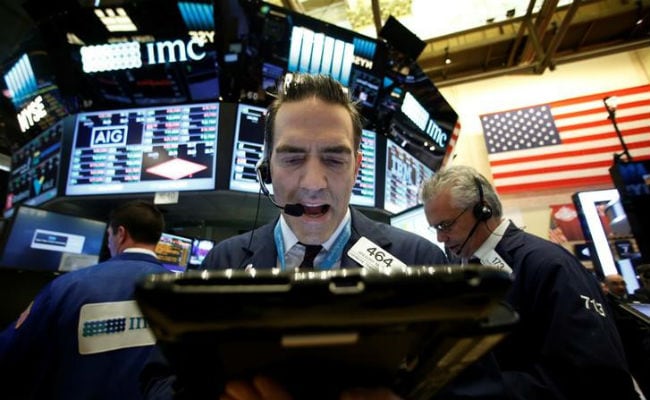
US stocks rose for a second straight session on Tuesday as investors bet Democrat candidate Hillary Clinton would most likely win the US presidential election.
Wall Street sees the former secretary of state as lending greater clarity and stability to the markets, while Republican candidate Donald Trump's stance on foreign policy, trade and immigration is less certain.
Data company VoteCastr, which is providing real-time election information through news outlets, including Slate, showed Ms Clinton with an early lead among voters in Florida, a must-win state for Mr Trump.
Several investors said VoteCastr's data had pushed stock prices higher, although many questioned its accuracy.
Ms Clinton has a 90 per cent chance of defeating Mr Trump, according to the final Reuters/Ipsos States of the Nation poll released on Monday.
"The market's so tense right now, it's like a rubber band that's stretched out. Anything can move it," said Joe Saluzzi, co-manager of trading at Themis Trading in Chatham, New Jersey.
At 3:32 pm ET, the Dow Jones industrial average was up 0.55 per cent at 18,360.44 and the S&P 500 had gained 0.56 per cent to 2,143.53.
The Nasdaq Composite added 0.74 per cent to 5,204.48.
The CBOE Volatility index, dubbed Wall Street's "fear gauge," reversed an early increase and dipped 0.75 after having notched its biggest one-day drop since late June on Monday.
The iShares MSCI Mexico Capped ETF, known of late as the "Trump ETF," climbed 1.97 per cent. The ETF is viewed as a barometer of Mr Trump's chances of winning the election since his policies are considered negative for Mexico.
US stocks opened slightly lower, then turned positive and extended the morning's gains.
"We were dramatically oversold. People were nervous Trump would win," said Michael James, managing director of equity trading at Wedbush Securities in Los Angeles. "There's likely to be additional volatility in both directions between now and the end of the day."
Ms Clinton was on track to win 303 votes in the electoral college to Mr Trump's 235, clearing the 270 needed for victory. She also leads Mr Trump by about 44 per cent to 39 per cent in the popular vote, according to the Reuters/Ipsos poll.
The S&P 500 has surged 2.7 per cent since the FBI said on Sunday it would not press criminal charges against Ms Clinton over her use of a private email server, an announcement seen as improving her chances at the polls.
Shares of Smith & Wesson Holding and Sturm Ruger & Co both rose over 1 percent. Their sales have benefited in the past from fears among gun owners of increased gun control.
Aetna and Anthem jumped more than 2.5 per cent. Both health insurers have gained from the Affordable Care Act, which Ms Clinton has vowed to extend.
Advancing issues outnumbered declining ones on the NYSE by a 1.52-to-1 ratio; on Nasdaq, a 1.39-to-1 ratio favored advancers.
The S&P 500 posted 22 new 52-week highs and 3 new lows; the Nasdaq Composite recorded 58 new highs and 75 new lows.
(This story has not been edited by NDTV staff and is auto-generated from a syndicated feed.)

-
High US Salaries, No Green Card Certainty: The Financial Calculation Facing Indian H-1B Families

The suspension of PERM processing at eight technology employers does not cancel existing H-1B visas. What it does is force a question many Indian families have been avoiding: is the US salary worth tying your career and family plans to one employer?
-
Unhedged Position: Can India See An Indonesia-Style Time Correction?
The Nifty is trading below levels it first clocked in 2024. Is there, then, as I have suggested in the headline, potential that the current time correction drags on painfully for the next three-five, even ten years?
-
Navigating Friction And Energy Realities: An Analysis Of Marco Rubio's October Visit To India
Occurring at a critical juncture marked by stalled trade negotiations and escalating geopolitical pressures over global energy supplies, the visit offers a profound window into modern US-India relations.
-
India Exports Capital. Why Not Export Trusteeship?
The big question, then, is whether India can build an institution that global borrowers, investors, banks, and lawyers can trust, even without an Indian connection.
-
France's Economy & Politics Are In Crisis | The Reason Why
Let's look at how the French economy and politics evolved under Nicolas Sarkozy, Franois Hollande and Emmanuel Macron.
-
You May Inherit The Business. You Must Earn Its Credibility.
Succession tests the founder's ability to share authority as much as it tests the next generation's readiness to assume it.
-
Signing Deals Is One Thing; Making Them Work Is Another | The Week In Whys
Sometimes, things don't turn out as planned. Indian companies have lost some bids to rivals, some projects won't produce until 2030.
-
FOMC Wall, PERM Suspension, Hospital Stocks | Talking Points This Week
A PERM suspension would directly affect green-card sponsorship rather than H-1B visas, so the near-term earnings impact could remain relatively limited. The key question is whether this marks a new phase in US scrutiny of Indian IT.
-
Everything, Everywhere, All At Once: Dalal Street's Week To Forget | Joining The Dots
Visa curbs, a Starlink spat and cancer drug caps: what connects this week's shocks for Indian markets
-
India Is Going Abroad For Critical Minerals. But It May Take Years To Pay Off | The Reason Why
Although India's steps are in the right direction, they remain modest compared with India's growing dependence.









