Volkswagen Sees Sales Slowing As Car Industry Struggles
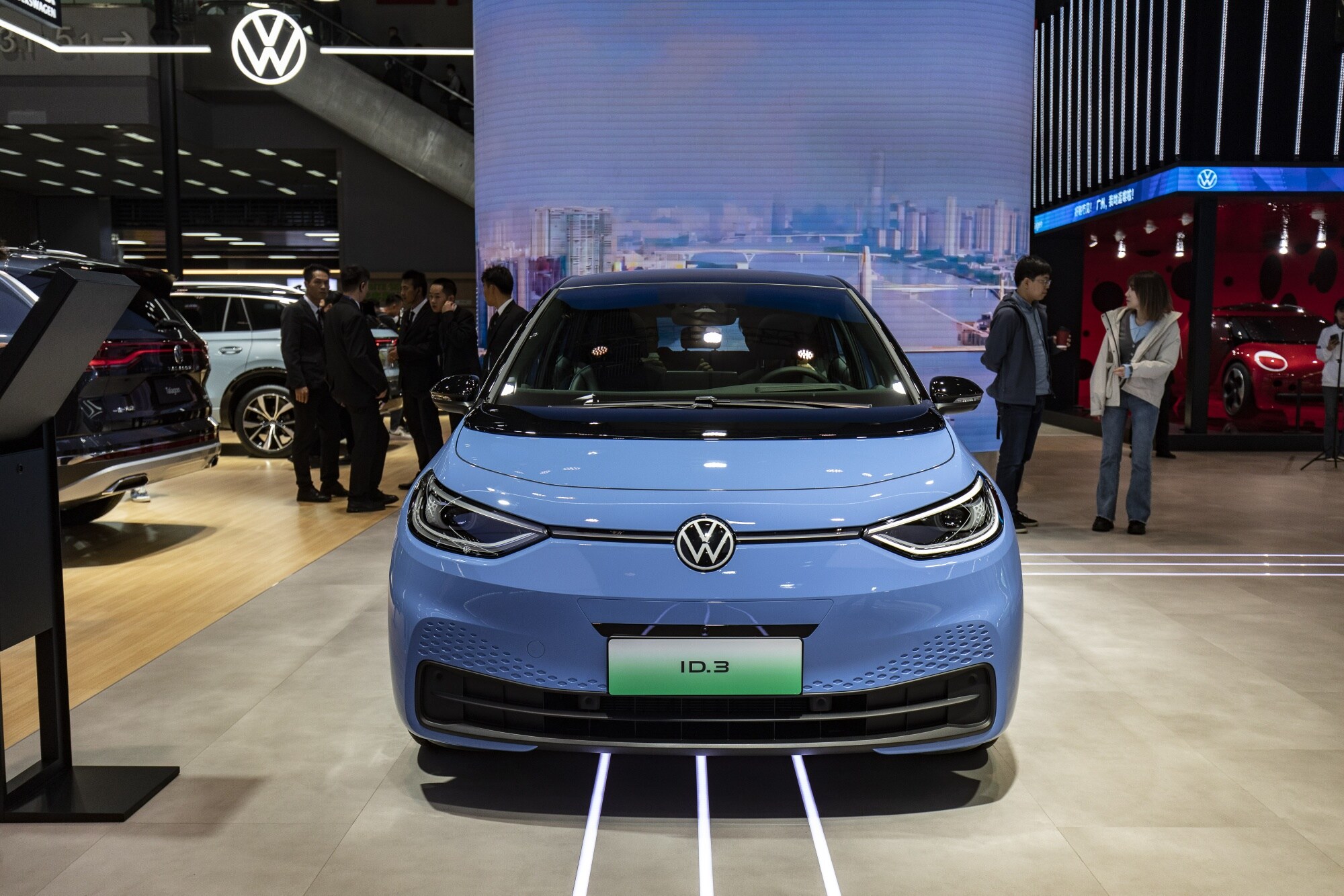
(Bloomberg) -- Volkswagen AG shares fell after the carmaker said sales growth will slow this year as the auto industry grapples with slumping demand for electric vehicles and intensifying competition.
New products will help Volkswagen exceed the €322 billion ($348 billion) it reported for 2023 by as much as 5%, the carmaker said Friday in a pre-release of its results. That's a drop from 15% sales growth last year.
Shares dropped as much as 7.2% before paring losses, contributing to a 6.7% decline in the stock over the past year.
Carmakers have been feeding off pent-up demand following protracted supply-chain problems across the industry, helping offset growing economic challenges. High living and borrowing costs are expected to weigh on consumption this year, while Volkswagen's biggest market China struggles with a property slump and weak business confidence.

“We are confident about 2024, despite the muted economic outlook and intense competition,” Chief Financial Officer Arno Antlitz said in a statement.
Volkswagen is pushing forward with an ambitious savings plan at its namesake brand to raise margins and catch up to rivals like Stellantis NV. That effort is even more urgent with slowing growth for electric cars and competition from cheaper Chinese models, other European carmakers and Tesla Inc.
Read More: Europe's Biggest Car Market to See First EV Slump Since 2016
Volkswagen said Friday it will trim €10 billion off its five-year rolling spending plan, bringing it to €170 billion, citing a tapering off of peak spending on both combustion engine models and EVs.
Fourth quarter revenue reached €87.1 billion, with an operating profit margin of 7%. Adjusted operating profit stayed roughly flat at €22.6 billion, taking into account negative effects from commodity hedging totaling €3.2 billion.
Volkswagen said it was increasing its payout to ordinary and preferred shareholders by €0.30 per share, with the payout ratio of 28% missing the company's previous target of 30%.
(Updates with chart.)
More stories like this are available on bloomberg.com
©2024 Bloomberg L.P.

-
Love, Sex Aur Dhokha: The Audacious Plot To Spy On Jensen Huang

A Taipei dinner, a Singapore chip buyer and a suspected Chinese asset: inside the alleged spy operation that got close to NVIDIA's Jensen Huang.
-
Ten Things I Learnt This Samvat
Patience can be a trap. Cheap stocks can stay cheap. Leverage can wipe you out. What did Samvat 2082 teach us? Niraj Shah writes on 10 lessons from the year gone by.
-
Talking Points This Week: Tech Nerves, FII Buying, And A Faraway Banking Shock
The global markets are not shining this Diwali. The exception in the large markets is, India.
-
Midterm Rally Lasted A Day. The Hard Reality Of A Divided US May Last Two Years | Opinion
Between a contested AI boom, a debt ceiling that arrives in 2027 and a president with every incentive to act alone, the next two years may prove more volatile than the first day's rally suggests.
-
Blue Wave Will Derail the AI Trade but Won't Dismantle the AI Era | Unhedged Position
The Democrats' sweep of the US Congress will see politics collide with economic forces both over the long and short term.
-
It's Time To Take The GST Council's Bet On Trust Global
Payment records can prove India's services exports, and clear, proportionate rules can bring foreign digital sellers into the tax net.
-
Opinion | India at 38: From Innovation Overperformer to Innovation Powerhouse
India now has 453 VC-backed deep science startups, 18 of them late-stage, after 117 percent growth since 2020. Laurus Labs, at USD 9.3 billion, is the most valuable deep science company in any middle-income economy outside China.
-
Navigating Energy Crossroads: S Jaishankar's Call For Diversified Supply Chains At G20 Ministerial Meeting
As geopolitical fault lines continue to test maritime trade routes and commodity flows, Jaishankar's message remains pertinent: true economic resilience requires open markets, protected transit lines, and a genuine commitment to multilateral cooperation rather than coercion.
-
Indians Are Travelling, But Not Every Journey Is A Holiday | The Week In Whys
Pilgrims, patients and working women are the real travellers, and the system hasn't quite caught up with them.









