Volkswagen Plans to Sell First Electric Car in India in 2023
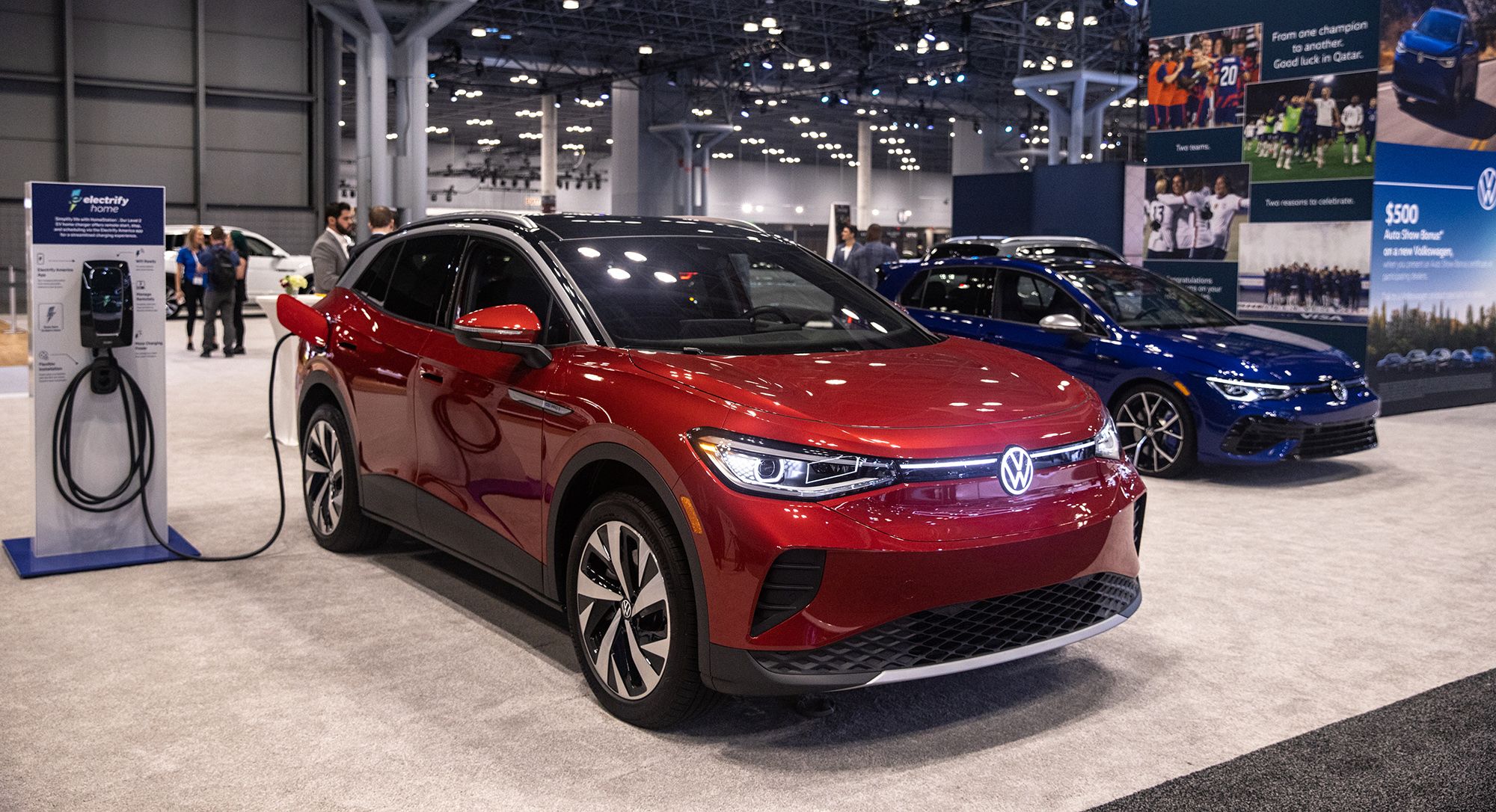
(Bloomberg) -- Volkswagen AG is looking to sell its first electric car, the ID.4 sports utility vehicle, in India in limited quantities next year as the South Asian nation pushes for faster adoption of cleaner vehicles.
The German carmaker will begin testing the ID.4 around September for its technical capabilities and if any adaptations are needed for local weather conditions, Ashish Gupta, brand director at Volkswagen's passenger cars division in India, said in an interview Thursday. Once the testing is over, the company will import a limited number of the electric car next year, he said.
Since the Indian government allows automakers to import only 2,500 cars without homologation, Volkswagen will bring its global electric portfolio into the country within that limit to test the market, Gupta said. While it would like to import all 2,500 units, the availability of vehicles is a concern worldwide due to worsening supply chain constraints, he said.

Volkswagen is expecting to start local assembly of its electric cars in India around 2025 or 2027, Gupta said. At that time, the carmaker will consider making its own batteries -- the costliest component of an EV -- locally in India, he said.
India, the world's fourth-largest automobile market, is seeing a spurt of interest from global carmakers in the race for green mobility. Volkswagen's EV will be up against Honda Motor Co.'s first hybrid electric sedan in India, priced at 1.95 million rupees, or about $25,000. Japanese giant Toyota Motor Corp. has agreed to consider adapting its hydrogen-powered fuel cell car, the Mirai, for local road and weather conditions. Kia Corp. is bringing its first electric car to the country later this year, while Hyundai Motor Co. has vowed to roll out six battery models by 2028 and launch its first electric crossover SUV, the Ioniq 5, this year.
Rising commodity prices have had a significant impact on Volkswagen's margins despite two price hikes to offset inflation, Gupta said. It will raise prices of vehicles further as it doesn't have the capacity to absorb surging input costs that have increased 10%-12% on an average this year, he said.
For many carmakers, including Volkswagen, Ukraine was a provider of specific components, whose supply has been hit because of the war, Gupta said. Russia and Ukraine are major sources of metals such as nickel, which is used to make high-strength steel for automobiles, he said. Volkswagen is making an effort to increase the capacity of existing suppliers and form alternate supply chains. It's offering new variants in cars to counter the shortage of infotainment and display systems, he said.
The supply chain constraints and semiconductor shortage will continue for the next six months at least, he said. The supply squeeze has resulted in higher wait times for Volkswagen's cars. The waiting period for the Taigun small SUV is two months and the backlog is as much as six months for some higher variants, he said.
More stories like this are available on bloomberg.com
©2022 Bloomberg L.P.

-
A New Samvat Wishlist: Inclusive Prosperity And Human Development

India has strengthened its economic foundations through infrastructure, digital access and enterprise. Its next growth chapter must deepen productivity, create better livelihoods and widen participation in prosperity.
-
Love, Sex Aur Dhokha: The Audacious Plot To Spy On Jensen Huang
A Taipei dinner, a Singapore chip buyer and a suspected Chinese asset: inside the alleged spy operation that got close to NVIDIA's Jensen Huang.
-
Ten Things I Learnt This Samvat
Patience can be a trap. Cheap stocks can stay cheap. Leverage can wipe you out. What did Samvat 2082 teach us? Niraj Shah writes on 10 lessons from the year gone by.
-
Talking Points This Week: Tech Nerves, FII Buying, And A Faraway Banking Shock
The global markets are not shining this Diwali. The exception in the large markets is, India.
-
Midterm Rally Lasted A Day. The Hard Reality Of A Divided US May Last Two Years | Opinion
Between a contested AI boom, a debt ceiling that arrives in 2027 and a president with every incentive to act alone, the next two years may prove more volatile than the first day's rally suggests.
-
Blue Wave Will Derail the AI Trade but Won't Dismantle the AI Era | Unhedged Position
The Democrats' sweep of the US Congress will see politics collide with economic forces both over the long and short term.
-
It's Time To Take The GST Council's Bet On Trust Global
Payment records can prove India's services exports, and clear, proportionate rules can bring foreign digital sellers into the tax net.
-
Opinion | India at 38: From Innovation Overperformer to Innovation Powerhouse
India now has 453 VC-backed deep science startups, 18 of them late-stage, after 117 percent growth since 2020. Laurus Labs, at USD 9.3 billion, is the most valuable deep science company in any middle-income economy outside China.
-
Navigating Energy Crossroads: S Jaishankar's Call For Diversified Supply Chains At G20 Ministerial Meeting
As geopolitical fault lines continue to test maritime trade routes and commodity flows, Jaishankar's message remains pertinent: true economic resilience requires open markets, protected transit lines, and a genuine commitment to multilateral cooperation rather than coercion.









