Vodafone Making A Call For Telenor’s India Business?
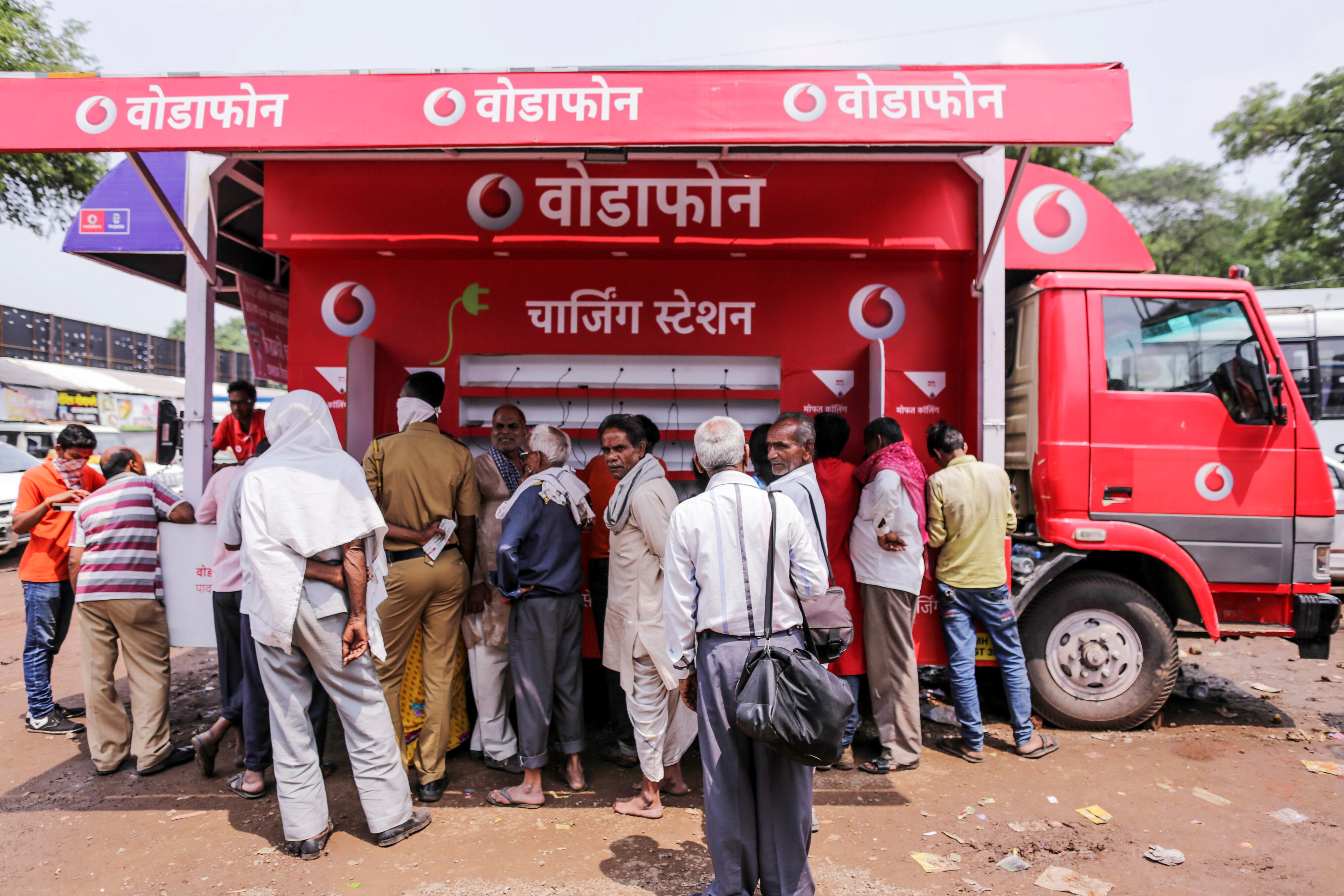
In the recently concluded spectrum auction in October, Vodafone India emerged as the top bidder by committing Rs 20,200 crore. The second largest telecommunications company in India focused on extending its fourth generation (4G) footprint in India, and by the end of the auction, increased its 4G reach to 17 circles from eight circles earlier, according to data provided by the Department of Telecommunications.
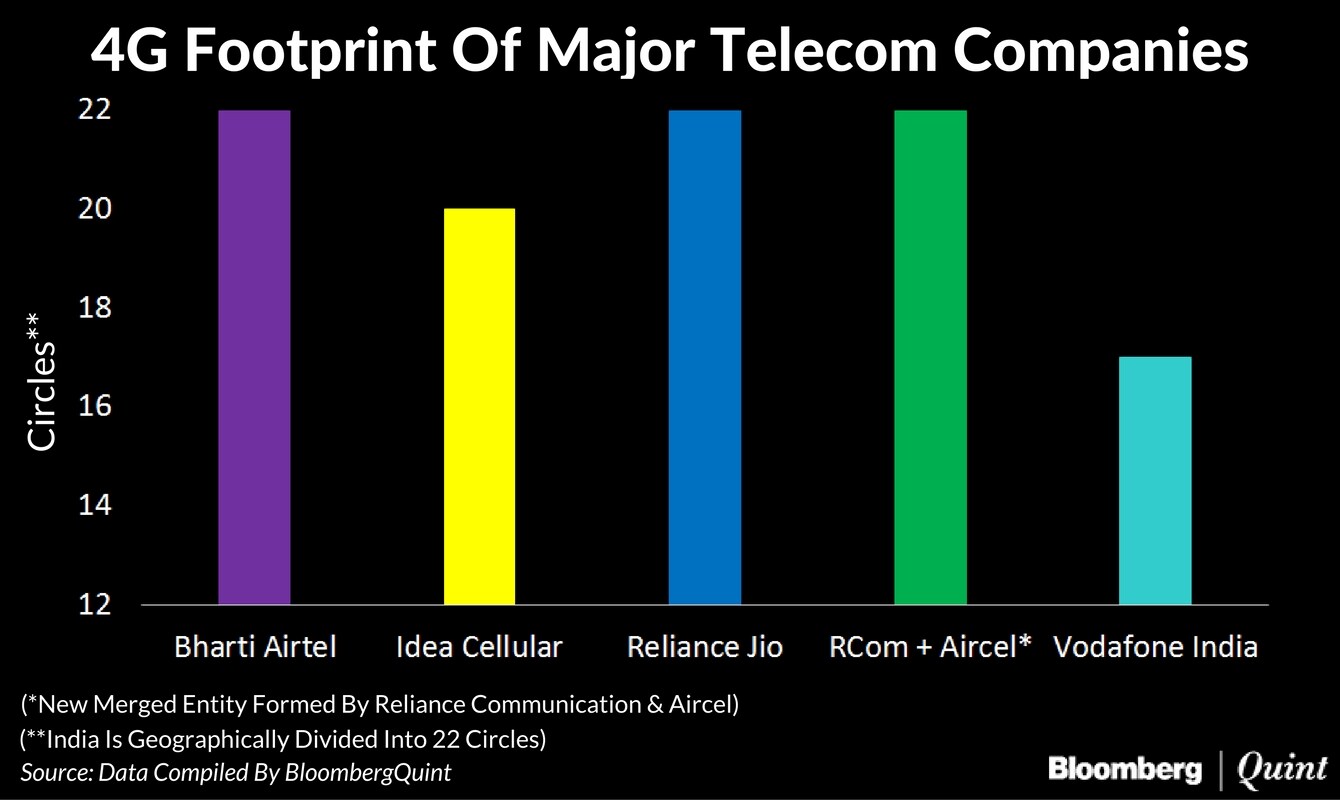
But even though its capacity to provide high speed 4G services has doubled, the company still lags behind peers, data compiled by BloombergQuint shows. Vodafone India still does not have any 4G footprint in five circles – Andhra Pradesh, Tamil Nadu and Chennai, Himachal Pradesh, Bihar, and Jammu and Kashmir, according to an ICICI Securities report.
In Maharashtra, it can provide 4G services only in the 2500 MHz band – in which it holds 20 MHz of spectrum – but not in the 1,800 MHz band. Globally, 1,800 MHz is the preferred band for 4G services to provide high-speed data.
The six circles mentioned above together account for 27 percent of Vodafone India's total revenue, while its aggregate revenue market share in these six circles is in the range of 7 to 30 percent.
It could fill the gap in its 4G spectrum assets by acquiring Telenor India's spectrum, Nitin Soni of Fitch Ratings said in a telephonic interview.
Vodafone India could acquire 1,800 MHz spectrum assets in some Indian circles from Telenor India as Vodafone lacks pan-India 4G spectrum assets and also Telenor may want to exit (India) given the absence of financial flexibility and the required 4G spectrum assets.Nitin Soni, Director-Asian Corporates, Fitch Ratings
In a recent report, Fitch Ratings had said, “Weaker telecom companies such as Telenor India and Tata Teleservices could exit or do mergers and acquisitions to strengthen their competitive position, as they lack financial flexibility and 3G/4G spectrum assets.”
Telenor India did not participate in the latest spectrum auction, signalling a retreat from the Indian market. Sigve Brekke, chief executive office of Telenor, said in a conference call with investors that the company's current spectrum position in India is “not sustainable” and it will look at long-term solutions to create value for shareholders.
In the third quarter of the current year, Telenor India posted a massive loss of approximately Rs 3,229 crore due to impairment of its licences.
The company began operations in India in December 2009 and currently holds 43.4 MHz of fully liberalised spectrum in the 1,800 MHz band in seven circles – Andhra Pradesh, Assam, Bihar, Gujarat, Maharashtra, Uttar Pradesh East and Uttar Pradesh West, valid till 2032/2034.
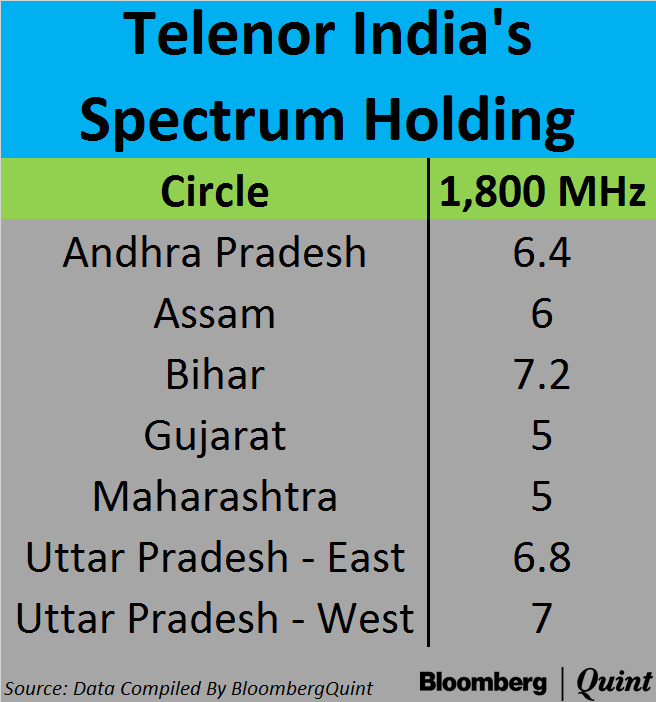
If Vodafone India were to acquire Telenor India's existing spectrum, it would get 4G footprint in the 1,800 MHz band in three circles – Maharashtra, Andhra Pradesh and Bihar. These three circles contribute 16.1 percent of Vodafone India's total revenue.
In the recently concluded spectrum auction, Vodafone India did not win any spectrum in the 1,800 MHz band in these three circles despite some unsold spectrum at the close of the auction.
For any potential acquisition, Vodafone India and Telenor India will have to take approvals from the Department of Telecommunications (DoT) and the Telecom Regulatory Authority of India (TRAI).
According to merger and acquisition (M&A) guidelines in the telecom sector, an M&A is allowed only if the percentage of adjusted gross revenue market share of the merged entity does not exceed 50 percent in any particular circle. The guidelines also specify that the entity should have less than 50 percent of spectrum in each band individually in addition to having less than 25 percent of the combined spectrum across all bands and all circles.
A potential acquisition of Telenor India by Vodafone India will not breach any of the above guidelines, according to BloombergQuint's calculations.
Vodafone India did not respond to our request for a comment. Telenor India refused to comment on the issue in this emailed statement to BloombergQuint:
We do not have any comments beyond what the CEO of Telenor Group said during the Q3 2016 result announcement. Our focus is on day-to-day operations in the market and continuously improving our performance, as is visible in Telenor India's performance reported in last three quarters.Spokesperson, Telenor India

-
Navigating Friction And Energy Realities: An Analysis Of Marco Rubio's October Visit To India

Occurring at a critical juncture marked by stalled trade negotiations and escalating geopolitical pressures over global energy supplies, the visit offers a profound window into modern US-India relations.
-
India Exports Capital. Why Not Export Trusteeship?
The big question, then, is whether India can build an institution that global borrowers, investors, banks, and lawyers can trust, even without an Indian connection.
-
France's Economy & Politics Are In Crisis | The Reason Why
Let's look at how the French economy and politics evolved under Nicolas Sarkozy, Franois Hollande and Emmanuel Macron.
-
You May Inherit The Business. You Must Earn Its Credibility.
Succession tests the founder's ability to share authority as much as it tests the next generation's readiness to assume it.
-
Signing Deals Is One Thing; Making Them Work Is Another | The Week In Whys
Sometimes, things don't turn out as planned. Indian companies have lost some bids to rivals, some projects won't produce until 2030.
-
FOMC Wall, PERM Suspension, Hospital Stocks | Talking Points This Week
A PERM suspension would directly affect green-card sponsorship rather than H-1B visas, so the near-term earnings impact could remain relatively limited. The key question is whether this marks a new phase in US scrutiny of Indian IT.
-
Everything, Everywhere, All At Once: Dalal Street's Week To Forget | Joining The Dots
Visa curbs, a Starlink spat and cancer drug caps: what connects this week's shocks for Indian markets
-
India Is Going Abroad For Critical Minerals. But It May Take Years To Pay Off | The Reason Why
Although India's steps are in the right direction, they remain modest compared with India's growing dependence.
-
When Everyone Has AI, What Gives You An Edge?
India's young workforce is entering an uncertain world of work where powerful AI tools are becoming widely accessible. The advantage will belong to those who combine deep expertise with digital fluency, and the distinctly human capabilities that technology cannot manufacture.
-
Wrong Labels, High Pesticide Residues Holding Back Agri Exports | The Reason Why
India needs stronger domestic food-safety and labelling standards, with best practices becoming part of everyday business for farmers, traders and food companies.










