Vicious Farm Cycle: Can’t Repay Loans, Don’t Get Crop Insurance Cover
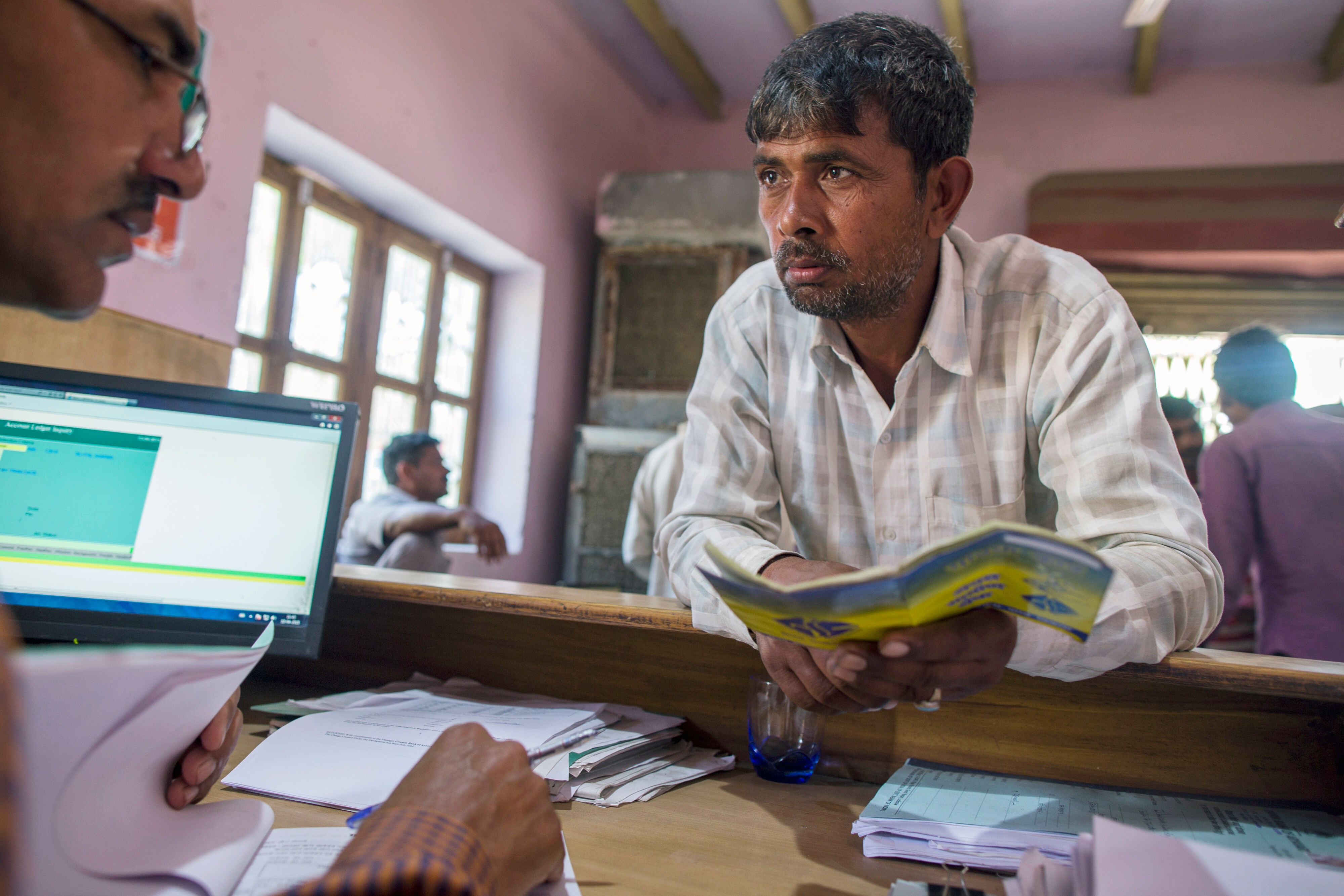
Suresh Dhoble, 55, a small farmer in Osmanabad, Maharashtra, borrowed Rs 1 lakh two years ago to sow soybeans and pulses in his three-hectare farm. But he stopped the bank repayments a year ago, when the state pardoned agricultural loans. “When the government has promised to pay off my entire loan, why should I?”
But Dhoble's decision to default will cost him his crop insurance cover under Prime Minister Narendra Modi's flagship insurance scheme, according to Sunil Kumar, assistant director at the central Department of Agriculture, Co-operation and Farmers Welfare. “The Pradhan Mantri Fasal Bima Yojana doesn't insure substandard loan accounts,” he said. This, as a July 2016 circular issued by the government had mandated compulsory coverage for standard loans.
Nearly 70 lakh loan accounts, said Kumar, have turned bad for a year now, according to an audit conducted by the department. They are mostly from Uttar Pradesh and Maharashtra— the two states ruled by Prime Minister Narendra Modi's Bharatiya Janata Party that has waived agricultural loans. Most of these accounts have defaulted on account of farmers' default in anticipation of a loan waiver, said Kumar and another ministry official.
“Primarily in anticipation of loan waivers, farmers did not repay their loans and their accounts were sub-standard at the time of enrolment under PMFBY. Therefore, compulsory coverage was not extended to them,” Ashish Bhutani, joint secretary in the credit division of agriculture ministry told BloombergQuint in an e-mail response.
Incidentally, the number of farmers covered for the kharif cropping season (July-October), which contributes to more than three-fourths of India's rice production, was the lowest in three years at 3.08 crore in 2017, according to data compiled by the central agriculture department. That effectively reverses the 30 percent increase in insurance coverage in the first year.
“In states where the loan waiver scheme was implemented, coverage decreased drastically,” Bhutani noted citing data on the reduction in the number of farmers insured in kharif season 2017 versus the same period in the previous year.
- Uttar Pradesh: 33 percent
- Maharashtra: 23 percent
- West Bengal: 23 percent
- Bihar: 22 percent
- Rajasthan: 14 percent
- Madhya Pradesh: 11.9 percent
“As elections approach, there will be more political parties announcing such waivers, and as the number of irregular accounts increase in these states the insurance coverage may also get affected,” said Siraj Hussain, former agriculture secretary and senior fellow at the Indian Council for Research on International Economic Relations.
Waiver Effect Counterproductive?
At one level, the lack of insurance cover may be a temporary problem. Whether the default is on genuine grounds or in anticipation of a waiver, the waiver is intended to regularise these accounts making them eligible for insurance cover. But waiver money is not always promptly distributed.
The Maharashtra government is yet to pay eligible farmers despite making the Rs 34,022 crore farm waiver announcement back in June last year. The state government authorised Rs 22,000 crore in payments and banks have deposited Rs 15,000 crore Chief Minister Devendra Fadnavis was quoted as saying in a July 4, 2018 report in the Mint newspaper. That suggests several indebted farmers have entered the 2018 kharif season with no insurance cover in case of crop failure.
“There is a fundamental contradiction between a short-term intervention such as the farm loan waiver and the need to create and expand the practice of agriculture risk-management by way of crop insurance,” said Abheek Barua, chief economist at HDFC Bank. This is not just a fiscal problem “but a problem of perverse and contradictory incentives at the micro-level, none of which would come to the farmers' aid when required”.
“Debt waivers undermine the utility of well-intended schemes like the prime minister's crop insurance plan in two ways,” said Anuj Kumbhat, chief executive officer at the Delhi-based farm research firm Weather Risk Management Services. Those not paying their loans will remain outside its purview until the government disburses funds, resulting in lower enrolment, he said. "Farmers making timely payments would also start opposing insurance as those who didn't repay had their loans pardoned."
It is not clear if this is an unintended defect in the insurance scheme and whether any amendment is on the anvil. BloombergQuint's emailed queries to the agriculture department that implements the crop insurance scheme remained unanswered. The New India Assurance Co., National Insurance Co, Oriental Insurance Co, Agriculture Insurance Company of India Ltd., ICICI Lombard General Insurance Ltd. and HDFC ERGO General Insurance Ltd. were yet to respond to emails.
Bad Loan Burden
Non-performing agriculture loans rose more than 23 percent year-on-year to Rs 60,200 crore in fiscal 2017, according to a Reserve Bank of India report. Data indicates the number increased to Rs 72,000 crore of NPAs as of March this year.
Recently, Karnataka announced a Rs 34,000-crore farm loan write-off taking the net loan waiver announced in India over the past 12 months or so to Rs 1.2 lakh crore. Bank of America Merrill Lynch estimates that loan waivers could touch 2 percent of the GDP amounting to $40 billion (Rs 2.74 lakh crore) in the run up to the 2019 general election.
That's why waivers help farmers only in the short term, according to Ashok Gulati, agricultural economist and former chairman of the Commission for Agriculture Costs and Prices. Eventually, they devour institutions such as banks, cooperative credit societies and self-help groups, he said.
And the credit culture they breed will hurt insurance coverage, according to Hussain. “The government should release the insurance data monthly to improve analysis and awareness about crop insurance in states where loan waivers have already been approved.”
Pardoned loans are a result of a farm distress despite two normal monsoons. The central government recently announced a sharp increase in the minimum support price for kharif crops as Prime Minister Modi aims to double farmers' income by 2022. But the lack of clarity on procurement clouds the benefit of higher prices.
“The incentives are not enough to solve farm distress. We need structural reforms,” said Barua. While overproduction has hurt some crops, MSP could worsen prices in the long run, he said. Lack of storage capacity and food-processing also limit procurement, and small farmers still end up dumping unsold crops.
That's been Dhoble's problem. “Neither the government is buying my produce nor am I able to sell it profitably in the market,” he said. “Where will I then get the money to pay my loan?”
Also Read: No Impact On NPAs Due To Farm Loan Waivers By States, Says Urjit Patel

-
Navigating Energy Crossroads: S Jaishankar's Call For Diversified Supply Chains At G20 Ministerial Meeting

As geopolitical fault lines continue to test maritime trade routes and commodity flows, Jaishankar's message remains pertinent: true economic resilience requires open markets, protected transit lines, and a genuine commitment to multilateral cooperation rather than coercion.
-
Indians Are Travelling, But Not Every Journey Is A Holiday | The Week In Whys
Pilgrims, patients and working women are the real travellers, and the system hasn't quite caught up with them.
-
Getting To Work Costs Women More | The Reason Why
It is not just about women paying more than men. It is about women paying much more in cities than in villages.
-
AI Bias In Investing Cannot Be Eliminated, But It Can Be Governed
Framing is a particularly important example as identical financial information presented in terms of gains rather than losses can lead an LLM to reach a different assessment.
-
Joining The Dots | Dark Skies, Steady Diya: Why Hope Holds This Diwali
With war, a weak rupee and foreign outflows weighing on sentiment, policymakers at the NDTV World Summit and market veterans at NDTV Profit Ignite: Diwali Edition offered the same advice: stay invested and filter out the noise.
-
The Curious Case of Equitas Small Finance Bank And A CEO Who Quit For Stock
PN Vasudevan believes persistent investor concerns over a perceived conflict of interest had become a governance overhang on Equitas Small Finance Bank's stock, even as the lender improved profitability and asset quality.
-
Talking Points This Week: AI Cash Burn, A Tiger Comeback And An India That Still Finds Its Own Path
India is not immune to higher oil or tighter global liquidity, yet its earnings base is broader, its domestic policy levers are still available.
-
Foreign Investors Own Half Of HDFC Bank and ICICI Bank. An LTCG Cut Could Matter Most Here
Foreign portfolio investors have US$115 billion parked in HDFC Bank, ICICI Bank. If the government cuts long-term capital gains tax, Jefferies says returning foreign money could land here first.
-
'Never Seen This Level Of Negativity': Sandeep Tandon Says The Next Rally May Be Closer Than You Think
Veteran investor Sandeep Tandon says foreign selling is easing, large-caps are due a comeback and mid-caps are crowded, while he turns positive on gold, power and pharma this Diwali.
-
Indians Stay With Family, Not In Hotels | The Reason Why
India still lacks enough clean, reliable and affordable hotels for budget-conscious travellers.










