Where Used Cars Have More Lasting Value Than Money
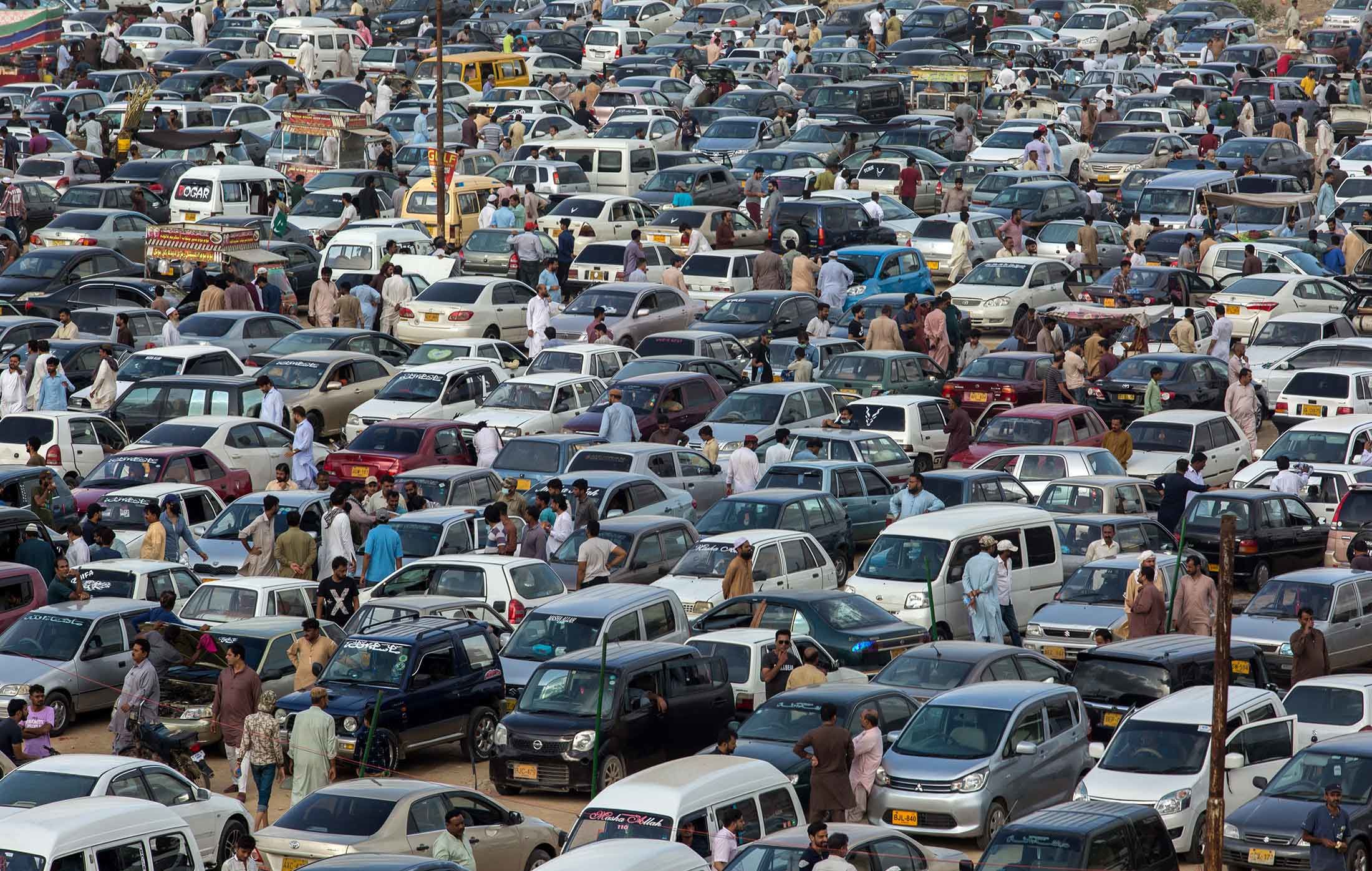
(Bloomberg Markets) -- Pakistan is an unusual place for cars. You can buy a new vehicle, drive it for years, and sell it at a higher price.
Muhammad Rameez, head of sales at Foundation Securities Pvt., says he purchased a new hatchback from the local unit of Suzuki Motor Corp. in 2019. After driving it 12,000 kilometers in Karachi, Rameez got it valued three years later at 65% higher than the original price. A Toyota Corolla purchased new for 2 million rupees ($8,766) five years ago can be sold in the used car market for 3.2 million rupees today, an increase of 60% before adjusting for inflation, according to Karachi-based Optimus Capital Management Pvt.
A falling currency, protectionist market, and high inflation all contribute to the rising value of cars—and a frenzied market for used ones. Middlemen, often referred to as “investors,” buy new automobiles in bulk and sell them at a premium. Pakistani customers paid that surcharge, known locally as “own money,” on 90% of vehicle sales for a total of 170 billion rupees over the last five years, according to the Pakistan Institute of Development Economics.
“The investor's objective is short-term financial gain,” says Muhammad Faisal, president of the automotive division of Lucky Motor Corp., which sells Kias and Peugeots. “When we speak to other global manufacturers, they are amazed that people give extra money to buy a car.”
The alternative can cost more. When Subhan Mohsin Ahmed ordered a 2022 Honda Civic in March, it cost 5.3 million rupees, and he was told delivery would take a year. Since then, the price has shot up 33% and it's expected to rise further. Pakistani contracts require customers to pay a portion of the price at the time of booking and the majority on the day of delivery.
At the U.P. Morr bazaar in the neighborhood of New Karachi, millions of rupees of used cars trade hands every Sunday evening. Tickets to the grounds, which accommodate some 2,000 vehicles, cost about 300 rupees—but some traders make deals on nearby roads as well.
Regular boom-bust cycles have pushed Pakistan into 13 loan programs from the International Monetary Fund since the late 1980s, and per capita income has stayed broadly unchanged. Inflation is among the fastest in Asia and the rupee has dropped almost 300% since 2000.
Stagnant living standards keeps the nation's market small, with sales of 120,000-220,000 cars for most years since 2004. That makes it unfeasible to open large factories. Companies instead import components—as much as 90% of the typical car—and assemble the vehicle locally. Assemblers build cars after receiving orders, instead of in anticipation of demand, so customers often have to wait as long as a year before they receive their delivery.
A similar trend can be seen in other countries that face regular currency depreciation, according to frontier markets investor Tundra Fonder AB.
“In most of our markets, which have relatively stable currencies, we didn't notice this factor,” says Mattias Martinsson, Tundra Fonder's chief investment officer. “But Egypt has similar characteristics to Pakistan's automobile industry.”
When Lucky Group introduced Kia cars to Pakistan in 2019, the company wanted to see the cars on the roads instead of in used-car showrooms. So employees plowed through the list of buyers who visited the showroom to ensure there weren't any investors among them. Muneeb Gulzar, the owner of used-car dealer Sam Automobiles, specializes in selling high-end imported cars such as Audis and Porsches in Karachi. He says he's in no hurry to get them out of the showroom.
“The longer these cars sit over here, the more valuable they get,” he explains.
More stories like this are available on bloomberg.com
©2022 Bloomberg L.P.

-
Love, Sex Aur Dhokha: The Audacious Plot To Spy On Jensen Huang

A Taipei dinner, a Singapore chip buyer and a suspected Chinese asset: inside the alleged spy operation that got close to NVIDIA's Jensen Huang.
-
Ten Things I Learnt This Samvat
Patience can be a trap. Cheap stocks can stay cheap. Leverage can wipe you out. What did Samvat 2082 teach us? Niraj Shah writes on 10 lessons from the year gone by.
-
Talking Points This Week: Tech Nerves, FII Buying, And A Faraway Banking Shock
The global markets are not shining this Diwali. The exception in the large markets is, India.
-
Midterm Rally Lasted A Day. The Hard Reality Of A Divided US May Last Two Years | Opinion
Between a contested AI boom, a debt ceiling that arrives in 2027 and a president with every incentive to act alone, the next two years may prove more volatile than the first day's rally suggests.
-
Blue Wave Will Derail the AI Trade but Won't Dismantle the AI Era | Unhedged Position
The Democrats' sweep of the US Congress will see politics collide with economic forces both over the long and short term.
-
It's Time To Take The GST Council's Bet On Trust Global
Payment records can prove India's services exports, and clear, proportionate rules can bring foreign digital sellers into the tax net.
-
Opinion | India at 38: From Innovation Overperformer to Innovation Powerhouse
India now has 453 VC-backed deep science startups, 18 of them late-stage, after 117 percent growth since 2020. Laurus Labs, at USD 9.3 billion, is the most valuable deep science company in any middle-income economy outside China.
-
Navigating Energy Crossroads: S Jaishankar's Call For Diversified Supply Chains At G20 Ministerial Meeting
As geopolitical fault lines continue to test maritime trade routes and commodity flows, Jaishankar's message remains pertinent: true economic resilience requires open markets, protected transit lines, and a genuine commitment to multilateral cooperation rather than coercion.
-
Indians Are Travelling, But Not Every Journey Is A Holiday | The Week In Whys
Pilgrims, patients and working women are the real travellers, and the system hasn't quite caught up with them.









