US Trails China In The Digital Currency Race. Here's Why
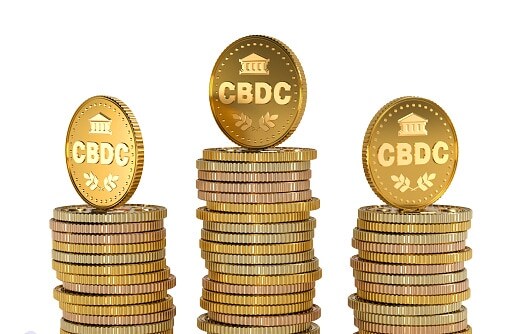
Over 100 countries are currently exploring Central Bank Digital Currencies (CBDCs), representing at least 95 per cent of the global economy.
CBDCs are the digital version of an official currency. A CBDC may or may not be backed by blockchain technology, but it offers a ‘sovereign guarantee' that crypto will not. However, like cryptos, a CBDC is expected to facilitate trust, safety, and liquidity.
According to a recent Deloitte report, the Asia Pacific region has been the “frontrunners” in CBDC projects. “Seven out of the top 10 CBDC projects are being conducted in the APAC region alone,” it noted.
China became the first major economy to launch a digital currency in 2021, while several developing countries are in various stages of experimentation.
As much as CBDC adoption is the story of developing countries gaining the first-mover advantage, it is also the story of at least one economic powerhouse missing out – the United States.
The US came out with its first comprehensive framework on digital assets (read CBDCs) in September 2022.
While analysing the benefits and downsides of a US CBDC, the reports urged the Federal Reserve “to continue its ongoing CBDC research, experimentation, and evaluation.”
On November 15, the New York Fed announced the launch of a proof-of-concept pilot project to see the feasibility of a CBDC, just days after releasing the results of its wholesale CBDC research titled ‘Project Cedar'.
The US' tryst with CBDCs came a fortnight after India's central bank began its pilot in the government securities market.
India is expected to launch a pilot retail version of CBDC in December, while the United States is still in the research phase and, according to the US Treasury Department, “could take years to develop” its CBDC.
The US lagging in CBDC development is surprising, given its pre-eminence as a technology innovator. Interestingly, two US researchers laid the theoretical framework for blockchain technology – Scott Stornetta and Stuart Haber. Satoshi Nakamoto, the presumed inventor of blockchain, referred to them in the first whitepaper.
Among the many factors for the US falling behind in the CBDC race could be the ‘innovator's dilemma', which refers to a dominant incumbent (the US in this case) being left behind due to a lack of investments in disruptive technologies.
“The dominant incumbent now faces a hard choice: whether to adopt or fight against these disruptive technologies—and if adopting, how to do so effectively,” a 2021 Brookings article noted.
The US' cautious approach towards CBDCs is confounding if one factor is China's looming threat dominating the financial system.
As one report in TIME magazine noted, developments in the digital currency space will not only impact the financial world but also bolster the geopolitical ambitions of countries.
With China and the US vying for the position of superpower, digital currencies are expected to play a major role in defining 21st Century trade and finance.
According to reports, China harbours ambitions to use its CBDC – digital yuan –– for global trade payments. China's move, therefore, can potentially undermine the US dollar's international dominance.
Nevertheless, whenever the US launches its own CBDC, it is expected to revamp the global economic system. Anmol Chawla, the co-founder of Taxcryp, said that CBDC would help the US maintain its economic dominance.
“The US wants continued domination of the dollar to protect its status as the world's reserve currency and ward off threats from countries like China,” he said.
Some experts, moreover, back the US' cautious approach towards CBDCs, arguing that the threats of volatility and hacking need to be investigated before a CBDC launch.
“The focus needs to be on the right solution to the market, not the first solution to the market,” said Yoda Regev, CEO of Qonetum Finance.

-
High US Salaries, No Green Card Certainty: The Financial Calculation Facing Indian H-1B Families

The suspension of PERM processing at eight technology employers does not cancel existing H-1B visas. What it does is force a question many Indian families have been avoiding: is the US salary worth tying your career and family plans to one employer?
-
Swiggy vs Eternal: Food Delivery's Two Rivals Are No Longer In The Same Race
Eternal is building a private AI assistant, dark.ai. Swiggy is still working out how to make Instamart pay, with an operating loss of Rs 895 crore in the July-September quarter while Blinkit stayed profitable.
-
Where You Live Shapes How You Get To Work | The Reason Why
Two-wheelers are the most popular way to get to work in India, accounting for nearly 43% of workplace commutes.
-
Unhedged Position: Can India See An Indonesia-Style Time Correction?
The Nifty is trading below levels it first clocked in 2024. Is there, then, as I have suggested in the headline, potential that the current time correction drags on painfully for the next three-five, even ten years?
-
Navigating Friction And Energy Realities: An Analysis Of Marco Rubio's October Visit To India
Occurring at a critical juncture marked by stalled trade negotiations and escalating geopolitical pressures over global energy supplies, the visit offers a profound window into modern US-India relations.
-
India Exports Capital. Why Not Export Trusteeship?
The big question, then, is whether India can build an institution that global borrowers, investors, banks, and lawyers can trust, even without an Indian connection.
-
France's Economy & Politics Are In Crisis | The Reason Why
Let's look at how the French economy and politics evolved under Nicolas Sarkozy, Franois Hollande and Emmanuel Macron.
-
You May Inherit The Business. You Must Earn Its Credibility.
Succession tests the founder's ability to share authority as much as it tests the next generation's readiness to assume it.
-
Signing Deals Is One Thing; Making Them Work Is Another | The Week In Whys
Sometimes, things don't turn out as planned. Indian companies have lost some bids to rivals, some projects won't produce until 2030.
-
FOMC Wall, PERM Suspension, Hospital Stocks | Talking Points This Week
A PERM suspension would directly affect green-card sponsorship rather than H-1B visas, so the near-term earnings impact could remain relatively limited. The key question is whether this marks a new phase in US scrutiny of Indian IT.









