US Starts New Screening Process For Visa Applicants
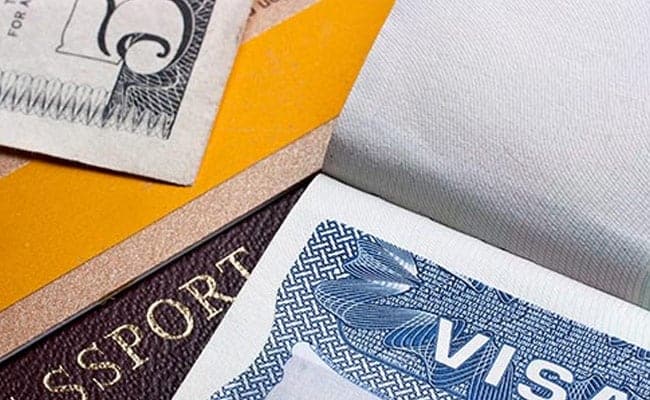
Washington: The Trump administration has enforced a new extreme visa screening process for foreign nationals including those from India under which applicants might be asked to share information regarding their social media accounts, emails and telephone numbers.
The State Department, which issues visas to foreign nationals through its diplomatic missions across the world, said that it started implementing this new change from May 25.
But these additional questions would be asked only in extreme circumstances, the State Department said.
"The additional questions apply to nationals of every country worldwide, including Indian nationals, but only when a consular officer determines that such information is required to confirm identity or conduct more rigorous national security vetting," Will Cocks, a State Department spokesman, told PTI.
Asserting that national security is a top administration priority when adjudicating visa applications, Cocks said every prospective traveller to the US undergoes extensive security screening.
"We are constantly working to find mechanisms to improve our screening processes and to support legitimate travel and immigration to the United States while protecting US citizens," he said.
The State Department took these measures after President Donald Trump signed an executive order in this regard.
"In accordance with the president's March 6, 2017 memorandum on enhancing the screening and vetting of applications for visas, the Department of State has begun collecting additional information from visa applicants worldwide when a consular officer determines that such information is required to confirm identity or conduct more rigorous national security vetting," he said.
Such visa applicants will be asked to provide additional information, including their social media handles, prior passport numbers, additional information about family members, and a longer history of past travel, employment and contact information, Cocks said.
"We already request contact information, travel history, family member information and previous addresses from all visa applicants," he said, adding that collecting additional information from visa applicants whose circumstances suggest a need for further scrutiny strengthens the process for vetting these applicants and confirming their identity.
"We estimate these changes affect only a fraction of one per cent of the more than 13 million annual visa applicants worldwide," Cocks said, adding that the Department began implementing this change on May 25.
"Consular officers will only use this additional information to vet applicants for potential visa ineligibilities under the existing US law. There are no visa ineligibilities under the US law on the basis of race, religion, ethnicity, national origin, political views, gender or sexual orientation," he added.
(Except for the headline, this story has not been edited by NDTV staff and is published from a syndicated feed.)

-
Why Amazon And Flipkart Are Struggling To Beat Meesho In India's Smaller Cities

With 274 million users and lowest-cost logistics, Meesho is defending its value commerce crown against giants like Amazon and Flipkart.
-
High US Salaries, No Green Card Certainty: The Financial Calculation Facing Indian H-1B Families
The suspension of PERM processing at eight technology employers does not cancel existing H-1B visas. What it does is force a question many Indian families have been avoiding: is the US salary worth tying your career and family plans to one employer?
-
Swiggy vs Eternal: Food Delivery's Two Rivals Are No Longer In The Same Race
Eternal is building a private AI assistant, dark.ai. Swiggy is still working out how to make Instamart pay, with an operating loss of Rs 895 crore in the July-September quarter while Blinkit stayed profitable.
-
Where You Live Shapes How You Get To Work | The Reason Why
Two-wheelers are the most popular way to get to work in India, accounting for nearly 43% of workplace commutes.
-
Unhedged Position: Can India See An Indonesia-Style Time Correction?
The Nifty is trading below levels it first clocked in 2024. Is there, then, as I have suggested in the headline, potential that the current time correction drags on painfully for the next three-five, even ten years?
-
Navigating Friction And Energy Realities: An Analysis Of Marco Rubio's October Visit To India
Occurring at a critical juncture marked by stalled trade negotiations and escalating geopolitical pressures over global energy supplies, the visit offers a profound window into modern US-India relations.
-
India Exports Capital. Why Not Export Trusteeship?
The big question, then, is whether India can build an institution that global borrowers, investors, banks, and lawyers can trust, even without an Indian connection.
-
France's Economy & Politics Are In Crisis | The Reason Why
Let's look at how the French economy and politics evolved under Nicolas Sarkozy, Franois Hollande and Emmanuel Macron.
-
You May Inherit The Business. You Must Earn Its Credibility.
Succession tests the founder's ability to share authority as much as it tests the next generation's readiness to assume it.
-
Signing Deals Is One Thing; Making Them Work Is Another | The Week In Whys
Sometimes, things don't turn out as planned. Indian companies have lost some bids to rivals, some projects won't produce until 2030.










