US Retail Sales Beat Forecasts, Defying Calls Of Weaker Consumer
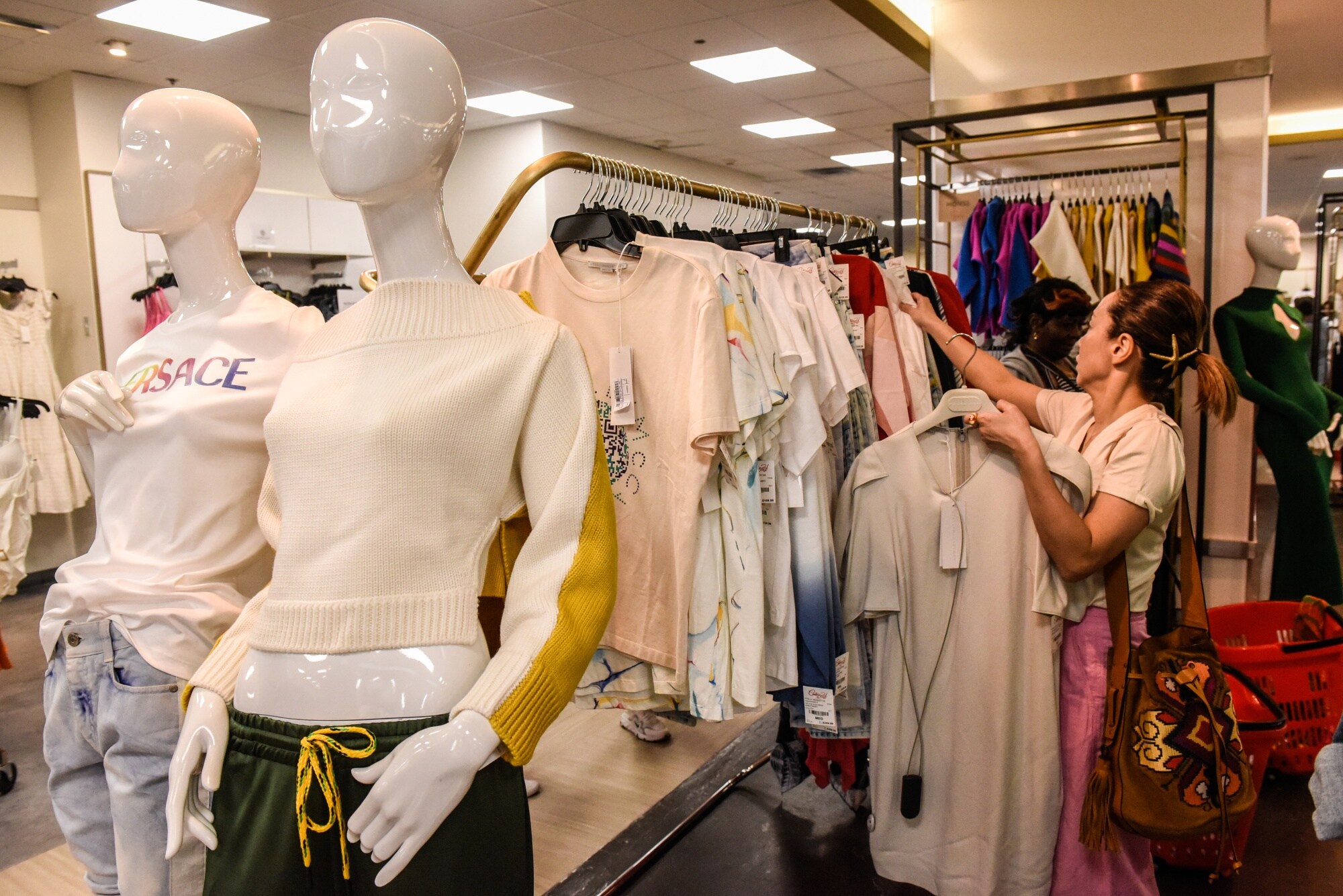
(Bloomberg) -- US retail sales accelerated in July by the most since early 2023 in a broad advance that points to a resilient consumer, even in the face of high prices and borrowing costs.
The value of retail purchases, unadjusted for inflation, increased 1% in July and helped by a sharp snapback in car sales, Commerce Department data showed Thursday. Excluding autos and gasoline stations, sales were up 0.4%.

Ten of the report's 13 categories posted increases. Car sales bounced back strongly after a cyberattack on auto dealerships led to a sizable drop in June. Electronics and appliances also posted solid gains. E-commerce sales rose at a modest clip, potentially reflecting heavy discounting in the period by Amazon.com Inc.'s Prime Day and other promotions from Walmart Inc. and Target Corp.
The report showcases a consumer that's holding up despite higher borrowing costs, a cooling labor market and an uncertain economic outlook. With pandemic savings now largely gone and wage growth cooling, many Americans are increasingly resorting to credit cards and other loans to support their purchases — raising questions about the sustainability of consumer spending, especially as more people are falling behind on payments.
Earlier Thursday, Walmart raised sales guidance for the year while indicating shoppers are becoming more selective and seeking value. US comparable sales exceeded analysts' estimates during the latest quarter and Chief Financial Officer John David Rainey pointed out that the company isn't “seeing any incremental fraying” of customers' financial health.
However, the weaker jobs market — and what it means for consumer spending, the biggest driver of US economic activity — is a key factor in why the Federal Reserve is expected to start cutting interest rates next month. Measures of consumer sentiment have been subdued as the labor market cools and the presidential election nears, overshadowing progress in taming inflation.
Walmart's latest earnings report underscores a more discerning US consumer about discretionary purchases in light of economic uncertainty and high interest rates. Americans are also pulling back on travel, while deferring big home renovations. Retailers spanning Home Depot Inc. to Wayfair Inc. have signaled a weakening spending environment.
Treasury yields and stock-index spiked as the sales report and another showing declining jobless claims pointed to few signs of a weakening economy. Initial applications for US unemployment benefits fell for a second week to the lowest level since early July, potentially allaying concerns of a more marked deterioration in the labor market.
The retail sales report showed so-called control-group sales — which are used to calculate gross domestic product — rose 0.3% in July, marking a third straight advance, though notably softer than June's print. The measure excludes food services, auto dealers, building materials stores and gasoline stations.
Not only are the retail figures unadjusted for inflation, they also largely reflect purchases of goods, which comprise a relatively narrow share of overall consumer outlays. Data due later this month will provide more details on real spending on goods and services in July.
Spending at restaurants and bars, the only service-sector category in the report, picked up to a 0.3% increase.
--With assistance from Chris Middleton and Matthew Boesler.
©2024 Bloomberg L.P.

-
Unhedged Position | Blue Wave Will Derail the AI Trade but Won't Dismantle the AI Era

The Democrats' sweep of the US Congress will see politics collide with economic forces both over the long and short term.
-
It's Time To Take The GST Council's Bet On Trust Global
Payment records can prove India's services exports, and clear, proportionate rules can bring foreign digital sellers into the tax net.
-
Opinion | India at 38: From Innovation Overperformer to Innovation Powerhouse
India now has 453 VC-backed deep science startups, 18 of them late-stage, after 117 percent growth since 2020. Laurus Labs, at USD 9.3 billion, is the most valuable deep science company in any middle-income economy outside China.
-
Navigating Energy Crossroads: S Jaishankar's Call For Diversified Supply Chains At G20 Ministerial Meeting
As geopolitical fault lines continue to test maritime trade routes and commodity flows, Jaishankar's message remains pertinent: true economic resilience requires open markets, protected transit lines, and a genuine commitment to multilateral cooperation rather than coercion.
-
Indians Are Travelling, But Not Every Journey Is A Holiday | The Week In Whys
Pilgrims, patients and working women are the real travellers, and the system hasn't quite caught up with them.
-
Getting To Work Costs Women More | The Reason Why
It is not just about women paying more than men. It is about women paying much more in cities than in villages.
-
AI Bias In Investing Cannot Be Eliminated, But It Can Be Governed
Framing is a particularly important example as identical financial information presented in terms of gains rather than losses can lead an LLM to reach a different assessment.
-
Joining The Dots | Dark Skies, Steady Diya: Why Hope Holds This Diwali
With war, a weak rupee and foreign outflows weighing on sentiment, policymakers at the NDTV World Summit and market veterans at NDTV Profit Ignite: Diwali Edition offered the same advice: stay invested and filter out the noise.
-
The Curious Case of Equitas Small Finance Bank And A CEO Who Quit For Stock
PN Vasudevan believes persistent investor concerns over a perceived conflict of interest had become a governance overhang on Equitas Small Finance Bank's stock, even as the lender improved profitability and asset quality.










