US Orders Tata-Led Air India To Pay $121.5 Million As Passenger Refunds
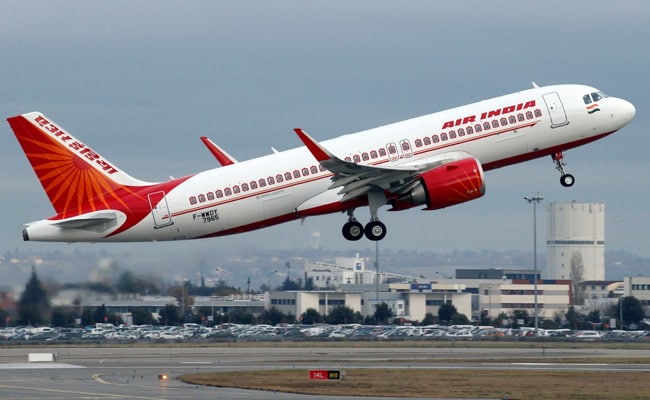
The US has ordered Tata-group owned Air India to pay a whopping $121.5 million as refunds and $1.4 million as penalties for extreme delays in providing refunds to passengers due to the cancellation or change in flights, mostly during the pandemic, officials said.
Air India is among the six airlines that have agreed to cough up a total of over $600 million as refunds, the US Department of Transportation said on Monday.
Air India's policy of “refund on request” is contrary to the Department of Transportation policy, which mandates air carriers to legally refund tickets in the case of cancellation or change in flight, officials said.
The cases in which Air India was asked to pay the refund and agreed to pay the penalty were before the national carrier was acquired by the Tatas.
According to an official investigation, Air India took more than 100 days to process more than half of the 1,900 refund complaints filed with the Department of Transportation for flights that the carrier cancelled or significantly changed.
Air India could not provide the agency with information regarding the time it took to process refunds to passengers who filed complaints and requested refunds directly with the carrier.
“Irrespective of Air India's stated refund policy, in practice Air India did not provide timely refunds. As a result, consumers experienced significant harm from the extreme delay in receiving their refunds,” the US Department of Transportation said.
In addition to Air India, the other airlines that were slapped fines include Frontier, TAP Portugal, Aero Mexico, EI AI, and Avianca.
The Department of Transportation said Air India was ordered to pay $121.5 million in refunds to its passengers and pay $1.4 million as fine.
Frontier was ordered to pay $222 million in refunds and $2.2 million in penalty. TAP Portugal will pay $126.5 million as refund and $1.1 million in penalty; Avianca ($76.8 million in refund and $750,000 in penalty), EI AI ($61.9 million in refund and $900,000 as penalty) and Aero Mexico ($13.6 million in refund and $900,00 as penalty).
In addition to the more than $600 million as refunds that airlines have paid, the Department of Transportation announced that it is assessing more than $7.25 million in civil penalties against these six airlines for extreme delays in providing refunds.
With Monday's fines, the Department's Office of Aviation Consumer Protection has assessed $8.1 million in civil penalties in 2022, the largest amount ever issued in a single year by that office, a media release said.
Under the US law, airlines and ticket agents have a legal obligation to refund consumers if the airline cancels or significantly changes a flight to, from and within the US, and the passenger does not wish to accept the alternative offered.
It is unlawful for an airline to refuse refunds and instead provide vouchers to such consumers, the Department of Transportation said.
“When a flight gets cancelled, passengers seeking refunds should be paid back promptly. Whenever that doesn't happen, we will act to hold airlines accountable on behalf of American travellers and get passengers their money back.” said US Transportation Secretary Pete Buttigieg.
“A flight cancellation is frustrating enough, and you shouldn't also have to haggle or wait months to get your refund,” he said.

-
Unhedged Position: Can India See An Indonesia-Style Time Correction?

The Nifty is trading below levels it first clocked in 2024. Is there, then, as I have suggested in the headline, potential that the current time correction drags on painfully for the next three-five, even ten years?
-
Navigating Friction And Energy Realities: An Analysis Of Marco Rubio's October Visit To India
Occurring at a critical juncture marked by stalled trade negotiations and escalating geopolitical pressures over global energy supplies, the visit offers a profound window into modern US-India relations.
-
India Exports Capital. Why Not Export Trusteeship?
The big question, then, is whether India can build an institution that global borrowers, investors, banks, and lawyers can trust, even without an Indian connection.
-
France's Economy & Politics Are In Crisis | The Reason Why
Let's look at how the French economy and politics evolved under Nicolas Sarkozy, Franois Hollande and Emmanuel Macron.
-
You May Inherit The Business. You Must Earn Its Credibility.
Succession tests the founder's ability to share authority as much as it tests the next generation's readiness to assume it.
-
Signing Deals Is One Thing; Making Them Work Is Another | The Week In Whys
Sometimes, things don't turn out as planned. Indian companies have lost some bids to rivals, some projects won't produce until 2030.
-
FOMC Wall, PERM Suspension, Hospital Stocks | Talking Points This Week
A PERM suspension would directly affect green-card sponsorship rather than H-1B visas, so the near-term earnings impact could remain relatively limited. The key question is whether this marks a new phase in US scrutiny of Indian IT.
-
Everything, Everywhere, All At Once: Dalal Street's Week To Forget | Joining The Dots
Visa curbs, a Starlink spat and cancer drug caps: what connects this week's shocks for Indian markets
-
India Is Going Abroad For Critical Minerals. But It May Take Years To Pay Off | The Reason Why
Although India's steps are in the right direction, they remain modest compared with India's growing dependence.
-
When Everyone Has AI, What Gives You An Edge?
India's young workforce is entering an uncertain world of work where powerful AI tools are becoming widely accessible. The advantage will belong to those who combine deep expertise with digital fluency, and the distinctly human capabilities that technology cannot manufacture.









