U.S. Invests $553 Million In Adani’s Sri Lanka Port To Curb China’s Influence
(Bloomberg) --
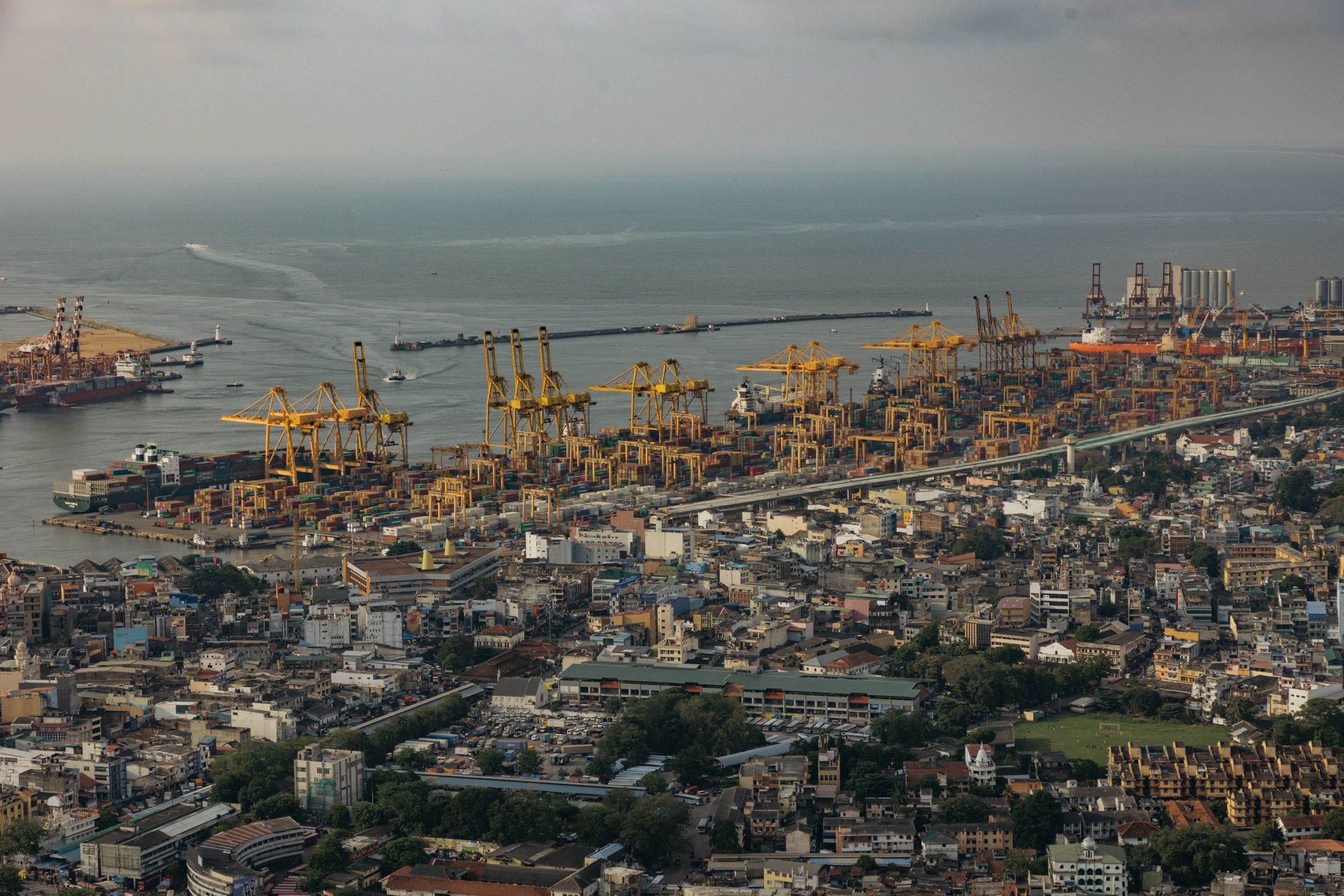
The US will provide $553 million in financing for a port terminal in Sri Lanka's capital being developed by Indian billionaire Gautam Adani, as New Delhi and Washington look to curtail China's influence in South Asia.
The funding from International Development Finance Corp. underscores renewed US and Indian efforts to loosen Beijing's sway over Sri Lanka after Colombo borrowed heavily to splurge on Chinese port and highway projects before its economic meltdown last year. For Adani, US money may offer a stamp of legitimacy after allegations of fraud by short seller Hindenburg Research erased billions from the conglomerate's market value earlier this year.

The deepwater West Container Terminal in Colombo is the US government agency's largest infrastructure investment in Asia, and among its biggest globally. It will bolster Sri Lanka's economic growth and “its regional economic integration, including with India, a key partner to both countries,” DFC said in a statement.
The funding is part of a global acceleration of DFC investments that totaled $9.3 billion in 2023. A US official described the Sri Lanka port financing as emblematic of the US commitment to be more engaged in development projects across the Indo-Pacific.
China had invested about $2.2 billion in the island nation as of the end of last year, its biggest foreign direct investor. US officials have publicly criticized Sri Lanka's little-used southern Hambantota port as unsustainable and part of what it calls China's “debt-trap diplomacy.”
DFC said it will be working with sponsors John Keells Holdings Plc and Adani Ports & Special Economic Zone Ltd., relying on their “local experience and high-quality standards.”
Colombo's port is one of the busiest in the Indian Ocean, given its proximity to the international shipping routes. Nearly half of all container ships pass through its waters. The DFC said it's been operating at more than 90% utilization for two years and needs new capacity.
Adani Group
The US funding may serve as an endorsement for the short seller-stung Adani Group, as well as the controversial port project in which it holds a majority stake. The conglomerate has been fighting a raft of corporate fraud allegations leveled by Hindenburg Research and various media investigations, which it has repeatedly denied.
Its energy and port investments in Sri Lanka were criticized last year by some local lawmakers as opaque and closely tied to New Delhi's interests. The Indian billionaire — a long-time supporter of Indian Prime Minister Narendra Modi, who has challenged China in past public speeches — denied these claims, saying the investments addressed Sri Lanka's needs. The US official declined to comment specifically on the allegations, saying only that DFC deployed strict due diligence in selecting projects.

DFC, a development finance agency launched under the Trump administration, was established to aid developing nations while advancing US foreign policy goals. It struggled at first to stake out projects around the world due to the Covid-19 pandemic.
But funding has accelerated in recent years and the agency has helped Washington close the development spending gap with China's much more higher-profile Belt and Road Initiative, according to a new report from the AidData institute at William & Mary in Virginia.
The DFC's funding will create “greater prosperity for Sri Lanka – without adding to sovereign debt – while at the same time strengthening the position of our allies across the region,” said Scott Nathan, the DFC's chief executive officer.
--With assistance from Anusha Ondaatjie.
More stories like this are available on bloomberg.com
©2023 Bloomberg L.P.
Disclaimer: AMG Media Networks Ltd. (AMNL) currently owns 49% stake in Quintillion Business Media Ltd. (QBML), the owner of BQ Prime Brand. AMNL has entered into an MOU to acquire the balance 51% stake in QBML. Post acquisition, QBML will become a wholly owned subsidiary of AMNL.

-
A New Samvat Wishlist: Inclusive Prosperity And Human Development

India has strengthened its economic foundations through infrastructure, digital access and enterprise. Its next growth chapter must deepen productivity, create better livelihoods and widen participation in prosperity.
-
Love, Sex Aur Dhokha: The Audacious Plot To Spy On Jensen Huang
A Taipei dinner, a Singapore chip buyer and a suspected Chinese asset: inside the alleged spy operation that got close to NVIDIA's Jensen Huang.
-
Ten Things I Learnt This Samvat
Patience can be a trap. Cheap stocks can stay cheap. Leverage can wipe you out. What did Samvat 2082 teach us? Niraj Shah writes on 10 lessons from the year gone by.
-
Talking Points This Week: Tech Nerves, FII Buying, And A Faraway Banking Shock
The global markets are not shining this Diwali. The exception in the large markets is, India.
-
Midterm Rally Lasted A Day. The Hard Reality Of A Divided US May Last Two Years | Opinion
Between a contested AI boom, a debt ceiling that arrives in 2027 and a president with every incentive to act alone, the next two years may prove more volatile than the first day's rally suggests.
-
Blue Wave Will Derail the AI Trade but Won't Dismantle the AI Era | Unhedged Position
The Democrats' sweep of the US Congress will see politics collide with economic forces both over the long and short term.
-
It's Time To Take The GST Council's Bet On Trust Global
Payment records can prove India's services exports, and clear, proportionate rules can bring foreign digital sellers into the tax net.
-
Opinion | India at 38: From Innovation Overperformer to Innovation Powerhouse
India now has 453 VC-backed deep science startups, 18 of them late-stage, after 117 percent growth since 2020. Laurus Labs, at USD 9.3 billion, is the most valuable deep science company in any middle-income economy outside China.
-
Navigating Energy Crossroads: S Jaishankar's Call For Diversified Supply Chains At G20 Ministerial Meeting
As geopolitical fault lines continue to test maritime trade routes and commodity flows, Jaishankar's message remains pertinent: true economic resilience requires open markets, protected transit lines, and a genuine commitment to multilateral cooperation rather than coercion.









