US ETF Market Ushers In Active Investing in India, Brazil Stocks
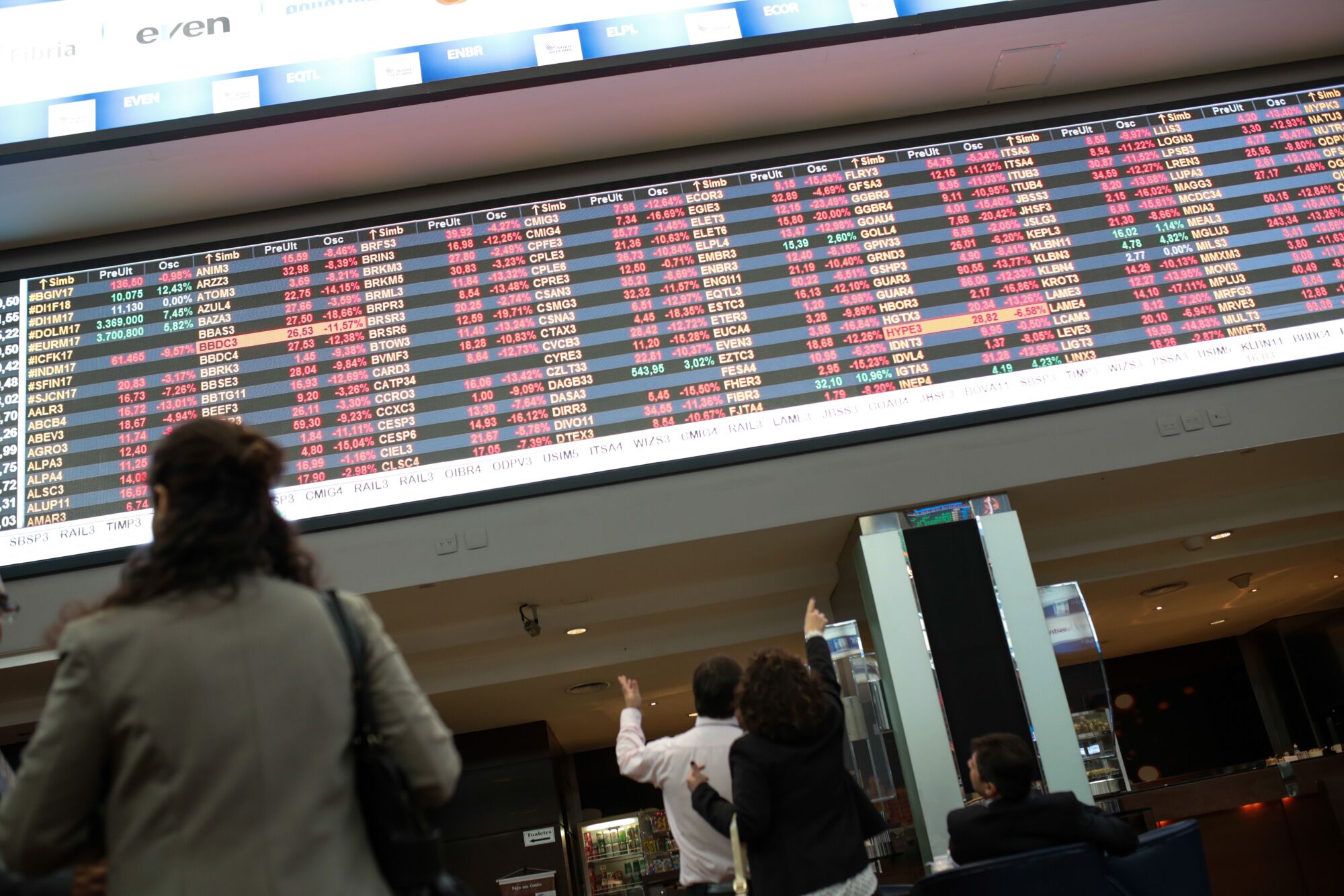
(Bloomberg) -- Investors betting on Brazil and India as the markets least vulnerable to the turmoil in emerging markets now have the opportunity to buy stocks in those countries via actively-managed exchange-traded funds.
The Global X Brazil Active ETF and Global X India Active ETF both launched Friday amid increased clamor for Brazil as it embarks on interest-rate cuts and for India as it overtakes China as the world's fastest growing major economy. The new funds, whose tickers are BRAZ and NDIA respectively, come at a time emerging-market volatility has spiked in the backdrop of an economic meltdown in China, debt distress across Africa, war in eastern Europe and political turmoil in Latin America.
While passive funds tracking indexes in the two countries have proved popular for long, active managers have always sought to highlight how tracking indexes missed out on a large portion of those sprawling markets valued at $3.6 trillion in Mumbai and $810 billion in Sao Paulo. High conviction trading ideas often emerge in these countries among companies not included in the big indexes, which are dominated by state-run companies in Brazil and conglomerates in India, said Malcolm Dorson, who will co-manage the portfolios with Paul Dmitriev.
“Some passive ETFs haven't always been able to beat their benchmarks, whose characteristics create an atmosphere where active management is paramount and helpful,” said Dorson. “We aim on having a high-conviction portfolio of 20-30 names, with significant research behind them.”

Brazil's Ibovespa is up almost 5% this year, gaining five times as much as the MSCI Emerging Markets Index. India's Sensex is also outperforming with a 6.8% advance.
The South American nation, which earlier attracted bond investors and carry traders with one of the world's most aggressive monetary tightening, is now luring equity buyers with an early start to cutting rates. Thus, it is more of a “tactical” opportunity, said Dorson.
Investors seeking a refuge from the high-inflation, high-rate spiral in other emerging economies such as Turkey have begun favoring Latin American countries stealing a march over the Federal Reserve in the new easing cycle. Expectations are also growing for the nation to move forward with fiscal and tax reforms by year-end.
Consumer Economy
Meanwhile, India's 430 million-strong middle class driving a domestic consumption story provides its markets relative immunity from global shocks. The country's exports amount 14% of gross domestic product, and are less affected by the slowdown in China or Fed rate hikes than most other emerging economies.
Economists project the South Asian nation will grow at least 1.5 percentage points faster than China over the next two years. It's also benefiting from so-called friend-shoring opportunities, by cornering some of the high-technology manufacturing business that's moving out of China.
“India is a very sound story for the next few decades,” said Dorson. “It's the best structural story, and not holding it now is the same as not owning China 20 years ago.”
The BRAZ fund currently favors financial stocks such as Banco BTG Pactual SA, B3 SA and Itau Unibanco Holding SA, consumer discretionary names including Lojas Renner SA and Raia Drogasil SA, and oil juniors. The fund is underweight utilities and state-run oil producer Petroleo Brasileiro SA.
The NDIA fund is overweight financials and consumer staples, and underweight materials, utilities and energy. It's betting on names including SBI Life Insurance Co., Shriram Finance Ltd., Nestle India Ltd. and Apollo Hospitals Enterprise Ltd.
Global X has an extensive platform of more than 100 ETF offerings, and have over $40 billion in assets under management. Both BRAZ and NDIA have an 0.75% expense ratio, which is slightly above the average 0.60% expense ratio across currently active actively-managed emerging-market ETFs. The largest passively-managed ETF tracking Indian stocks charges 0.68%.
--With assistance from Srinivasan Sivabalan.
More stories like this are available on bloomberg.com
©2023 Bloomberg L.P.

-
Talking Points This Week: Tech Nerves, FII Buying, And A Faraway Banking Shock

The global markets are not shining this Diwali. The exception in the large markets is, India.
-
Midterm Rally Lasted A Day. The Hard Reality Of A Divided US May Last Two Years | Opinion
Between a contested AI boom, a debt ceiling that arrives in 2027 and a president with every incentive to act alone, the next two years may prove more volatile than the first day's rally suggests.
-
Blue Wave Will Derail the AI Trade but Won't Dismantle the AI Era | Unhedged Position
The Democrats' sweep of the US Congress will see politics collide with economic forces both over the long and short term.
-
It's Time To Take The GST Council's Bet On Trust Global
Payment records can prove India's services exports, and clear, proportionate rules can bring foreign digital sellers into the tax net.
-
Opinion | India at 38: From Innovation Overperformer to Innovation Powerhouse
India now has 453 VC-backed deep science startups, 18 of them late-stage, after 117 percent growth since 2020. Laurus Labs, at USD 9.3 billion, is the most valuable deep science company in any middle-income economy outside China.
-
Navigating Energy Crossroads: S Jaishankar's Call For Diversified Supply Chains At G20 Ministerial Meeting
As geopolitical fault lines continue to test maritime trade routes and commodity flows, Jaishankar's message remains pertinent: true economic resilience requires open markets, protected transit lines, and a genuine commitment to multilateral cooperation rather than coercion.
-
Indians Are Travelling, But Not Every Journey Is A Holiday | The Week In Whys
Pilgrims, patients and working women are the real travellers, and the system hasn't quite caught up with them.
-
Getting To Work Costs Women More | The Reason Why
It is not just about women paying more than men. It is about women paying much more in cities than in villages.
-
AI Bias In Investing Cannot Be Eliminated, But It Can Be Governed
Framing is a particularly important example as identical financial information presented in terms of gains rather than losses can lead an LLM to reach a different assessment.









