US Central Bank Cautious On Policy Tightening, Ties Rate Hike To Economic Rebound
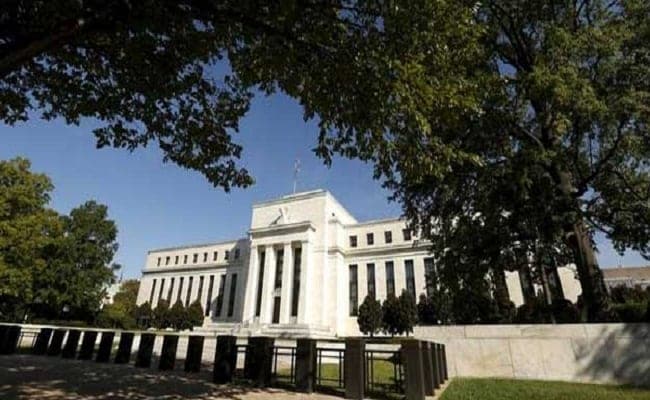
Washington: Federal Reserve policymakers agreed they should hold off on raising interest rates until it was clear a recent US economic slowdown was temporary, though most said a hike was coming soon, minutes from their last policy meeting showed on Wednesday. Nearly all policymakers at the May 2-3 meeting also said they favoured beginning the wind-down of the US central bank's massive holdings of Treasury debt and mortgage-backed securities this year. While investors continue to see a rate increase as highly likely next month, the minutes showed that the Fed's rate-setting committee "generally" believed it hinged on the economy rebounding from its sharp slowdown in the first quarter.
"Members generally judged that it would be prudent to await additional evidence indicating that a recent slowdown in the pace of economic activity had been transitory before taking another step in removing accommodation," according to the minutes, which provided the latest indication of the Fed's heightened caution over policy tightening.
Still, Fed officials made it clear they expected the economy to pick up momentum.
Wall Street briefly pared gains and the US dollar fell against a basket of currencies after the minutes were released. Yields on US Treasury debt turned lower.
"They left June open. I think they would move in June, followed by a fourth-quarter hike," said Matt Toms, chief investment officer of fixed income at Voya Investment Management in Atlanta.
US central bank policymakers also discussed at length the reasons for the first-quarter slowdown and why a measure of underlying price gains also fell further below their 2 percent inflation target, according to the minutes.
A wider group of policymakers including officials who aren't voting on the rate-setting committee this year said they expected a rate increase would be needed soon, and reviewed a Fed staff proposal on reducing the central bank's balance sheet.
The Federal Reserve has more than $4 trillion in Treasury debt and mortgage-backed securities, largely accumulated as part of the effort to stimulate the economy in the wake of the 2007-2009 recession.
The staff proposal, presented as a "possible operational approach" to winding down the balance sheet, entails halting reinvestments of ever-larger amounts of maturing securities.
Under the plan, a limit would be set on the amount of securities allowed to fall off the balance sheet every month. Initially, the cap would be set at a low level, but every three months the Fed would allow deeper cuts.
"Nearly all policymakers expressed a favourable view of this general approach," the minutes said.

-
Talking Points This Week: Tech Nerves, FII Buying, And A Faraway Banking Shock

The global markets are not shining this Diwali. The exception in the large markets is, India.
-
Midterm Rally Lasted A Day. The Hard Reality Of A Divided US May Last Two Years | Opinion
Between a contested AI boom, a debt ceiling that arrives in 2027 and a president with every incentive to act alone, the next two years may prove more volatile than the first day's rally suggests.
-
Blue Wave Will Derail the AI Trade but Won't Dismantle the AI Era | Unhedged Position
The Democrats' sweep of the US Congress will see politics collide with economic forces both over the long and short term.
-
It's Time To Take The GST Council's Bet On Trust Global
Payment records can prove India's services exports, and clear, proportionate rules can bring foreign digital sellers into the tax net.
-
Opinion | India at 38: From Innovation Overperformer to Innovation Powerhouse
India now has 453 VC-backed deep science startups, 18 of them late-stage, after 117 percent growth since 2020. Laurus Labs, at USD 9.3 billion, is the most valuable deep science company in any middle-income economy outside China.
-
Navigating Energy Crossroads: S Jaishankar's Call For Diversified Supply Chains At G20 Ministerial Meeting
As geopolitical fault lines continue to test maritime trade routes and commodity flows, Jaishankar's message remains pertinent: true economic resilience requires open markets, protected transit lines, and a genuine commitment to multilateral cooperation rather than coercion.
-
Indians Are Travelling, But Not Every Journey Is A Holiday | The Week In Whys
Pilgrims, patients and working women are the real travellers, and the system hasn't quite caught up with them.
-
Getting To Work Costs Women More | The Reason Why
It is not just about women paying more than men. It is about women paying much more in cities than in villages.
-
AI Bias In Investing Cannot Be Eliminated, But It Can Be Governed
Framing is a particularly important example as identical financial information presented in terms of gains rather than losses can lead an LLM to reach a different assessment.









