US Banks Must Pay Up To $2 Billion More Per Year To Shield Wall Street: Fed
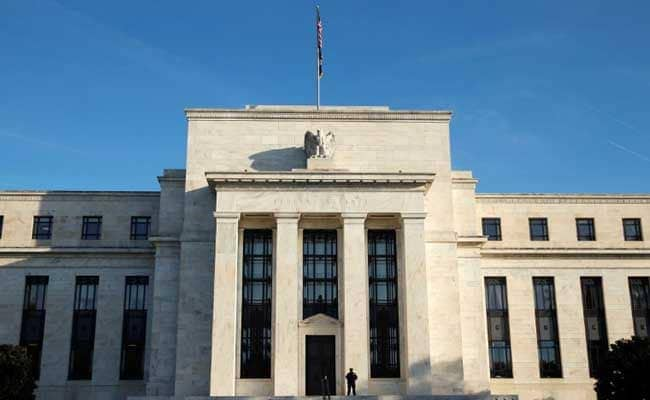
Washington: The largest U.S. banks will have to pay as much as $2 billion more a year to insure against a future market collapse, the U.S. Federal Reserve said on Thursday, as it outlined a new rule designed to further protect the financial system.
The rule demands Wall Street holds more debt that could be converted to shareholder equity if a bank is pushed to bankruptcy. Investor-owned stock is the main buffer against a bank failure.
Half of the eight largest U.S. banks would need to issue roughly $50 billion in fresh debt to satisfy the new standard, known as Total Loss Absorbing Capacity (TLAC), according to Fed estimates.
Taken together, the eight banks' overall annual funding costs are set to increase by between $680 million and $2 billion, the Fed has said.
Fed officials declined to identify the four banks that lack sufficient debt. Wells Fargo & Co said in November it envisioned issuing at least an additional $29 billion in debt to satisfy the rule.
Large banks were already making significant strides to satisfy the new rule, Fed officials said.
The final rule issued on Thursday largely upholds a draft issued early this year, but with a few concessions to the industry.
Much existing debt will be counted towards satisfying the new rule, the Fed said, a process known as 'grandfathering'.
"This grandfathering should significantly reduce the burden of complying with the requirements," the Fed said in a statement.
Besides Wells Fargo, the banks expected to satisfy the new rule are JPMorgan Chase & Co, Bank of America Corp, Citigroup Inc, State Street Corp, Bank of New York Mellon Corp, Morgan Stanley and Goldman Sachs Group Inc.
Some of the largest subsidiaries of foreign banks must also satisfy TLAC.
(This story has not been edited by NDTV staff and is auto-generated from a syndicated feed.)

-
Love, Sex Aur Dhokha: The Audacious Plot To Spy On Jensen Huang

A Taipei dinner, a Singapore chip buyer and a suspected Chinese asset: inside the alleged spy operation that got close to NVIDIA's Jensen Huang.
-
Ten Things I Learnt This Samvat
Patience can be a trap. Cheap stocks can stay cheap. Leverage can wipe you out. What did Samvat 2082 teach us? Niraj Shah writes on 10 lessons from the year gone by.
-
Talking Points This Week: Tech Nerves, FII Buying, And A Faraway Banking Shock
The global markets are not shining this Diwali. The exception in the large markets is, India.
-
Midterm Rally Lasted A Day. The Hard Reality Of A Divided US May Last Two Years | Opinion
Between a contested AI boom, a debt ceiling that arrives in 2027 and a president with every incentive to act alone, the next two years may prove more volatile than the first day's rally suggests.
-
Blue Wave Will Derail the AI Trade but Won't Dismantle the AI Era | Unhedged Position
The Democrats' sweep of the US Congress will see politics collide with economic forces both over the long and short term.
-
It's Time To Take The GST Council's Bet On Trust Global
Payment records can prove India's services exports, and clear, proportionate rules can bring foreign digital sellers into the tax net.
-
Opinion | India at 38: From Innovation Overperformer to Innovation Powerhouse
India now has 453 VC-backed deep science startups, 18 of them late-stage, after 117 percent growth since 2020. Laurus Labs, at USD 9.3 billion, is the most valuable deep science company in any middle-income economy outside China.
-
Navigating Energy Crossroads: S Jaishankar's Call For Diversified Supply Chains At G20 Ministerial Meeting
As geopolitical fault lines continue to test maritime trade routes and commodity flows, Jaishankar's message remains pertinent: true economic resilience requires open markets, protected transit lines, and a genuine commitment to multilateral cooperation rather than coercion.
-
Indians Are Travelling, But Not Every Journey Is A Holiday | The Week In Whys
Pilgrims, patients and working women are the real travellers, and the system hasn't quite caught up with them.









