AI-171 Crash: US Aviation Body FAA Rules Out Further Action on Boeing 787 Fuel Switch Locks
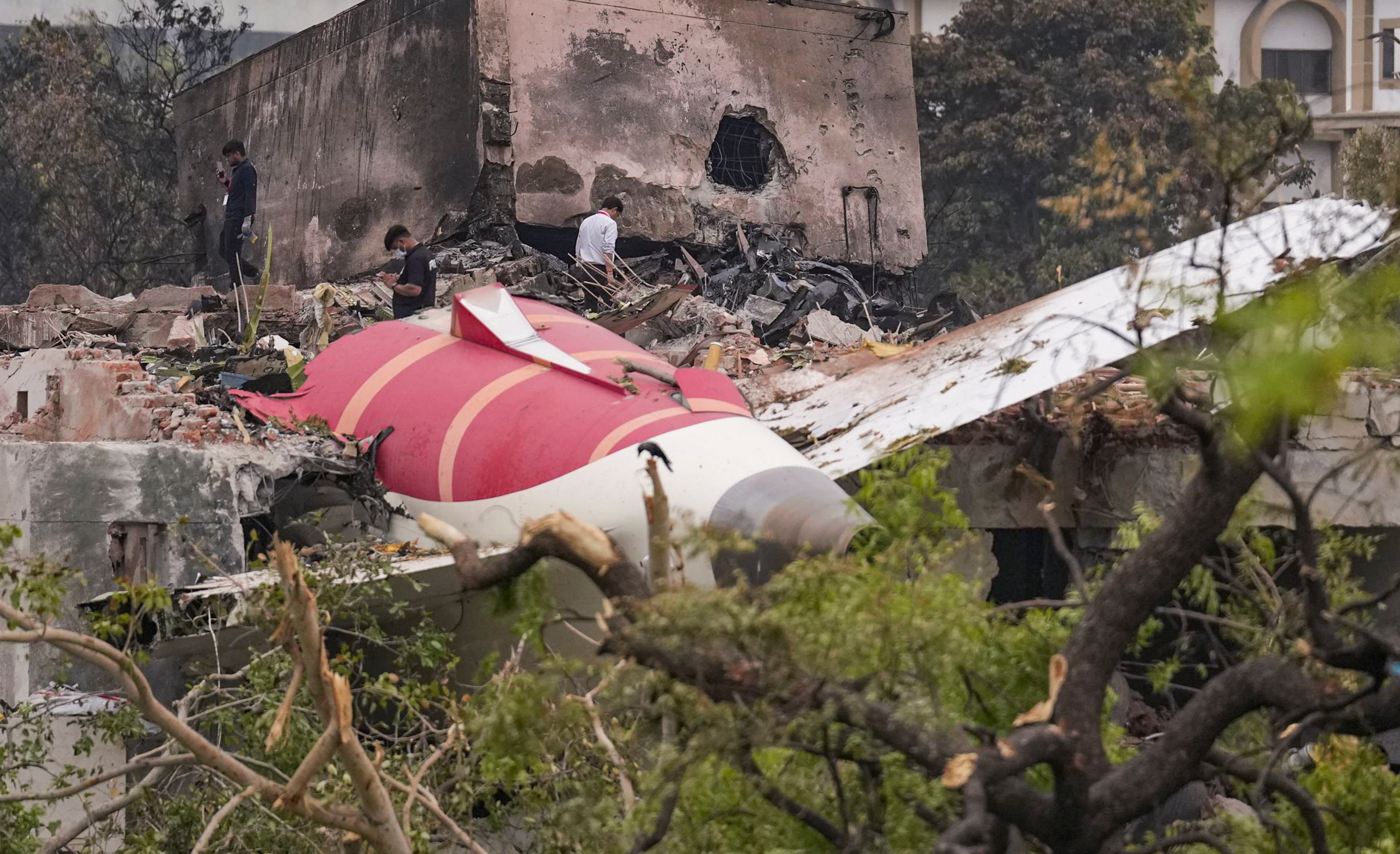
The Federal Aviation Administration has informed its international counterparts that fuel control switch designs, including its locking feature, in Boeing planes like the Dreamliner involved in the June 12 fatal Air India crash are safe, according to a notification reviewed by NDTV Profit
The US aviation safety regulator insists that no airworthiness directive is deemed necessary for Boeing operators at this time. These directives mandate specific actions to be performed on aircraft or aircraft components to correct unsafe conditions that may affect flight safety.
The FAA's notice, addressed to foreign civil aviation authorities on July 11, followed a preliminary investigation report on the AI171 crash, involving a Boeing 787-8, which killed at least 275 people.
One of the key findings of the report was that the twin engines of the ill-fated flight shut down seconds after take-off as fuel supply was cut off. Switches controlling flow of fuel to the aircraft's engines had been moved from “run” to the “cut-off” position, hampering the thrust of the plane, the report said. Neither pilot, however, acknowledged activating the switches.
The cockpit voice recording revealed brief confusion between the pilots, with one asking, “Why did you cut off?” and the other replying, “I didn't.”
The report, prepared by Air Accidents Investigation Bureau, also mentions a FAA's 2018 bulletin that had warned of a potential malfunction of the fuel control switches, manufactured by US-based Honeywell, in a few Boeing models such as the 737s, a smaller model of Boeing aircraft.
The bulletin recommended that carriers operating Boeing models, including the 787, inspect the locking mechanism of the fuel cut-off switches — a step not taken by Air India, according to the AAIB report.
Air India told investigators it did not carry out suggested inspections as they were "advisory and not mandatory".
The scrutiny of maintenance records revealed that the throttle control module was replaced by Air India on the AI171 Dreamliner twice — in 2019 and 2023 even though the reason for the replacement was not linked to the fuel control switch. AAIB also noted that there has been no defect reported pertaining to the fuel control switch since 2023 on the aircraft.
The 2018 bulletin “was based on reports that the fuel control switches were installed with the locking feature disengaged”, the FAA said in a notice.
"Although the fuel control switch design, including the locking feature, is similar on various Boeing airplane models, the FAA does not consider this issue to be an unsafe condition that would warrant an Airworthiness Directive on any Boeing airplane models, including the Model 787."
Boeing referred a request for comment to the FAA, which did not comment beyond the notice.
The AAIB has been investigating the crash in co-ordination with the US National Transportation Safety Board and the UK's Air Accidents Investigation Branch, with the FAA providing technical support. Crash investigators are continuing to seek evidence and gather information, with no actions recommended to Air India, Boeing 787s or users of the GE Aerospace engines that powered Flight AI 171 at this time, the AAIB said.

-
Where You Live Shapes How You Get To Work | The Reason Why

Two-wheelers are the most popular way to get to work in India, accounting for nearly 43% of workplace commutes.
-
High US Salaries, No Green Card Certainty: The Financial Calculation Facing Indian H-1B Families
The suspension of PERM processing at eight technology employers does not cancel existing H-1B visas. What it does is force a question many Indian families have been avoiding: is the US salary worth tying your career and family plans to one employer?
-
Unhedged Position: Can India See An Indonesia-Style Time Correction?
The Nifty is trading below levels it first clocked in 2024. Is there, then, as I have suggested in the headline, potential that the current time correction drags on painfully for the next three-five, even ten years?
-
Navigating Friction And Energy Realities: An Analysis Of Marco Rubio's October Visit To India
Occurring at a critical juncture marked by stalled trade negotiations and escalating geopolitical pressures over global energy supplies, the visit offers a profound window into modern US-India relations.
-
India Exports Capital. Why Not Export Trusteeship?
The big question, then, is whether India can build an institution that global borrowers, investors, banks, and lawyers can trust, even without an Indian connection.
-
France's Economy & Politics Are In Crisis | The Reason Why
Let's look at how the French economy and politics evolved under Nicolas Sarkozy, Franois Hollande and Emmanuel Macron.
-
You May Inherit The Business. You Must Earn Its Credibility.
Succession tests the founder's ability to share authority as much as it tests the next generation's readiness to assume it.
-
Signing Deals Is One Thing; Making Them Work Is Another | The Week In Whys
Sometimes, things don't turn out as planned. Indian companies have lost some bids to rivals, some projects won't produce until 2030.
-
FOMC Wall, PERM Suspension, Hospital Stocks | Talking Points This Week
A PERM suspension would directly affect green-card sponsorship rather than H-1B visas, so the near-term earnings impact could remain relatively limited. The key question is whether this marks a new phase in US scrutiny of Indian IT.
-
Everything, Everywhere, All At Once: Dalal Street's Week To Forget | Joining The Dots
Visa curbs, a Starlink spat and cancer drug caps: what connects this week's shocks for Indian markets









