United States Tells India It is Mulling Caps On H-1B Visas To Deter Data Rules: Report
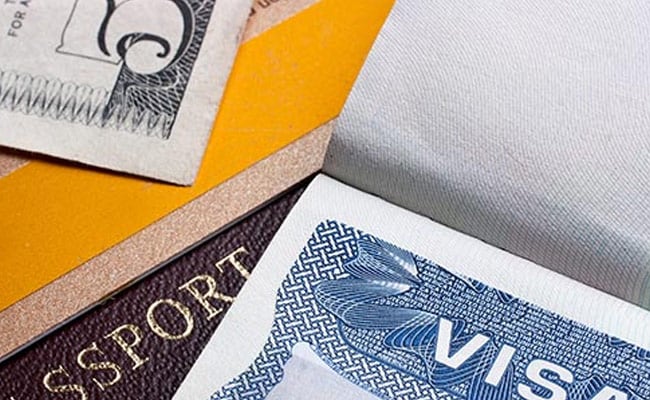
The United States has told India it is considering caps on H-1B work visas for nations that force foreign companies to store data locally, three sources with knowledge of the matter told Reuters, widening the two countries' row over tariffs and trade.
The plan to restrict the popular H-1B visa programme, under which skilled foreign workers are brought to the United States each year, comes days ahead of US Secretary of State Mike Pompeo's visit to New Delhi.
India, which has upset companies such as Mastercard and irked the US government with stringent new rules on data storage, is the largest recipient of these temporary visas, most of them to workers at big Indian technology firms.
The warning comes as trade tensions between the United States and India have resulted in tit-for-tat tariff actions in recent weeks. From Sunday, India imposed higher tariffs on some US goods, days after Washington withdrew a key trade privilege for New Delhi.
Two senior Indian government officials said on Wednesday they were briefed last week on a US government plan to cap H-1B visas issued each year to Indians at between 10 per cent and 15 per cent of the annual quota. There is no current country-specific limit on the 85,000 H-1B work visas granted each year, and an estimated 70 per cent go to Indians.
Both officials said they were told the plan was linked to the global push for "data localisation", in which a country places restrictions on data as a way to gain better control over it and potentially curb the power of international companies. US firms have lobbied hard against data localisation rules around the world.
A Washington-based industry source aware of India-US negotiations also said the United States was deliberating capping the number of H-1B visas in response to global data storage rules. The move, however, was not solely targeted at India, the source said.
"The proposal is that any country that does data localisation, then it (H-1B visas) would be limited to about 15% of the quota. It's being discussed internally in the US government," the person said.
A spokeswoman for the US Trade Representative's office (USTR) referred questions to the State Department, which did not immediately respond to a request for comment.
IT SECTOR
Most affected by any such caps would be India's more than $150 billion IT sector, including Tata Consultancy Services (TCS) and Infosys Ltd, which uses H-1B visas to fly engineers and developers to service clients in the United States, its biggest market. Major Silicon Valley tech companies also hire workers using the visas.
Shares in Indian IT firms fell in early trade on Thursday after the Reuters story. Wipro Ltd fell around 4 per cent, while Infosys and TCS fell more than 2 per cent each. The broader Nifty IT index's 1.8 per cent fall was its biggest intraday percentage decline in over five weeks.
Stratfor analyst Reva Goujon on Twitter called the move "potentially another big blow to the US tech industry amid US-China economic battle," a sentiment echoed on social media by some Indians and their supporters.
India's Ministry of External Affairs has sought an "urgent response" from officials on how such a move by the United States could affect India, said one of the two government officials, who declined to be named due to the sensitivity of the matter.
India's Ministry of External Affairs, as well as the commerce department that is typically involved in such discussions, did not respond to an e-mail seeking comment.
Since last year, the Trump administration has been upset that US companies such as Mastercard and Visa suffer due to regulations in several countries that it says are protectionist and increasingly require companies to store more data locally.
India last year mandated foreign firms to store their payments data "only in India" for supervision, and New Delhi is working on a broad data protection law that would impose strict rules for local processing of data it considers sensitive.
While governments the world over have been announcing stricter data storage rules to better access data in their jurisdictions, critics say restricting cross-border data flows hurts innovation and raises companies' costs.
In March the USTR, in a press note, highlighted "key barriers to digital trade", citing data-flow restrictions in India, China, Indonesia and Vietnam, among others.
At a US-India Business Council event last week, Pompeo said the Trump administration would push for free flow of data across borders, not just to help US companies but also to secure consumers' privacy.

-
Opinion | India at 38: From Innovation Overperformer to Innovation Powerhouse

India now has 453 VC-backed deep science startups, 18 of them late-stage, after 117 percent growth since 2020. Laurus Labs, at USD 9.3 billion, is the most valuable deep science company in any middle-income economy outside China.
-
Navigating Energy Crossroads: S Jaishankar's Call For Diversified Supply Chains At G20 Ministerial Meeting
As geopolitical fault lines continue to test maritime trade routes and commodity flows, Jaishankar's message remains pertinent: true economic resilience requires open markets, protected transit lines, and a genuine commitment to multilateral cooperation rather than coercion.
-
Indians Are Travelling, But Not Every Journey Is A Holiday | The Week In Whys
Pilgrims, patients and working women are the real travellers, and the system hasn't quite caught up with them.
-
Getting To Work Costs Women More | The Reason Why
It is not just about women paying more than men. It is about women paying much more in cities than in villages.
-
AI Bias In Investing Cannot Be Eliminated, But It Can Be Governed
Framing is a particularly important example as identical financial information presented in terms of gains rather than losses can lead an LLM to reach a different assessment.
-
Joining The Dots | Dark Skies, Steady Diya: Why Hope Holds This Diwali
With war, a weak rupee and foreign outflows weighing on sentiment, policymakers at the NDTV World Summit and market veterans at NDTV Profit Ignite: Diwali Edition offered the same advice: stay invested and filter out the noise.
-
The Curious Case of Equitas Small Finance Bank And A CEO Who Quit For Stock
PN Vasudevan believes persistent investor concerns over a perceived conflict of interest had become a governance overhang on Equitas Small Finance Bank's stock, even as the lender improved profitability and asset quality.
-
Talking Points This Week: AI Cash Burn, A Tiger Comeback And An India That Still Finds Its Own Path
India is not immune to higher oil or tighter global liquidity, yet its earnings base is broader, its domestic policy levers are still available.
-
Foreign Investors Own Half Of HDFC Bank and ICICI Bank. An LTCG Cut Could Matter Most Here
Foreign portfolio investors have US$115 billion parked in HDFC Bank, ICICI Bank. If the government cuts long-term capital gains tax, Jefferies says returning foreign money could land here first.










