Union Budget 2017: Two New Schemes Announced To Boost BHIM App
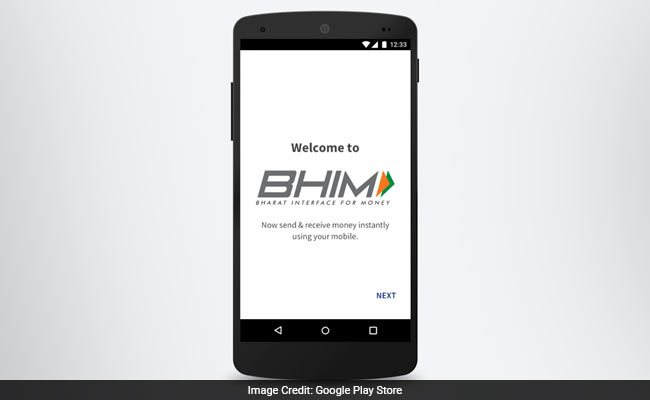
Finance Minister Arun Jaitley today announced two new schemes to boost the government's BHIM or Bharat Interface for Money digital payment app. Digital economy will clean up the system, and weed out corruption and black money, Mr Jaitley said in his Budget speech, announcing an Aadhaar-based payment system to promote digital transactions for people living in remote areas.
"A merchant enabled Aadhaar payment system will be launched shortly. This will specially be beneficial to those who do not have debit cards, mobile wallets or mobile phones," Mr Jaitley said.
He spoke about the BHIM app, launched on December 30 by Prime Minister Narendra Modi as a big push towards digital India after the November notes ban.
"Nearly 125 lakh people have adopted the BHIM app. Government will launch two new schemes - a referral bonus and a cash back scheme for merchants - to promote the use of BHIM," Mr Jaitley said.
The BHIM app, based on Unified Payments Interface (UPI), is available on Google's Play Store. It has been upgraded twice since its launch to include seven new languages besides English and Hindi. The new version has enhanced security features and an improvised customer care mechanism.
Mr Jaitley said a mission will be set up with a target of over 2,500 crore digital transactions for 2017-18 through the United Payments Interface, Aadhaar Pay, Immediate Payment Service and debit cards.
Stating that the government wanted to promote digital economy as an integral part of the government's strategy, the Finance Minister said it would have a transformational impact on the system.
"This, in turn, is expected to energise private investment in the country through lower cost of credit. India is now at the cusp of a massive digital revolution. A shift to digital platform has huge benefits to the common man," he said.
The BHIM app, said the finance minister, will unleash the power of mobile phones for making digital payments and financial inclusion.

-
Ten Things I Learnt This Samvat

Patience can be a trap. Cheap stocks can stay cheap. Leverage can wipe you out. What did Samvat 2082 teach us? Niraj Shah writes on 10 lessons from the year gone by.
-
Talking Points This Week: Tech Nerves, FII Buying, And A Faraway Banking Shock
The global markets are not shining this Diwali. The exception in the large markets is, India.
-
Midterm Rally Lasted A Day. The Hard Reality Of A Divided US May Last Two Years | Opinion
Between a contested AI boom, a debt ceiling that arrives in 2027 and a president with every incentive to act alone, the next two years may prove more volatile than the first day's rally suggests.
-
Blue Wave Will Derail the AI Trade but Won't Dismantle the AI Era | Unhedged Position
The Democrats' sweep of the US Congress will see politics collide with economic forces both over the long and short term.
-
It's Time To Take The GST Council's Bet On Trust Global
Payment records can prove India's services exports, and clear, proportionate rules can bring foreign digital sellers into the tax net.
-
Opinion | India at 38: From Innovation Overperformer to Innovation Powerhouse
India now has 453 VC-backed deep science startups, 18 of them late-stage, after 117 percent growth since 2020. Laurus Labs, at USD 9.3 billion, is the most valuable deep science company in any middle-income economy outside China.
-
Navigating Energy Crossroads: S Jaishankar's Call For Diversified Supply Chains At G20 Ministerial Meeting
As geopolitical fault lines continue to test maritime trade routes and commodity flows, Jaishankar's message remains pertinent: true economic resilience requires open markets, protected transit lines, and a genuine commitment to multilateral cooperation rather than coercion.
-
Indians Are Travelling, But Not Every Journey Is A Holiday | The Week In Whys
Pilgrims, patients and working women are the real travellers, and the system hasn't quite caught up with them.
-
Getting To Work Costs Women More | The Reason Why
It is not just about women paying more than men. It is about women paying much more in cities than in villages.









