Unilever Investors Reject Director Pay After Messy Year

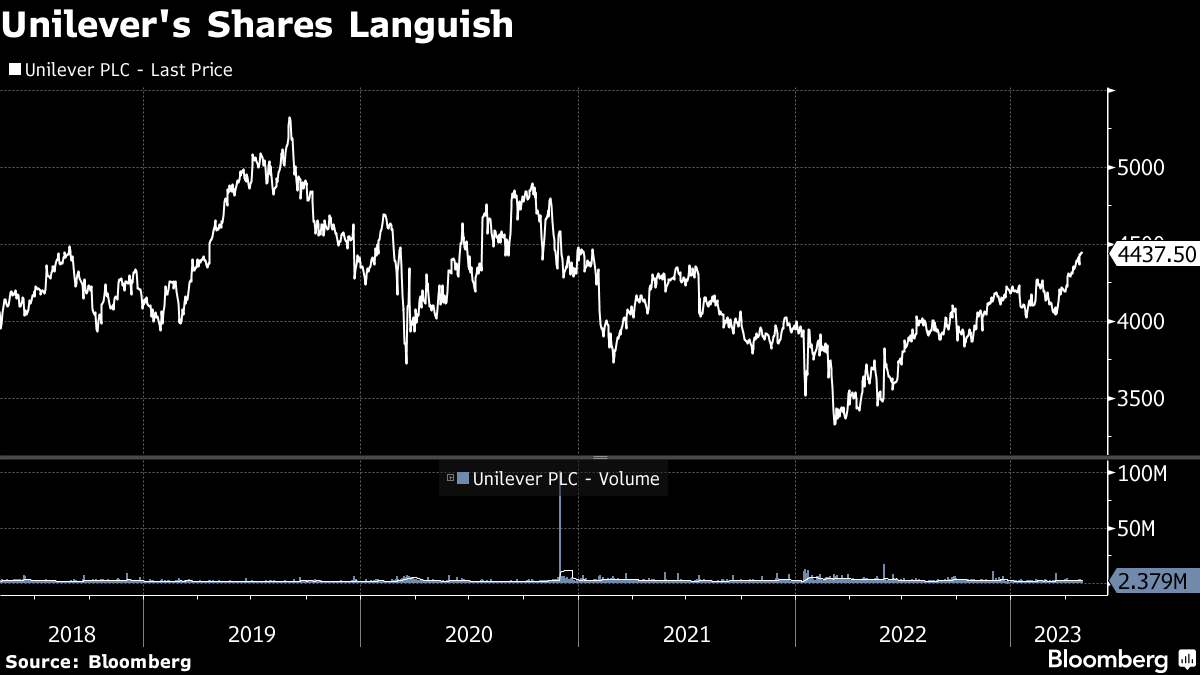
(Bloomberg) -- Unilever Plc's shareholders voted down the company's 2022 remuneration report after a botched attempt to buy the consumer arm of drugmaker GSK Plc and years of lackluster share price performance.
Almost 60% of shareholders voted against Unilever's pay report at its annual general meeting in a poll. Some 17% also voted against reelecting Nils Andersen as chairman.
Although the votes are not binding, meaning pay awards to executives will be made. Still, they're a rebuke to management at the maker of Dove soap, which has long prided itself on its “purpose” and sustainable agenda.
Unilever's board said it was “disappointed that the advisory vote” did not pass, adding that it would engage with shareholders over the next few months to listen carefully to feedback and determine any next steps.
Chief Executive Officer Alan Jope, widely criticized for his £50 billion ($62.8 billion) failed lunge at GSK's consumer unit, has been awarded a bonus of 200% of fixed pay against a target of 150%. His total remuneration is €5.4 million ($6 milllion). Jope delivered strong sales growth in 2022 but that was entirely the result of higher pricing and came at the expense of falling volumes and profitability.
Hein Schumacher is set to succeed Jope as CEO in July and is expected to attempt to address grievances of shareholders about the company's patchy operational performance and questionable strategic narrative.
Read more: New Unilever CEO to Spur Change at Company Laden With ‘Purpose'
Unilever has come under fire from investors like Terry Smith for failing to have a good dialogue with investors. The UK fund manager told his investors earlier this year that Unilever had ignored long-term shareholders while granting activist Nelson Peltz a seat on the board after he held shares for just a few months.
(Updates with share graph, additional information. A previous version corrected the spelling of chairman's name.)
More stories like this are available on bloomberg.com
©2023 Bloomberg L.P.

-
Ten Things I Learnt This Samvat

Patience can be a trap. Cheap stocks can stay cheap. Leverage can wipe you out. What did Samvat 2082 teach us? Niraj Shah writes on 10 lessons from the year gone by.
-
Talking Points This Week: Tech Nerves, FII Buying, And A Faraway Banking Shock
The global markets are not shining this Diwali. The exception in the large markets is, India.
-
Midterm Rally Lasted A Day. The Hard Reality Of A Divided US May Last Two Years | Opinion
Between a contested AI boom, a debt ceiling that arrives in 2027 and a president with every incentive to act alone, the next two years may prove more volatile than the first day's rally suggests.
-
Blue Wave Will Derail the AI Trade but Won't Dismantle the AI Era | Unhedged Position
The Democrats' sweep of the US Congress will see politics collide with economic forces both over the long and short term.
-
It's Time To Take The GST Council's Bet On Trust Global
Payment records can prove India's services exports, and clear, proportionate rules can bring foreign digital sellers into the tax net.
-
Opinion | India at 38: From Innovation Overperformer to Innovation Powerhouse
India now has 453 VC-backed deep science startups, 18 of them late-stage, after 117 percent growth since 2020. Laurus Labs, at USD 9.3 billion, is the most valuable deep science company in any middle-income economy outside China.
-
Navigating Energy Crossroads: S Jaishankar's Call For Diversified Supply Chains At G20 Ministerial Meeting
As geopolitical fault lines continue to test maritime trade routes and commodity flows, Jaishankar's message remains pertinent: true economic resilience requires open markets, protected transit lines, and a genuine commitment to multilateral cooperation rather than coercion.
-
Indians Are Travelling, But Not Every Journey Is A Holiday | The Week In Whys
Pilgrims, patients and working women are the real travellers, and the system hasn't quite caught up with them.
-
Getting To Work Costs Women More | The Reason Why
It is not just about women paying more than men. It is about women paying much more in cities than in villages.









