UK's BAE Systems To Cut Nearly 2,000 Jobs
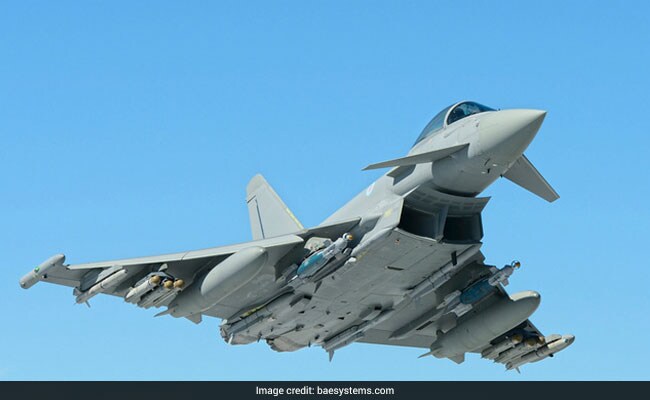
London: British defence company BAE Systems announced nearly 2,000 job cuts on Tuesday, mostly at its military aircraft operations after orders for its Typhoon fighter jet slowed. The job losses are part of a shake up by Charles Woodburn, who took over as chief executive in July and plans to streamline the business and revamp its air and maritime operations. The Eurofighter Typhoon jet has won fewer orders this year than the rival Rafale built by France's Dassault Aviation, as a major order expected from Saudi Arabia has not materialised, although Qatar agreed to buy 24 Typhoons in September.
Britain's Unite union said it would fight the "devastatingly short sighted" job losses as BAE said it will also cut around 375 jobs at its maritime operations and 150 roles at its Applied Intelligence business, as part of a reorganisation designed to be make the business more competitive.
The group, which employs 34,600 people in Britain, has already slowed production at two of its plants in Lancashire, northern England, which are involved in making the Typhoon jet.
Based on current orders for its Typhoon and Hawk aircraft, BAE said it needed to reduce the workforce at the unit by up to 1,400 roles.
BAE's Warton and Samlesbury plants will suffer the brunt of the losses as around 5,000 people there work on the Typhoon programme, which is a joint project between BAE, France's Airbus and Italy's Finmeccanica.
Unite stood ready to fight the job losses.
"These planned job cuts will not only undermine Britain's sovereign defence capability, but devastate communities across the UK who rely on these skilled jobs and the hope of a decent future they give to future generations," Unite's Assistant General Secretary Steve Turner said.
BAE said in August that any new orders were unlikely to impact production delivery rates positively for at least 24 months, and production would be under constant review.
"We obviously have to review our (Typhoon) production demand very carefully," Mr Woodburn said in August.
However, he said he remained confident about future orders for the aircraft.

-
Opinion | India at 38: From Innovation Overperformer to Innovation Powerhouse

India now has 453 VC-backed deep science startups, 18 of them late-stage, after 117 percent growth since 2020. Laurus Labs, at USD 9.3 billion, is the most valuable deep science company in any middle-income economy outside China.
-
Navigating Energy Crossroads: S Jaishankar's Call For Diversified Supply Chains At G20 Ministerial Meeting
As geopolitical fault lines continue to test maritime trade routes and commodity flows, Jaishankar's message remains pertinent: true economic resilience requires open markets, protected transit lines, and a genuine commitment to multilateral cooperation rather than coercion.
-
Indians Are Travelling, But Not Every Journey Is A Holiday | The Week In Whys
Pilgrims, patients and working women are the real travellers, and the system hasn't quite caught up with them.
-
Getting To Work Costs Women More | The Reason Why
It is not just about women paying more than men. It is about women paying much more in cities than in villages.
-
AI Bias In Investing Cannot Be Eliminated, But It Can Be Governed
Framing is a particularly important example as identical financial information presented in terms of gains rather than losses can lead an LLM to reach a different assessment.
-
Joining The Dots | Dark Skies, Steady Diya: Why Hope Holds This Diwali
With war, a weak rupee and foreign outflows weighing on sentiment, policymakers at the NDTV World Summit and market veterans at NDTV Profit Ignite: Diwali Edition offered the same advice: stay invested and filter out the noise.
-
The Curious Case of Equitas Small Finance Bank And A CEO Who Quit For Stock
PN Vasudevan believes persistent investor concerns over a perceived conflict of interest had become a governance overhang on Equitas Small Finance Bank's stock, even as the lender improved profitability and asset quality.
-
Talking Points This Week: AI Cash Burn, A Tiger Comeback And An India That Still Finds Its Own Path
India is not immune to higher oil or tighter global liquidity, yet its earnings base is broader, its domestic policy levers are still available.
-
Foreign Investors Own Half Of HDFC Bank and ICICI Bank. An LTCG Cut Could Matter Most Here
Foreign portfolio investors have US$115 billion parked in HDFC Bank, ICICI Bank. If the government cuts long-term capital gains tax, Jefferies says returning foreign money could land here first.










