Ujjivan Small Finance Bank Adopts A Conservative Interest Rate Strategy On Launch
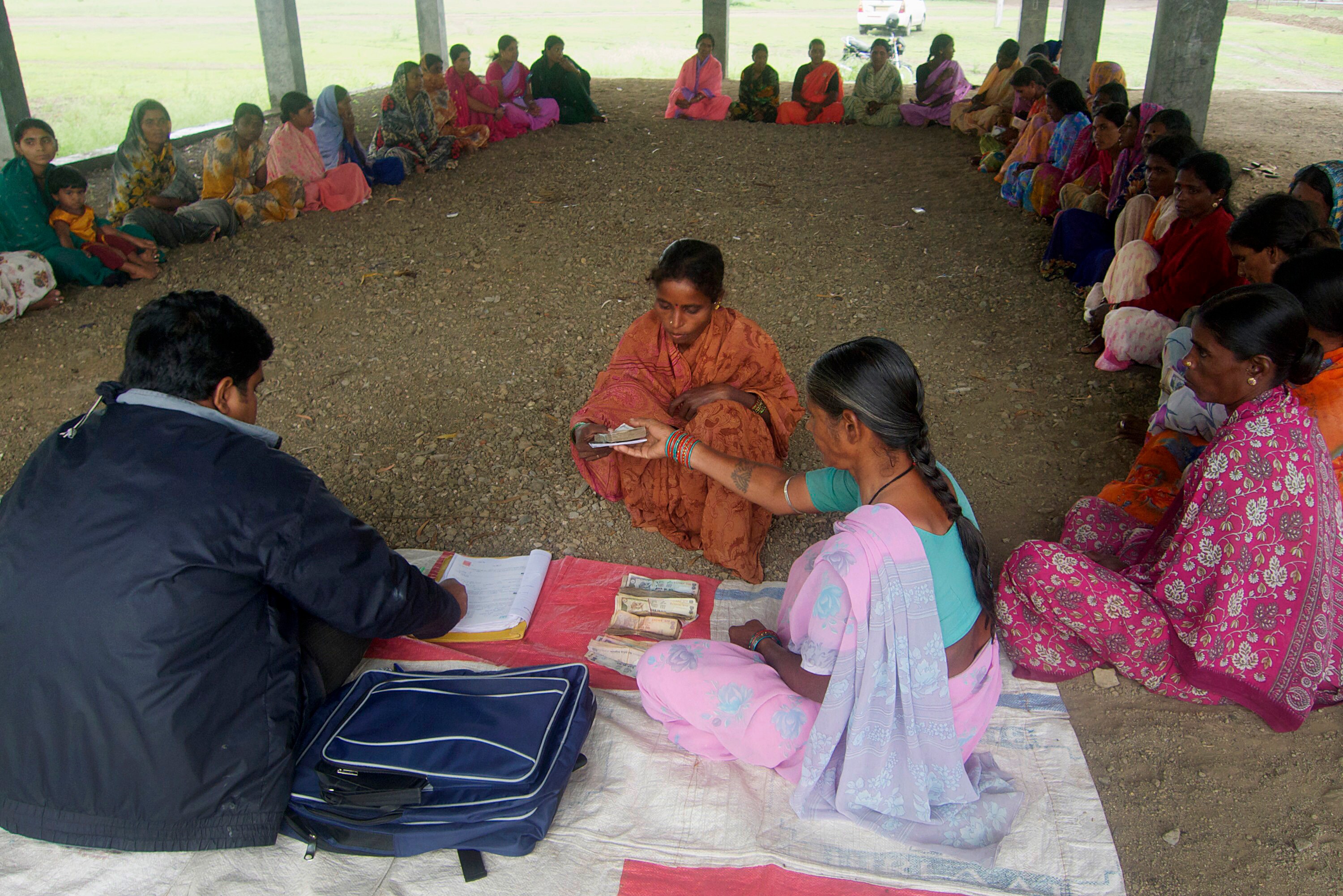
Ujjivan Small Finance Bank (SFB), the fifth of its kind to launch, will offer a savings interest rate on a par with large banks as it chooses to draw more customers towards its fixed deposit products.
Ujjivan, which was among the 10 entities that got in-priniciple approval from the Reserve Bank of India (RBI) in September 2015, rolled out pilot operations in Bengaluru on Monday.
The bank will offer a 4 percent interest rate on savings deposits, Samit Ghosh, founder and managing director of Ujjivan Financial Services, told BloombergQuint in a phone conversation. Ujjivan Financial Services, which is a listed entity, will become the holding company of the small finance bank once its roll out is complete.
The 4 percent savings deposit rate is comparable to the rate offered by most public banks, who will be the key competitors for Ujjivan.
The SFB will be slightly more aggressive on fixed deposits and offer between 5.5 percent and 8 percent across tenures. For senior citizens, the bank has offered 50 basis points more than its regular rate on all tenors of deposits.
State Bank of India's rates for fixed deposits below Rs 1 crore range between 5.5 percent and 7.1 percent and it offers an additional 35-50 basis points to senior citizens across tenors. Private sector lender, ICICI Bank's fixed deposit interest rates range between 4-7 percent.
“People are more sensitive to interest rates on fixed deposits,” explained Ghosh. “So, we're offering on an average 1 percent more than the larger banks.”
Explaining his decision not to offer higher rates on savings accounts, Ghosh said that the service tends to be less sensitive to interest rates and depends more on the quality of service and benefits offered.
Staggered Roll-Out
Ujjivan will launch pilot operations starting with five branches and over time extend the small finance bank offering to all of its existing branches.
“We are currently piloting in five branches to ensure that all the processes are in place before the full roll out,” said Ghosh.
This will be followed by a phased conversion of existing branches between March and September this year. Currently, Ujjivan Financial Services, which was operating as a microfinance firm, has 469 branches across 24 states and union territories and 209 districts.
We have a requirement to have 25 percent of our branch network in rural and unbanked areas. With our existing branches we already meet a portion of this requirement. But we'll be launching another 60 plus branches by the end of this financial year to meet that requirement. Beyond that, I don't think we're going to open new branches.Samit Ghosh, Founder & Managing Director, Ujjivan Financial Services
Apart from Ujjivan, Capital Small Finance Bank, Equitas Small Finance Bank, Suryoday Small Finance Bank, and Utkarsh Small Finance Bank have already launched operations.
Small finance banks will offer basic banking services, accepting deposits and lending to unserved and underserved sections including small business units, small and marginal farmers, micro and small industries, and entities in the unorganized sector, RBI said when it released guidelines for such banks in 2015.
Also Read: Suryoday Small Finance Bank Offers Higher Deposit Rates As It Launches Operations
Demonetisation Impact Persists
For all micro finance companies, including Ujjivan Financial Services, loan disbursements and collections fell immediately after the government announced the withdrawal of Rs 500 and Rs 1,000 notes. According to Ghosh, the impact has reduced since then and currency availability has normalised.
“But, there is a segment of customers where livelihoods have been affected, and what they are doing is that they are repaying, but with a lag. So right now, we are a bit cautious on the whole segment. We have restricted ourselves to disbursing loans to repeat customers,” said Ghosh.
A large portion of the company's loans are disbursed to repeat customers. In the nine months to December 31, as much as 69 percent of disbursments were made to repeat customers.
The decision to remain cautious on lending was evident in the company's results for the quarter ended December 31, where the gross loan book was 43.5 percent higher compared to the same period last year but had grown only 1.6 percent sequentially to Rs 6,587.90 crore.
Ghosh anticipates that it will take another six months for things to get back to normal.
While his peers are planning to increase the ticket size of loans in segments like housing in order to grow their loan book, Ghosh plans to focus on the company's core business.
“On the group lending and microfinance side, (after the launch of the small finance bank) we would not have the Rs 60,000 restriction that we had imposed on ourselves, and we could go up to Rs 1 lakh. But we will not do that now. We will take a call in six months,” said Ghosh.

-
High US Salaries, No Green Card Certainty: The Financial Calculation Facing Indian H-1B Families

The suspension of PERM processing at eight technology employers does not cancel existing H-1B visas. What it does is force a question many Indian families have been avoiding: is the US salary worth tying your career and family plans to one employer?
-
Swiggy vs Eternal: Food Delivery's Two Rivals Are No Longer In The Same Race
Eternal is building a private AI assistant, dark.ai. Swiggy is still working out how to make Instamart pay, with an operating loss of Rs 895 crore in the July-September quarter while Blinkit stayed profitable.
-
Where You Live Shapes How You Get To Work | The Reason Why
Two-wheelers are the most popular way to get to work in India, accounting for nearly 43% of workplace commutes.
-
Unhedged Position: Can India See An Indonesia-Style Time Correction?
The Nifty is trading below levels it first clocked in 2024. Is there, then, as I have suggested in the headline, potential that the current time correction drags on painfully for the next three-five, even ten years?
-
Navigating Friction And Energy Realities: An Analysis Of Marco Rubio's October Visit To India
Occurring at a critical juncture marked by stalled trade negotiations and escalating geopolitical pressures over global energy supplies, the visit offers a profound window into modern US-India relations.
-
India Exports Capital. Why Not Export Trusteeship?
The big question, then, is whether India can build an institution that global borrowers, investors, banks, and lawyers can trust, even without an Indian connection.
-
France's Economy & Politics Are In Crisis | The Reason Why
Let's look at how the French economy and politics evolved under Nicolas Sarkozy, Franois Hollande and Emmanuel Macron.
-
You May Inherit The Business. You Must Earn Its Credibility.
Succession tests the founder's ability to share authority as much as it tests the next generation's readiness to assume it.
-
Signing Deals Is One Thing; Making Them Work Is Another | The Week In Whys
Sometimes, things don't turn out as planned. Indian companies have lost some bids to rivals, some projects won't produce until 2030.
-
FOMC Wall, PERM Suspension, Hospital Stocks | Talking Points This Week
A PERM suspension would directly affect green-card sponsorship rather than H-1B visas, so the near-term earnings impact could remain relatively limited. The key question is whether this marks a new phase in US scrutiny of Indian IT.









