UIDAI Announces Phased Rollout Of Face Authentication Starting With Telecom Operators
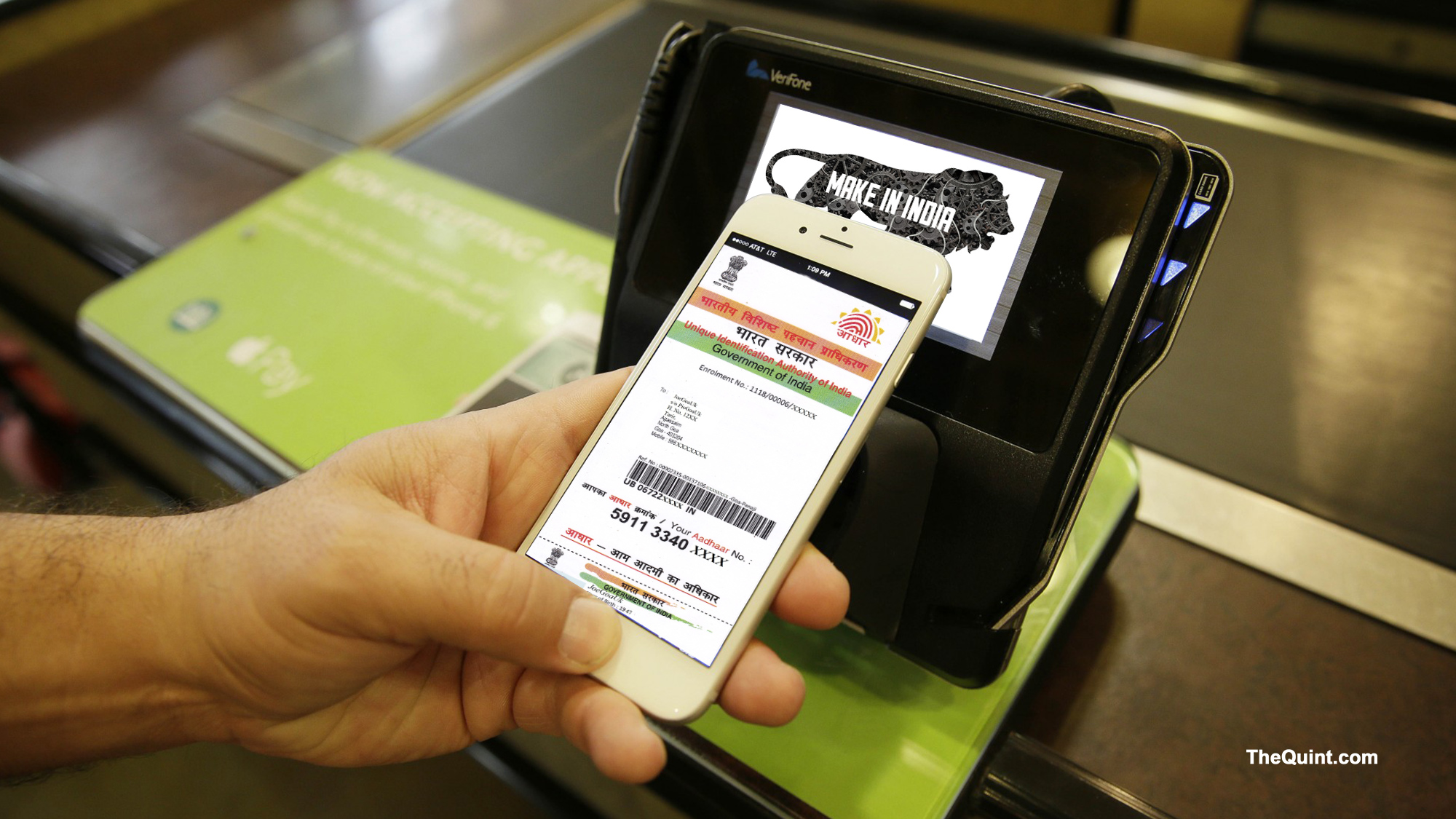
Aadhaar-issuing body UIDAI has finally announced a phased rollout of face recognition feature as an additional mode of authentication, starting with telecom service providers from Sept. 15.
The authority had earlier planned to roll out the feature from July 1, a deadline that was later pushed to Aug. 1. It has also proposed a monetary disincentive for telecom operators found slipping on the prescribed targets from mid next month.
For authentication agencies other than telecom service providers, the UIDAI said specific instructions will be issued on implementation of face authentication feature, but did not give a fresh deadline.
The Unique Identification Authority of India further said ‘live face photo' capture and its verification with the photo obtained in eKYC will be essential in those cases where Aadhaar is used for issuance of mobile SIMs.
UIDAI says the move is aimed at curbing the possibility of fingerprint spoofing or cloning, and seeks to tighten the audit process and security around issuance and activation of mobile SIMs.
It may be recalled that in June this year, a Hyderabad-based mobile SIM card distributor had forged Aadhaar details for activating thousands of SIMs.
“This instruction (for matching live face photo with eKYC photo) will apply only where Aadhaar is used for issuance of SIMs. As per Telecom Department's instructions, if SIM is issued through other means without Aadhaar, then these instructions will not apply,” UIDAI CEO Ajay Bhushan Pandey told PTI.
UIDAI has proposed a two-factor authentication for use of face recognition by telcos. Where an individual provides Aadhaar number, the authentication will be done using fingerprint or iris and face. For individuals providing Virtual ID, the authentication can be on basis of fingerprint or iris. UIDAI said in case where an individual is unable to authenticate fingerprint or iris, face authentication can be used as an additional mode, to make the system more inclusive.
“TSPs (operators) are hereby directed that with effect from September 15, 2018 at least 10 percent of their total monthly authentication transactions shall be performed using face authentication in this manner. Any shortfall in transactions using face authentication would be charged at Rs 0.20 per transaction,” said a UIDAI circular.
Pandey said this will ensure that telcos provide face capture facilities to customers who encounter difficulty in authentication due to worn out fingerprints.
“A combination of live face with fingerprint in authentication will also enhance Aadhaar security as it will effectively curb fingerprint spoofing,” Pandey said.
The circular also states that after successful eKYC authentication, the telecom operators will also capture the live face photo (that is, not merely holding a still photo in front of a camera) of the individual, over and above the photo captured for face authentication.
“It shall be the responsibility of the TSP that the live photo thus captured shall be verified at their backend system with the photo received in eKYC before activation of the SIM. The TSP shall store both the photos in its database for audit purpose...this process shall be followed for the eKYC performed for all the customers for issuance of SIM cards,” the circular said.
Failure to comply, will invite a financial disincentive in line with the prescribed norms, the authority warned.
“It has been noticed that due to non-readiness of few device providers, the various AUAs (authentication user agencies) were not in a position to implement face authentication with effect from August 1, 2018,” the UIDAI said. “Therefore, to avoid any inconvenience to public it has been decided to roll out the face authentication in a phased manner.”

-
High US Salaries, No Green Card Certainty: The Financial Calculation Facing Indian H-1B Families

The suspension of PERM processing at eight technology employers does not cancel existing H-1B visas. What it does is force a question many Indian families have been avoiding: is the US salary worth tying your career and family plans to one employer?
-
Swiggy vs Eternal: Food Delivery's Two Rivals Are No Longer In The Same Race
Eternal is building a private AI assistant, dark.ai. Swiggy is still working out how to make Instamart pay, with an operating loss of Rs 895 crore in the July-September quarter while Blinkit stayed profitable.
-
Where You Live Shapes How You Get To Work | The Reason Why
Two-wheelers are the most popular way to get to work in India, accounting for nearly 43% of workplace commutes.
-
Unhedged Position: Can India See An Indonesia-Style Time Correction?
The Nifty is trading below levels it first clocked in 2024. Is there, then, as I have suggested in the headline, potential that the current time correction drags on painfully for the next three-five, even ten years?
-
Navigating Friction And Energy Realities: An Analysis Of Marco Rubio's October Visit To India
Occurring at a critical juncture marked by stalled trade negotiations and escalating geopolitical pressures over global energy supplies, the visit offers a profound window into modern US-India relations.
-
India Exports Capital. Why Not Export Trusteeship?
The big question, then, is whether India can build an institution that global borrowers, investors, banks, and lawyers can trust, even without an Indian connection.
-
France's Economy & Politics Are In Crisis | The Reason Why
Let's look at how the French economy and politics evolved under Nicolas Sarkozy, Franois Hollande and Emmanuel Macron.
-
You May Inherit The Business. You Must Earn Its Credibility.
Succession tests the founder's ability to share authority as much as it tests the next generation's readiness to assume it.
-
Signing Deals Is One Thing; Making Them Work Is Another | The Week In Whys
Sometimes, things don't turn out as planned. Indian companies have lost some bids to rivals, some projects won't produce until 2030.
-
FOMC Wall, PERM Suspension, Hospital Stocks | Talking Points This Week
A PERM suspension would directly affect green-card sponsorship rather than H-1B visas, so the near-term earnings impact could remain relatively limited. The key question is whether this marks a new phase in US scrutiny of Indian IT.









