UAE's Abdulla Al Hamed Explores AI-Driven Media Innovation With India
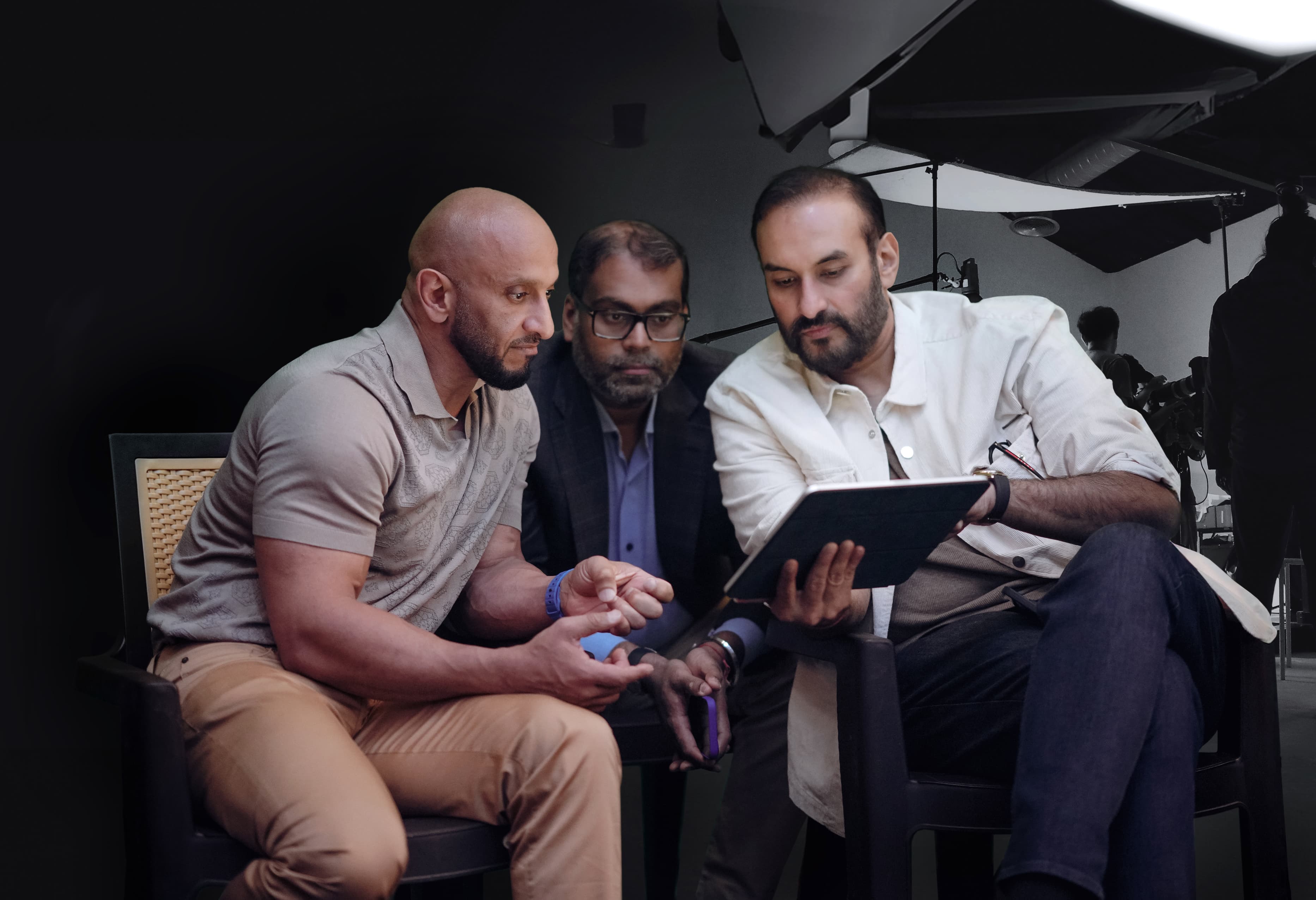
Abdulla bin Mohammed bin Butti Al Hamed, Chairman of the National Media Office and Chairman of the Board of Directors of the UAE Media Council, explored opportunities for AI-driven innovation in the media and entertainment sector during his visit to India, meeting with DNEG, a world-leading visual entertainment services company for the creation of feature film, television, and multiplatform content.
During his visit to the Mumbai filming locations of the epic movie 'Ramayana,' Al Hamed met with the film's director Nitesh Tiwari and producer Namit Malhotra, who is CEO of DNEG and Founder of Prime Focus, to discuss collaboration in visual entertainment and the use of advanced technologies.
They also explored opportunities to train Emirati talent in this field, enabling them to create innovative visual content for films, television, and interactive platforms. The visit aligns with the UAE's vision to increase investments in the visual entertainment, film, and multi-platform content technology sectors, thereby enhancing its status as a regional and international hub for innovation and creativity in media and entertainment.

Chairman of the National Media Office during his visit to the Mumbai filming locations of the epic movie 'Ramayana.'
The chairman of the National Media Office said, "We are open to establishing more partnerships and collaborations with leading countries in the visual entertainment sector to build an integrated media and entertainment ecosystem. This ambitious and comprehensive cooperation between the UAE and India in the fields of media, culture, AI applications, and advanced technologies reflects the UAE's commitment to accelerating technological development in media and entertainment sectors, further solidifying the UAE's position as a global leader in innovation, technology, and creativity."
The UAE has increased its investments in AI, expected to rise this year to $5.22 billion from $3.47 billion last year. This investment, he explained, has placed the UAE third globally in attracting AI professionals and experts, ensuring a bright future aligned with the country's development vision, which prioritises investment in advanced technology applications.
Al Hamed emphasised the importance of exchanging experiences between the UAE and India amidst the rapid development of AI and its applications in various fields, primarily in media, culture, arts, and cinema. He pointed out that the media industry is one of the sectors benefiting from AI applications, which contribute, for example, to improving content quality and automating processes such as data analysis and understanding audience preferences, helping to provide content that meets the needs of the target audience.
"We seek to invest the UAE's expertise, ambitions, and capabilities in AI and technology and the Indian side's experience and history in the arts, particularly cinema, to develop the creative sector and increase the creative industries' contribution to the country's overall GDP," the Chairman of the National Media Office concluded.
The visit reflects the UAE's ambitious strategy to increase investments in AI and its applications in various fields to solidify its position as an innovative destination in the world of advanced technologies. This is achieved through supporting innovative and research projects, adopting emerging technologies, enhancing the UAE's competitive position regionally and globally, and developing a thriving AI ecosystem. This strategy contributes to creating opportunities for establishing new partnerships capable of developing world-leading products and services.
DNEG is one of the largest global companies operating in the visual entertainment sector, having won Oscars and international accolades. With offices and studios in North America, Europe, Asia, and Australia, the company has strengthened its technological capabilities through its 'Brahma' platform for AI and structured data using generative and digital models and simulations. The platform works on developing a comprehensive AI-based system for creating realistic computer-generated imagery, making it one of the most extensive platforms in the industry.

-
High US Salaries, No Green Card Certainty: The Financial Calculation Facing Indian H-1B Families

The suspension of PERM processing at eight technology employers does not cancel existing H-1B visas. What it does is force a question many Indian families have been avoiding: is the US salary worth tying your career and family plans to one employer?
-
Swiggy vs Eternal: Food Delivery's Two Rivals Are No Longer In The Same Race
Eternal is building a private AI assistant, dark.ai. Swiggy is still working out how to make Instamart pay, with an operating loss of Rs 895 crore in the July-September quarter while Blinkit stayed profitable.
-
Where You Live Shapes How You Get To Work | The Reason Why
Two-wheelers are the most popular way to get to work in India, accounting for nearly 43% of workplace commutes.
-
Unhedged Position: Can India See An Indonesia-Style Time Correction?
The Nifty is trading below levels it first clocked in 2024. Is there, then, as I have suggested in the headline, potential that the current time correction drags on painfully for the next three-five, even ten years?
-
Navigating Friction And Energy Realities: An Analysis Of Marco Rubio's October Visit To India
Occurring at a critical juncture marked by stalled trade negotiations and escalating geopolitical pressures over global energy supplies, the visit offers a profound window into modern US-India relations.
-
India Exports Capital. Why Not Export Trusteeship?
The big question, then, is whether India can build an institution that global borrowers, investors, banks, and lawyers can trust, even without an Indian connection.
-
France's Economy & Politics Are In Crisis | The Reason Why
Let's look at how the French economy and politics evolved under Nicolas Sarkozy, Franois Hollande and Emmanuel Macron.
-
You May Inherit The Business. You Must Earn Its Credibility.
Succession tests the founder's ability to share authority as much as it tests the next generation's readiness to assume it.
-
Signing Deals Is One Thing; Making Them Work Is Another | The Week In Whys
Sometimes, things don't turn out as planned. Indian companies have lost some bids to rivals, some projects won't produce until 2030.
-
FOMC Wall, PERM Suspension, Hospital Stocks | Talking Points This Week
A PERM suspension would directly affect green-card sponsorship rather than H-1B visas, so the near-term earnings impact could remain relatively limited. The key question is whether this marks a new phase in US scrutiny of Indian IT.









