Two Months In, Jaitley Takes Stock Of Demonetisation
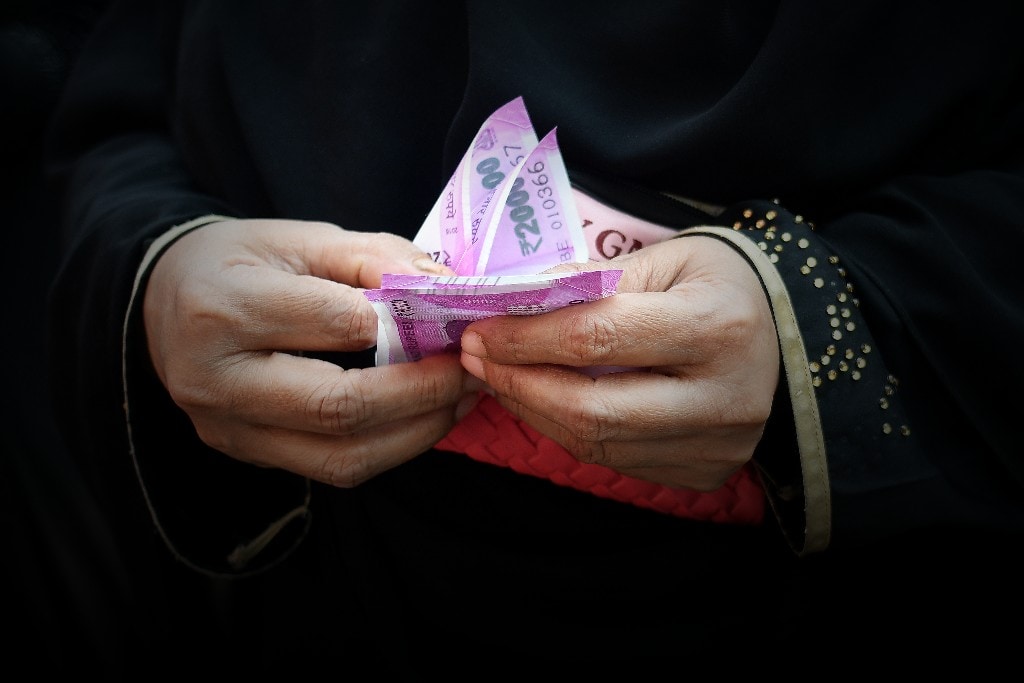
With doubts being raised about demonetisation eliminating black money, Finance Minister Arun Jaitley today said colour of funds has not changed by merely depositing them in banks as the money has now lost its 'anonymity' and can be identified with the owner.
In a Facebook post titled 'Demonetisation -- A look back at the last two months', he also said the period of pain and inconveniences is getting over and the economic activity is being restored.
Large amount of cash with banks will lead to lower interest rates, he further said. "When 86 per cent of a country's currency, constituting 12.2 per cent of its GDP, is squeezed out of the market and sought to be replaced by a new currency, there would obviously be significant consequences of that decision," he said, adding that the queues outside the banks have disappeared and remonetisation has moved ahead.
The period of pain and inconveniences is getting over. Economic activity is being restored.Arun Jaitley, Finance Minister
Jaitley said demonetisation required both courage and stamina. "The implementation of the decision carried pain. It can lead to short-term criticism and inconveniences. Drop in economic activity on account of the currency squeeze during the remonetisation period would have a transient impact on the economy."
The fact that large quantum of high denominational currency has been deposited with the banks does not render this money to be legitimate cash. Black money does not change its colour merely because it is deposited in bank. On the contrary, it loses its anonymity and can now be identified with its owner.Arun Jaitley, Finance Minister
The comments follow reports about an estimated 97 per cent of junked notes getting deposited in bank accounts, thus casting doubts on the effectiveness of demonetisation move in checking the black money menace.
The Revenue Department, he said, would be entitled to tax this money. "In any case, the amendment to the Income Tax Act itself provides that the said money, if voluntarily declared or if involuntarily detected, would be liable for differential and high rates of taxation and penalty," he said.
The Revenue Department, he said, would be entitled to tax this money. "In any case, the amendment to the Income Tax Act itself provides that the said money, if voluntarily declared or if involuntarily detected, would be liable for differential and high rates of taxation and penalty," he said.
Jaitley said banks today have a lot more money available in order to lend for growth.
"Since this money constitutes low-cost deposits with the banks, it is bound to bring down the rate of interest. Both these things have already happened. Lakhs of crores, which were floating in the market as loose currency, have now entered the banking system. Not only has the money lost is anonymity, its owners, after being taxed, are entitled to put it to more effective uses," he said.
Jaitley said the Narendra Modi Government wanted to move against the shadow economy and black money from Day-1, and went on to list the steps taken including constituting SIT on black money and international cooperation in sharing information on base erosion and profit shifting.
"Modi Government is determined to act against the shadow economy and black money. All efforts in this regard till date have been fruitful," Jaitley later tweeted.
He said agreement was reached with Switzerland to get details of assets held by Indian citizens from 2019 and tax treaties with Mauritius, Cyprus and Singapore renegotiated to end round-tripping.
"PM Narendra Modi mustered international support against evils of black money since he took over as PM of India," Jaitley tweeted.
He said India enacted a law for dealing with black money outside India and a 'highly successful' Income Declaration Scheme (IDS) for domestic black money holders was launched.
Also PAN card requirement for cash transaction above Rs 2 lakhs has put hurdles on expenditure through black money.
Stating that GST, to be implemented this year, will provide for better indirect tax administration and being a more efficient law will check tax evasion, he said the demonetisation of high denominational currency notes was the big step in the same direction.
With the demonetisation, the size of the banking transactions and consequently the size of the economy is bound to increase, he said, adding that in the medium and long run, the GDP would be bigger and cleaner.
Full text of Jaitley's Facebook post:

-
Navigating Energy Crossroads: S Jaishankar's Call For Diversified Supply Chains At G20 Ministerial Meeting

As geopolitical fault lines continue to test maritime trade routes and commodity flows, Jaishankar's message remains pertinent: true economic resilience requires open markets, protected transit lines, and a genuine commitment to multilateral cooperation rather than coercion.
-
Indians Are Travelling, But Not Every Journey Is A Holiday | The Week In Whys
Pilgrims, patients and working women are the real travellers, and the system hasn't quite caught up with them.
-
Getting To Work Costs Women More | The Reason Why
It is not just about women paying more than men. It is about women paying much more in cities than in villages.
-
AI Bias In Investing Cannot Be Eliminated, But It Can Be Governed
Framing is a particularly important example as identical financial information presented in terms of gains rather than losses can lead an LLM to reach a different assessment.
-
Joining The Dots | Dark Skies, Steady Diya: Why Hope Holds This Diwali
With war, a weak rupee and foreign outflows weighing on sentiment, policymakers at the NDTV World Summit and market veterans at NDTV Profit Ignite: Diwali Edition offered the same advice: stay invested and filter out the noise.
-
The Curious Case of Equitas Small Finance Bank And A CEO Who Quit For Stock
PN Vasudevan believes persistent investor concerns over a perceived conflict of interest had become a governance overhang on Equitas Small Finance Bank's stock, even as the lender improved profitability and asset quality.
-
Talking Points This Week: AI Cash Burn, A Tiger Comeback And An India That Still Finds Its Own Path
India is not immune to higher oil or tighter global liquidity, yet its earnings base is broader, its domestic policy levers are still available.
-
Foreign Investors Own Half Of HDFC Bank and ICICI Bank. An LTCG Cut Could Matter Most Here
Foreign portfolio investors have US$115 billion parked in HDFC Bank, ICICI Bank. If the government cuts long-term capital gains tax, Jefferies says returning foreign money could land here first.
-
'Never Seen This Level Of Negativity': Sandeep Tandon Says The Next Rally May Be Closer Than You Think
Veteran investor Sandeep Tandon says foreign selling is easing, large-caps are due a comeback and mid-caps are crowded, while he turns positive on gold, power and pharma this Diwali.
-
Indians Stay With Family, Not In Hotels | The Reason Why
India still lacks enough clean, reliable and affordable hotels for budget-conscious travellers.










