Two Anti-Dumping Duties Prompt Tyre Industry To Call For Export Ban On Carbon Black
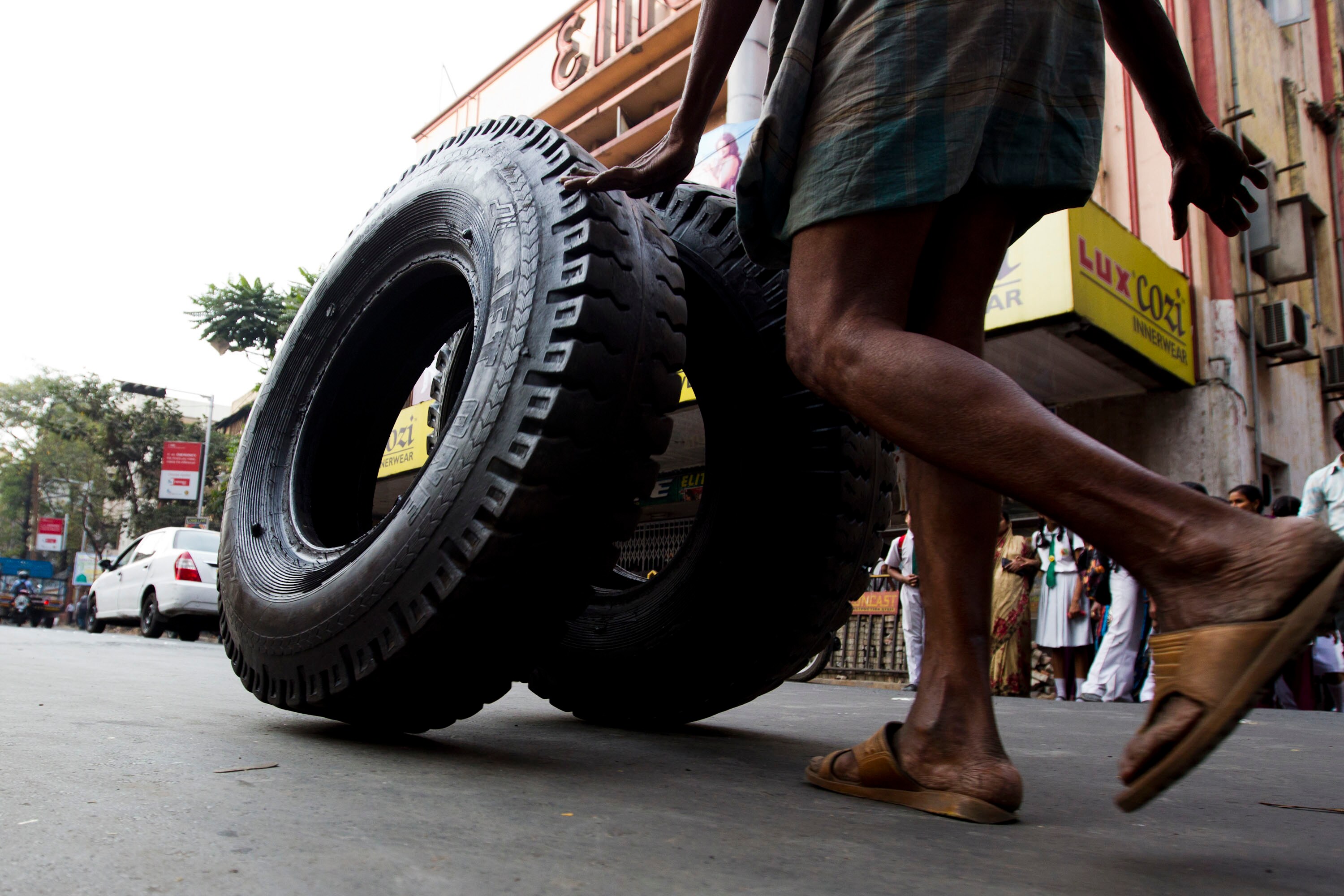
A shortage in the domestic market of carbon black, a key raw material used in tyres as a reinforcing material, has resulted in unplanned shutdowns of factories, an industry body has said.
Curiously, two different anti-dumping duties have resulted in this problem.
Last year the imposition of an anti-dumping duty on select Chinese tyres helped boost domestic tyre production. But a 2015 anti-dumping duty on the import of carbon black restricted supplies of the raw material.
To counter this, the Automotive Tyre Manufacturers Association, in a statement issued on Monday, has asked the government to allow duty free import of carbon black for domestic tyre makers. It has also asked for curbs on the export of carbon black.
The domestic production of carbon black is estimated at 8.4 lakh kilo tonne, while consumption is pegged at 9 lakh KT resulting in a shortfall of 60,000 KT, according to ATMA. This gap is increased further as domestic manufacturers export nearly 1.2 lakh KT, taking the overall shortage to 1.8 lakh KT which is approx 20 percent of the total domestic production.
The gap in the demand and supply of the raw material leaves the industry with no choice but to import carbon black, ATMA said. However, the an anti-dumping duty amounting to $397 per tonne is proving to be prohibitive.
If exports are increased, the domestic availability will fall further, said Rajiv Budhraja, director general of ATMA, making the case for export curbs.
There is a huge potential of value addition which is to take place in the country and you are exporting such a basic raw material and penalising the domestic value addition by imposing this anti-dumping duty on imports. This is a paradoxical situation where the government must step in and resolve that do we export basic raw material and penalise the consuming interest for imports for a product or raw material which is in such scarce supply?Rajiv Budhraja, Director General, Automotive Tyre Manufacturers Association
But Jigar Jani, analyst at Edelweiss Securities, who tracks this sector closely, believes this gap can be lessened by 50 percent. “While the difference is estimated to be approx. 1.8 lakh KT, it is after deducting imports. If you add back the imports which is estimated to be around 90,000 -1 lakh KT, then the actual demand-supply gap falls to only 80,000 KT.”
Except that imports are prohibitively priced due to the duty, said ATMA
Crisis For MSMSEs
While domestic manufacturers of carbon black are undertaking capacity expansion, this will only start contributing meaningfully after the first half of the next financial year.
With this production gap and high import duty, micro, small and medium enterprises manufacturing tyres have come under pressure, Budhraja said.
“...Many MSMEs have shut down because they don't have carbon black. On one hand, the budget is incentivising the MSMEs and the government is promoting ‘Make in India'. The original equipment segment after so many years is seeing a revival. We were hoping that with anti-dumping on truck and bus radial, the domestic industry will see an acceleration with more production and then suddenly you hit a speed breaker,” he added.
Adding to the shortage is a change in the production trend of carbon black, said Vikrant Gupta, equity research associate at Antique Stock Broking. Existing manufacturers of the raw material are shifting towards a niche high-value sub segment in the carbon industry called specialty black, which has application in non-tyre segment like coatings, polymers and printing, etc., he said.
“Realisations from specialty carbon black are twice that of normal rubber carbon black and command four-five times higher Ebitda margins (earnings before interest, depreciation and ammortisation margins). This coupled with an element of exports which accounts for nearly 10-12 percent of the total domestic production has resulted in severe crunch of the raw material,” Gupta said.
Jani argued that an export ban on carbon black would be more effective than reducing the anti-dumping duty.
While there are exports happening, the realisations from domestic market are higher than overseas market estimated at about Rs 120-130 per kg as against Rs 90-95/kg. In a situation like this, what makes sense is to curb exports instead of removing anti-dumping duty as it would increase the domestic availability.Jigar Jani, Analyst, Edelweiss Securities

-
Navigating Energy Crossroads: S Jaishankar's Call For Diversified Supply Chains At G20 Ministerial Meeting

As geopolitical fault lines continue to test maritime trade routes and commodity flows, Jaishankar's message remains pertinent: true economic resilience requires open markets, protected transit lines, and a genuine commitment to multilateral cooperation rather than coercion.
-
Indians Are Travelling, But Not Every Journey Is A Holiday | The Week In Whys
Pilgrims, patients and working women are the real travellers, and the system hasn't quite caught up with them.
-
Getting To Work Costs Women More | The Reason Why
It is not just about women paying more than men. It is about women paying much more in cities than in villages.
-
AI Bias In Investing Cannot Be Eliminated, But It Can Be Governed
Framing is a particularly important example as identical financial information presented in terms of gains rather than losses can lead an LLM to reach a different assessment.
-
Joining The Dots | Dark Skies, Steady Diya: Why Hope Holds This Diwali
With war, a weak rupee and foreign outflows weighing on sentiment, policymakers at the NDTV World Summit and market veterans at NDTV Profit Ignite: Diwali Edition offered the same advice: stay invested and filter out the noise.
-
The Curious Case of Equitas Small Finance Bank And A CEO Who Quit For Stock
PN Vasudevan believes persistent investor concerns over a perceived conflict of interest had become a governance overhang on Equitas Small Finance Bank's stock, even as the lender improved profitability and asset quality.
-
Talking Points This Week: AI Cash Burn, A Tiger Comeback And An India That Still Finds Its Own Path
India is not immune to higher oil or tighter global liquidity, yet its earnings base is broader, its domestic policy levers are still available.
-
Foreign Investors Own Half Of HDFC Bank and ICICI Bank. An LTCG Cut Could Matter Most Here
Foreign portfolio investors have US$115 billion parked in HDFC Bank, ICICI Bank. If the government cuts long-term capital gains tax, Jefferies says returning foreign money could land here first.
-
'Never Seen This Level Of Negativity': Sandeep Tandon Says The Next Rally May Be Closer Than You Think
Veteran investor Sandeep Tandon says foreign selling is easing, large-caps are due a comeback and mid-caps are crowded, while he turns positive on gold, power and pharma this Diwali.










