Twitter CEO, Staff Donate $1.5 Million To Fight Trump Visa Ban
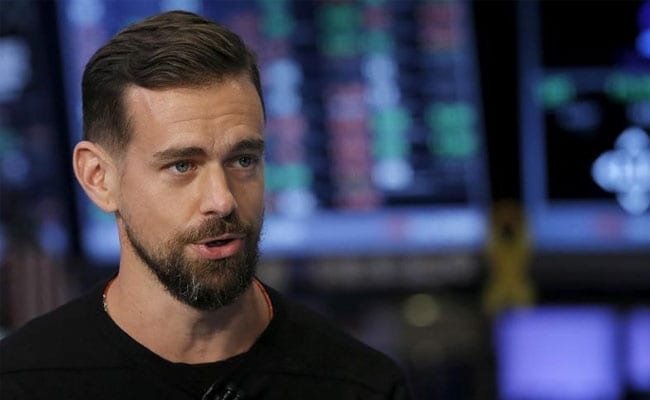
San Francisco: Twitter CEO Jack Dorsey and about 1,000 of his colleagues have donated over $1.5 million to a leading rights group that has pledged to fight President Donald Trump's temporary ban on refugees and immigrants from seven Muslim-majority countries.
The donation has been made to American Civil Liberties Union (ACLU) that has reportedly raised more than $24 million in online donations in the past few days.
Initially, 925 Twitter staff pulled together a donation of over $530,000. That was then matched by CEO Dorsey and Executive Chairman Omid Kordestani to take the total to $1.59 million, TechCrunch reported, citing a company-wide email.
A Twitter spokesperson confirmed the donation and the numbers involved to the tech industry news website.
"Our work is far from done. In the coming months we'll see a flurry of legal challenges, legislative pushes and public pronouncements. But as long as civil liberties are threatened, I'm proud to know that as individuals we will stand up to defend freedom and look after people," Twitter General Counsel Vijaya Gadde wrote in the memo.
"The Executive Order's humanitarian and economic impact is real and upsetting," Dorsey said on Twitter over the weekend.
"We benefit from what refugees and immigrants bring to the US," he said.
Also, Microsoft has requested the Trump administration to ease travel restrictions on its employees affected by the executive order on immigration, visa and border security.
Trump last week signed the sweeping executive order to suspend the arrival of refugees and impose tough new controls on travellers from Iraq, Syria, Iran, Libya, Somalia, Sudan and Yemen as part of new measures to "keep radical Islamic terrorists" out of America.
Silicon Valley's top executives, including India-born CEOs Google's Sundar Pichai and Microsoft's Satya Nadella, had condemned Trump's immigration ban, voicing concern that the move could directly hit their own staffers and stop bringing great talent to the US.
Executives from Microsoft, Google, Apple, Netflix, Tesla, Facebook, Uber and other top American companies slammed Trump's immigration order that sparked widespread protests across the US.
Tech giant Google also created a crisis fund that could raise up to $4 million for four immigrant rights organisations, including ACLU and UN High Commissioner for Refugees (UNHCR).
Facebook CEO Mark Zuckerberg was one of the first to address the ban publicly.
"We need to keep this country safe, but we should do that by focusing on people who actually pose a threat. Expanding the focus of law enforcement beyond people who are real threats would make all Americans less safe by diverting resources...," he had written on Facebook.
(Except for the headline, this story has not been edited by NDTV staff and is published from a syndicated feed.)

-
Navigating Friction And Energy Realities: An Analysis Of Marco Rubio's October Visit To India

Occurring at a critical juncture marked by stalled trade negotiations and escalating geopolitical pressures over global energy supplies, the visit offers a profound window into modern US-India relations.
-
India Exports Capital. Why Not Export Trusteeship?
The big question, then, is whether India can build an institution that global borrowers, investors, banks, and lawyers can trust, even without an Indian connection.
-
France's Economy & Politics Are In Crisis | The Reason Why
Let's look at how the French economy and politics evolved under Nicolas Sarkozy, Franois Hollande and Emmanuel Macron.
-
You May Inherit The Business. You Must Earn Its Credibility.
Succession tests the founder's ability to share authority as much as it tests the next generation's readiness to assume it.
-
Signing Deals Is One Thing; Making Them Work Is Another | The Week In Whys
Sometimes, things don't turn out as planned. Indian companies have lost some bids to rivals, some projects won't produce until 2030.
-
FOMC Wall, PERM Suspension, Hospital Stocks | Talking Points This Week
A PERM suspension would directly affect green-card sponsorship rather than H-1B visas, so the near-term earnings impact could remain relatively limited. The key question is whether this marks a new phase in US scrutiny of Indian IT.
-
Everything, Everywhere, All At Once: Dalal Street's Week To Forget | Joining The Dots
Visa curbs, a Starlink spat and cancer drug caps: what connects this week's shocks for Indian markets
-
India Is Going Abroad For Critical Minerals. But It May Take Years To Pay Off | The Reason Why
Although India's steps are in the right direction, they remain modest compared with India's growing dependence.
-
When Everyone Has AI, What Gives You An Edge?
India's young workforce is entering an uncertain world of work where powerful AI tools are becoming widely accessible. The advantage will belong to those who combine deep expertise with digital fluency, and the distinctly human capabilities that technology cannot manufacture.
-
Wrong Labels, High Pesticide Residues Holding Back Agri Exports | The Reason Why
India needs stronger domestic food-safety and labelling standards, with best practices becoming part of everyday business for farmers, traders and food companies.










