Trump Says Business ‘Not Worried’ About Tariffs, Touts Tax Deal
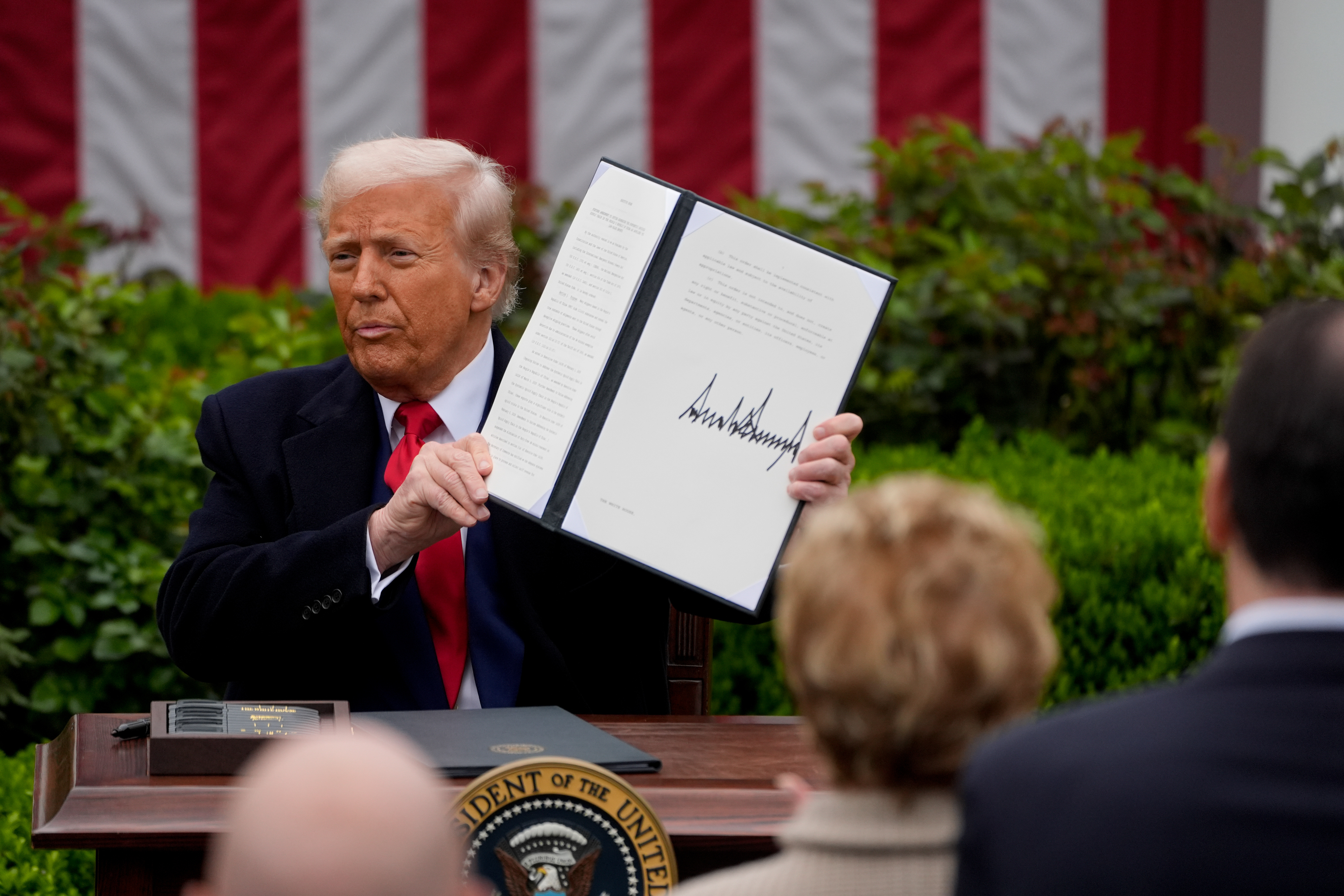
President Donald Trump said that large corporations are unconcerned about his sweeping tariff campaign, which had sparked the worst selloff in stocks since the Covid-19 pandemic, and he implied that they are instead focused on a legislative package that would fast-track a renewal of his 2017 tax cuts.
“Big business is not worried about the Tariffs, because they know they are here to stay, but they are focused on the BIG, BEAUTIFUL DEAL, which will SUPERCHARGE our Economy. Very important. Going on right now!!!” Trump posted Friday evening on his social media platform Truth Social.
The US Senate on Friday is voting on a Republican budget blueprint, the latest in a multi-step process to extend the tax cuts set to expire at the end of this year. Lawmakers have yet to face some of the most difficult decisions, including which spending programs to cut and which tax reductions to prioritize.
Earlier on Friday, Trump condemned China's move to slap a 34% charge on all American goods in response to his reciprocal tariffs, which raised duties on Chinese imports to at least 54%. The tit-for-tat raised fears his trade fight could escalate and tip global economies into a recession.
“CHINA PLAYED IT WRONG, THEY PANICKED - THE ONE THING THEY CANNOT AFFORD TO DO!” Trump posted on social media.
The US president did not announce plans to respond to China with further measures, but he has previously pledged that if countries raise duties in response to his new tariffs, he will do so as well. The White House declined to elaborate on Trump's post.
Trump also said on his social media page that he spoke to Vietnamese leader To Lam, adding Lam “told me that Vietnam wants to cut their Tariffs down to ZERO if they are able to make an agreement with the U.S.” Trump imposed a 46% tariff on Vietnamese goods set to take effect April 9.
“I thanked him on behalf of our Country, and said I look forward to a meeting in the near future,” the US president said before traveling to his golf club in West Palm Beach, Florida.
Countries are weighing how to respond to Trump's latest levies, which raised US tariffs to their highest level in more than a century and battered the post-World War II world trading system he has long decried as unfair.
While China hit American goods with tariffs, Cambodia offered to slash its own duties in a bid to convince Trump to hold off on imposing a 49% charge — one of the highest rates on any Asian economy.

Top administration officials, including the president himself, have sent conflicting messages about the opportunity for US trading partners to cut deals to lower the new tariffs, but Trump on Friday suggested there was little room for negotiation.
“TO THE MANY INVESTORS COMING INTO THE UNITED STATES AND INVESTING MASSIVE AMOUNTS OF MONEY, MY POLICIES WILL NEVER CHANGE. THIS IS A GREAT TIME TO GET RICH, RICHER THAN EVER BEFORE!!!” Trump posted on social media.
US stocks took another beating on Friday. The benchmark S&P 500 Index tumbled 6%, capping the steepest two-day slide since the pandemic hit the US in March 2020 and wiping out some $5 trillion of value.
Brushing aside the market turmoil, the president appeared emboldened by March jobs data that beat forecasts, with US nonfarm payrolls increasing 228,000 last month. Those numbers comprise hiring decisions before he announced his tariff plan.
“GREAT JOB NUMBERS, FAR BETTER THAN EXPECTED. IT'S ALREADY WORKING,” the president wrote in another social media post earlier Friday.
Complicating the challenge for foreign leaders and business executives are Trump's own mixed signals about his willingness to negotiate to reduce the size and scope of his levies. Late Thursday, Trump indicated he would be willing to lower his duties if other nations offered him something “phenomenal.”
Trump and top advisers say they are counting on tariffs — including a minimum 10% levy on all US trading partners — to encourage domestic investment by companies eager to avoid import taxes. Handing out exemptions could undermine that business case for investing in US manufacturing, White House trade counselor Peter Navarro said in a Thursday interview with CNBC.
Trump separately shared a TikTok video from another user asserting that he was “purposely crashing the market” by 20% as part of a grand strategy get the Federal Reserve to “slash interest rates.” The video argues the tariffs will force companies to invest in America and also make farmers “sell more of their products here in the US to bring grocery prices way down.”

-
Talking Points This Week: Tech Nerves, FII Buying, And A Faraway Banking Shock

The global markets are not shining this Diwali. The exception in the large markets is, India.
-
Midterm Rally Lasted A Day. The Hard Reality Of A Divided US May Last Two Years | Opinion
Between a contested AI boom, a debt ceiling that arrives in 2027 and a president with every incentive to act alone, the next two years may prove more volatile than the first day's rally suggests.
-
Blue Wave Will Derail the AI Trade but Won't Dismantle the AI Era | Unhedged Position
The Democrats' sweep of the US Congress will see politics collide with economic forces both over the long and short term.
-
It's Time To Take The GST Council's Bet On Trust Global
Payment records can prove India's services exports, and clear, proportionate rules can bring foreign digital sellers into the tax net.
-
Opinion | India at 38: From Innovation Overperformer to Innovation Powerhouse
India now has 453 VC-backed deep science startups, 18 of them late-stage, after 117 percent growth since 2020. Laurus Labs, at USD 9.3 billion, is the most valuable deep science company in any middle-income economy outside China.
-
Navigating Energy Crossroads: S Jaishankar's Call For Diversified Supply Chains At G20 Ministerial Meeting
As geopolitical fault lines continue to test maritime trade routes and commodity flows, Jaishankar's message remains pertinent: true economic resilience requires open markets, protected transit lines, and a genuine commitment to multilateral cooperation rather than coercion.
-
Indians Are Travelling, But Not Every Journey Is A Holiday | The Week In Whys
Pilgrims, patients and working women are the real travellers, and the system hasn't quite caught up with them.
-
Getting To Work Costs Women More | The Reason Why
It is not just about women paying more than men. It is about women paying much more in cities than in villages.
-
AI Bias In Investing Cannot Be Eliminated, But It Can Be Governed
Framing is a particularly important example as identical financial information presented in terms of gains rather than losses can lead an LLM to reach a different assessment.









