Tried ONDC Yet? No? We Did It For You!
The Open Network for Digital Commerce, touted to be the ‘UPI of e-commerce', was beta tested across 16 PIN codes in Bengaluru on Friday.
Nagged by the fear of missing out while sitting in Mumbai, and after a short flight and a long commute in India's Silicon Valley, we now know.
Here's how it works:
Three parties are involved in completing a single transaction on the network—buyer, seller, and logistics applications.
Consumers can place their orders through ‘buyer apps' participating on the network. ‘Buyer apps' refer to applications or websites that enable consumers to shop from all sellers available on ONDC.
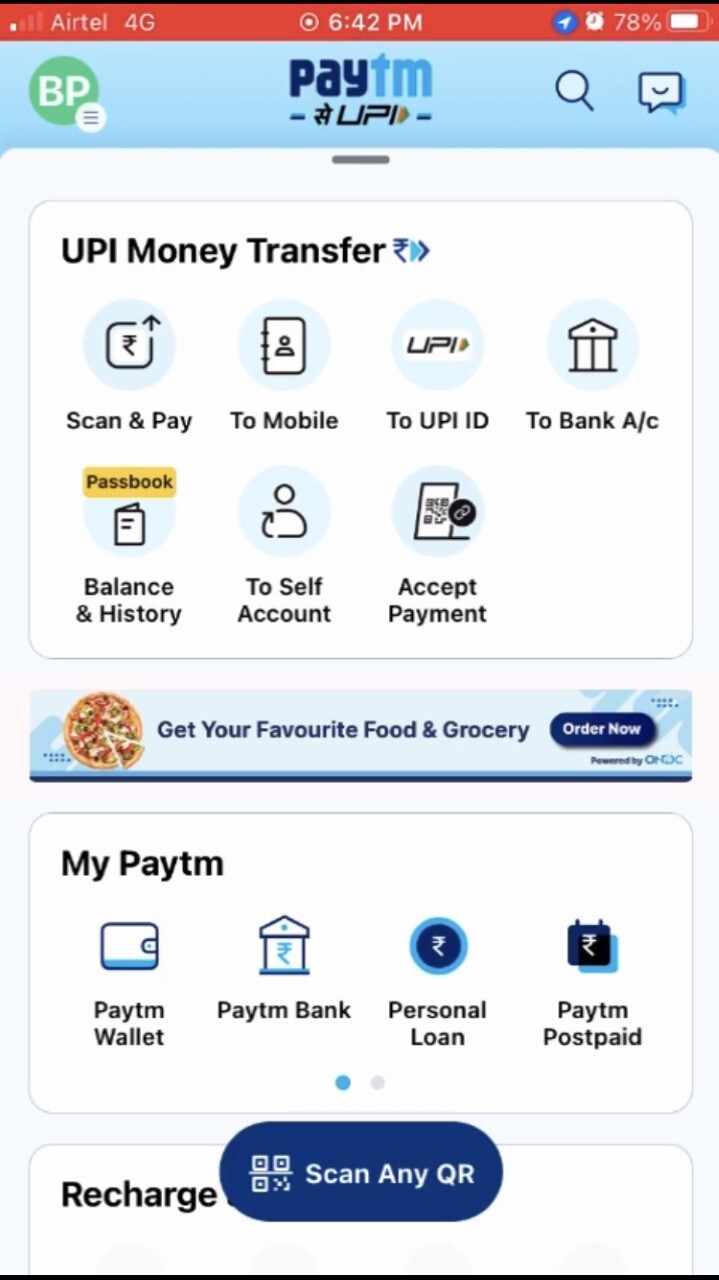
Among the available ‘buyer apps' are Mystore, Paytm, and Spicemoney. We used Paytm.
If opened in at of the 16 PIN codes, right under the UPI transfer box, a tab powered by ONDC shows a link to order food and grocery.
Source: SellerApp
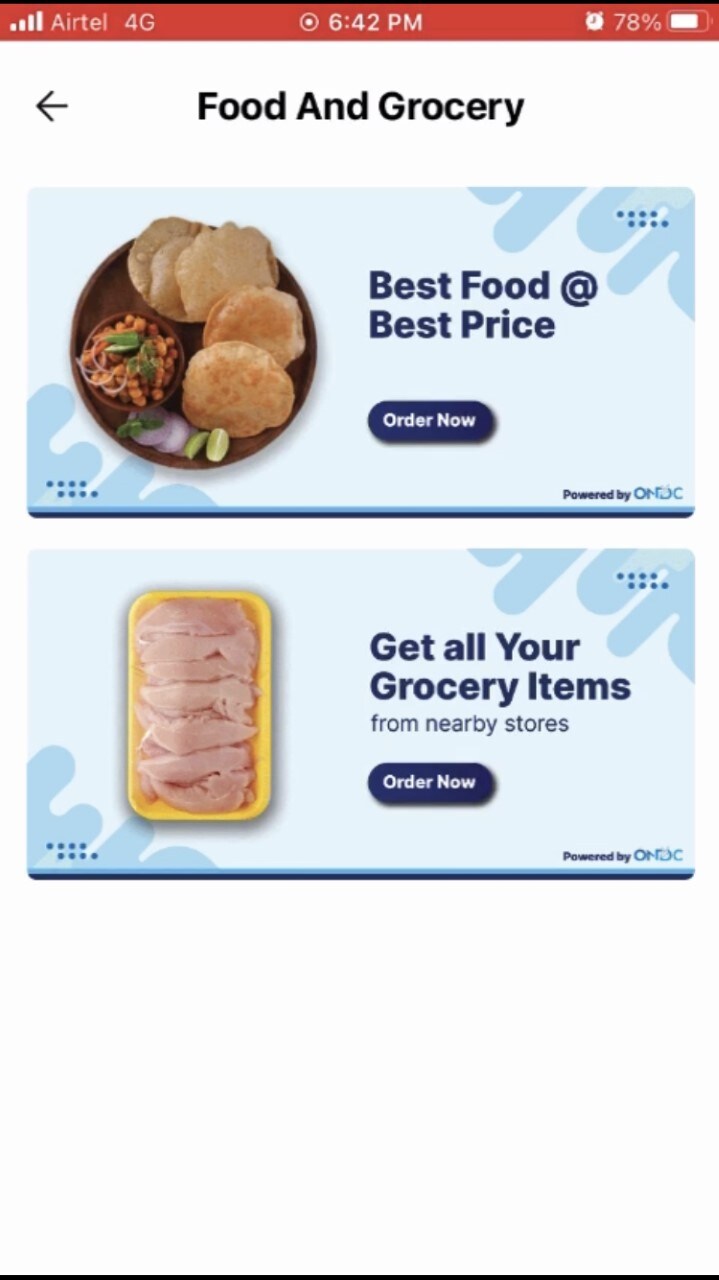
Currently, the customer can only order food and grocery, with the network planning to rollout other categories in due course.
Source: SellerApp
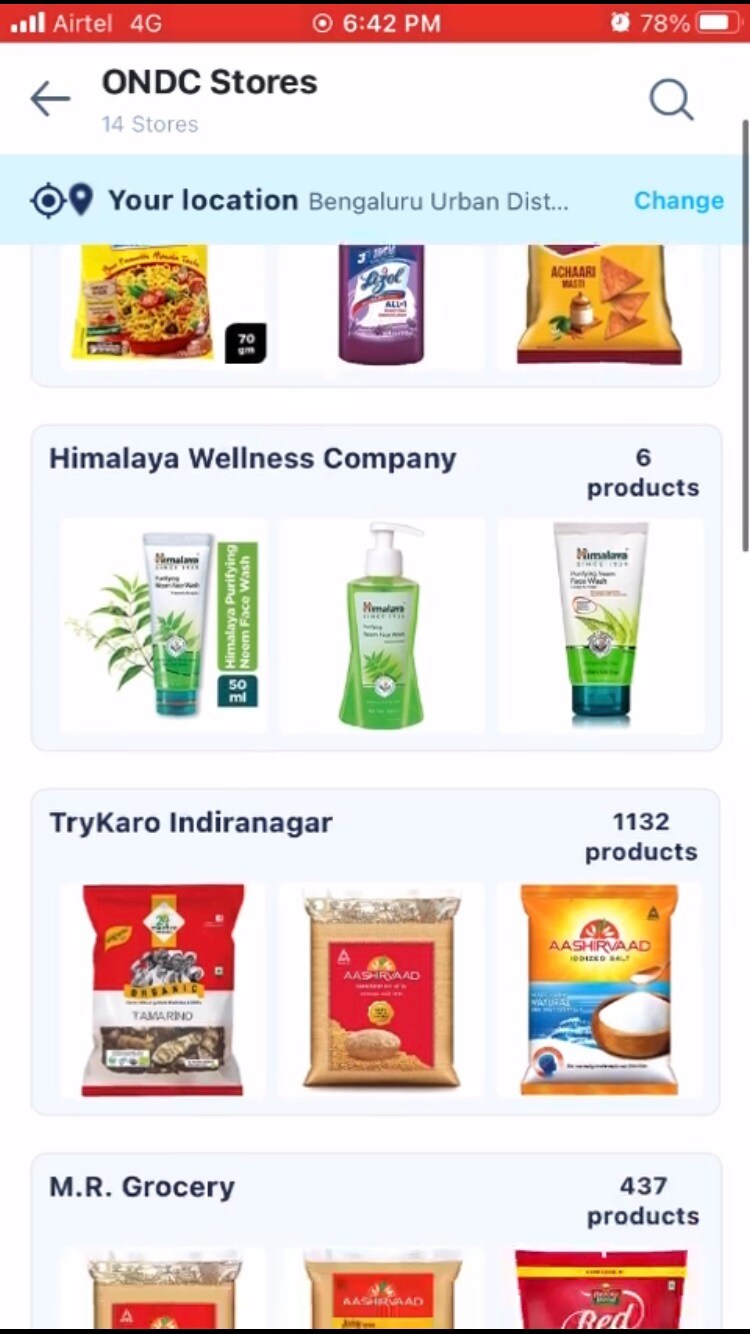
Customers can purchase from every seller listed on the network. That includes merchants on other e-commerce platforms as well, along with some local sellers for whom ONDC marks their first digital presence.
Right now, distance is a factor. However, ‘any seller' is expected to be enabled once more logistics partners are live on the platform.
Source: SellerApp
Buyers can add items to the cart and make a purchase as they do on other e-commerce platforms. For the beta test, cash-on-delivery is not applicable.
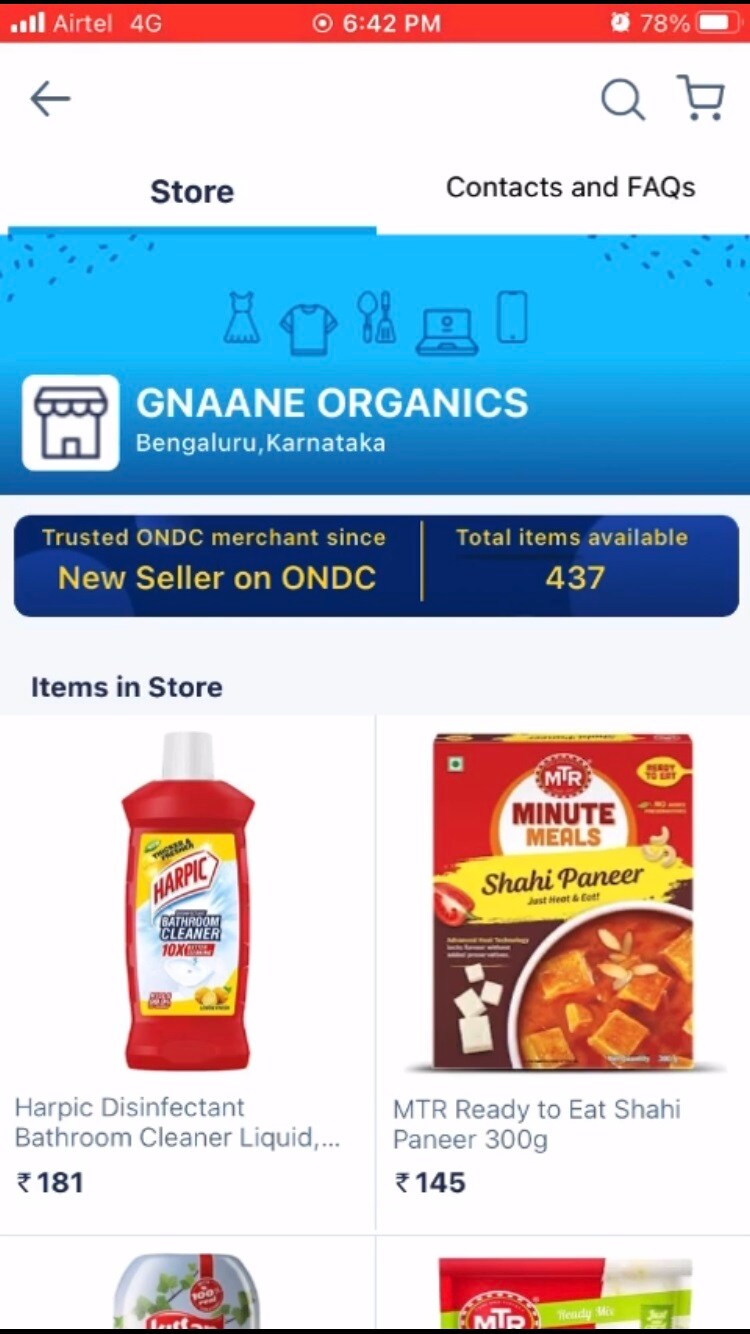
Source: SellerApp
‘Seller-side apps' enable merchants to join the network, making their catalogues and inventory visible to buyers. SellerApp, Bizom, Digiit, Enstore by Innobits, eSamudaay, eVitalrx, Go Frugal, GrowthFalcons, Mystore, nStore, Uengage and Ushop are a few participating in the beta test.
Dunzo, Loadshare and Shiprocket are providing logistics services, while Protean eGov Technologies Ltd. (formerly NSDL e-Gov) is providing gateway services.
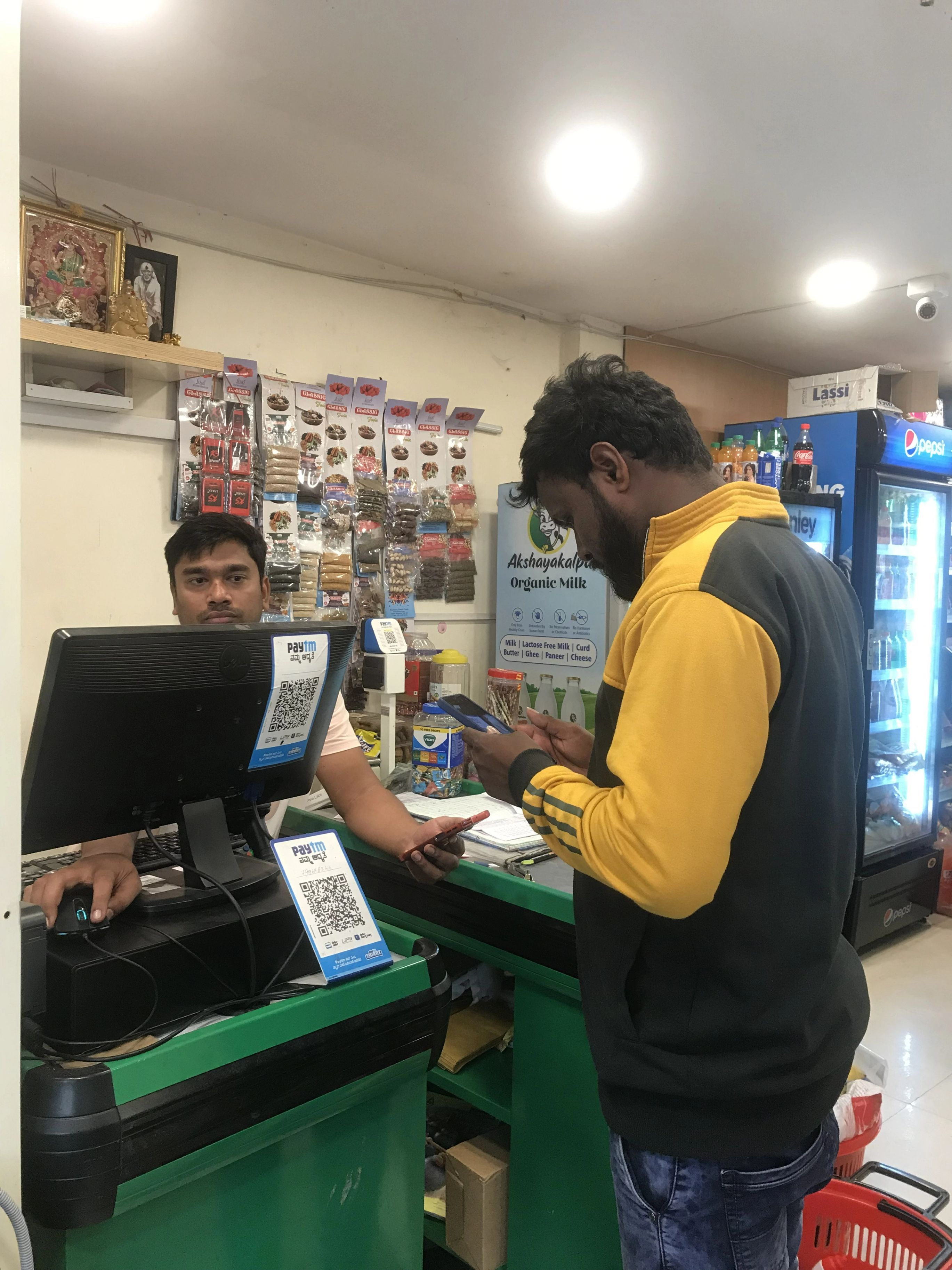
GnaanE grocery store in Bengaluru. (Photo: BQ Prime)
The open network is expected to make e-commerce more inclusive and accessible for consumers and sellers. They can transact irrespective of the platforms or applications they use if those are connected to ONDC.
Several users, however, have complained of not being able to use the buyer apps for ONDC. For them, the option is not showing up.
Orders Trickle In
A To Z Supermarket was already digital before ONDC. The store received close to 250 orders a day from its delivery partners alone. Then, some of these delivery partners opened their dark stores, and A To Z's orders fell to about 50 a day.
“It's a big issue,” store owner Deepak Kumar said. The apps that haven't yet opened their dark stores will soon do so. So, it's better to have more options, he said.
Since on-boarding on the platform, he has been receiving 10-15 orders a day through ONDC, most for items such as honey, rice and biscuits.
Lower Commission
Ayesha Sayeda, owner of Nomad Rolls and Shakes, received two orders the day they went live on ONDC. “It's a good start. We will pick up.”
The network is helping keeping commission rates low. “Other aggregators can charge up to 30% including taxes,” she said. “So, it's a great relief to now be paying closer to 12%.”
Brands that are more popular get lower commission rates, she said. “When commission rates are different, we have to charge different rates on different platforms.”
The move, Sayeda said, can help increase visibility and get more business. “With lower commissions to pay, we can give discounts or offers for visibility, or charge less to be more competitive… It will be more profitable for us and even for customers—the delivery charge, the surcharge, all other charges will be less.”
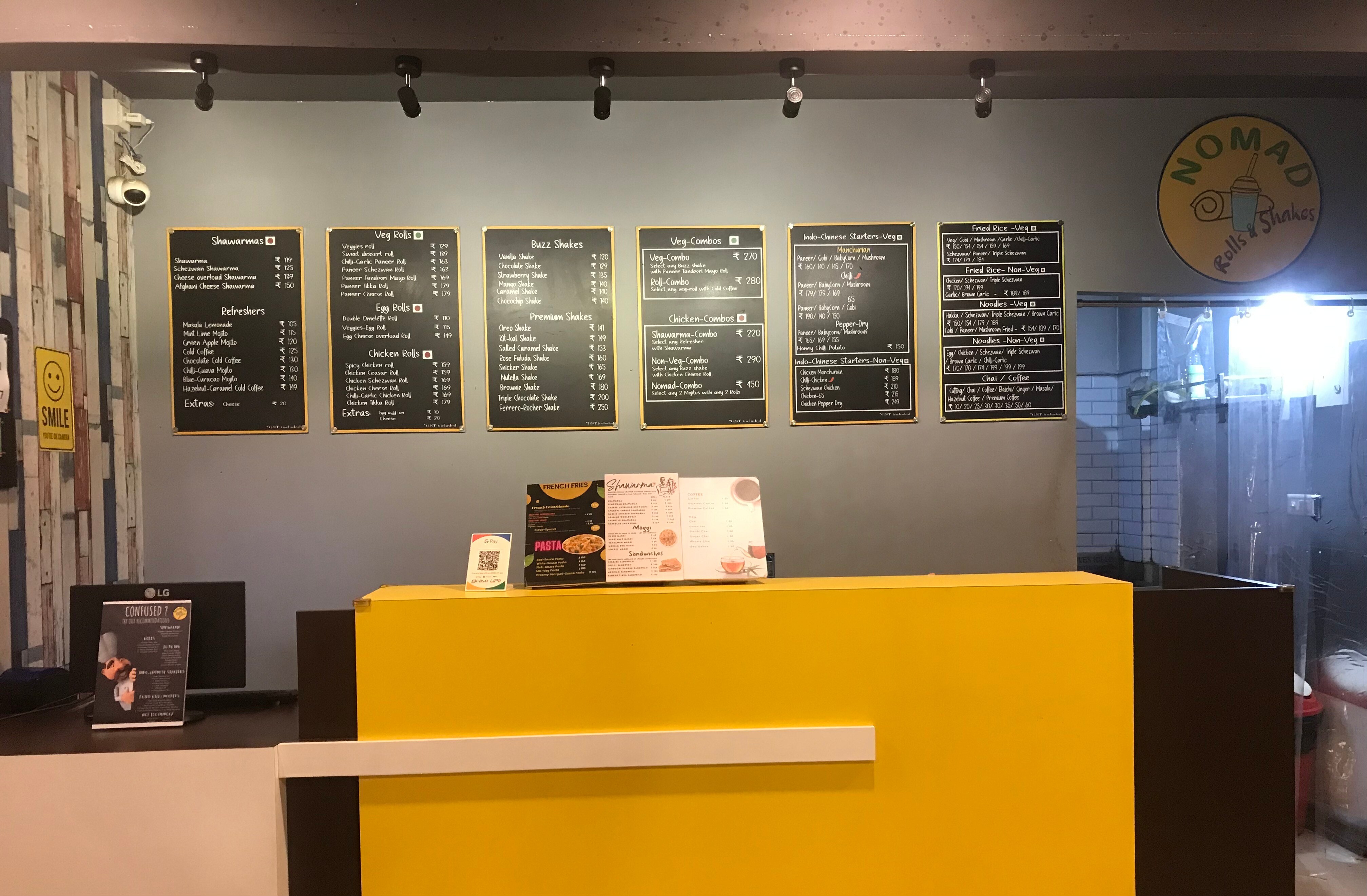
Nomad Rolls and Shakes in Bengaluru. (Photo: BQ Prime)
It's a game-changer for small restaurants like hers and for cloud kitchens, she said, because the commission rate is low.
“I don't have expectations now. I know it will take time, she said. “I know if the government has launched something like this—taking small businesses digital, it will of benefit in the future.”
Like all other platforms, on-boarding has been really easy and simple, she said.
Jalaludin, store manager at Fruitland in Indiranagar, said the prospect of having to pay less commission makes the network attractive. Besides, the government's backing ensures safety and security. His store will soon go live on the network. It's unavailable on other platforms because of the commission charges, Jalaludin said.
On pilot day, up until 5 p.m., the network had received 161 orders, with 88 coming from Paytm. The others were from IDFC, Spicemoney and Mystore. While 55% of these comprised grocery, food accounted for the rest.
Right from the beginning, from the hackathon, which piqued interest over how the transaction would flow, the network's strategy has been very controlled, said Brij Purohit, co-founder at SellerApp—one of the seller-side apps responsible for compliance, catalogue listing, payment aggregation, refunds and return-related issues, along with integration with logistics partners.
“After the hackathon, we moved to an integration phase in a closed user group where multiple issues were fixed. Then, we moved to a broader audience,” he said.
For small kirana stores not digital-savvy, there has definitely been a need to handhold them, and train them, Purohit said.
In the future, there will be a lot more use cases that will be served on this network, he said. Any transaction that involves two businesses and a facilitating intermediary can be on the network—cab bookings, services bookings like home cleaning, healthcare, insurance, hospitality. “We understand it's not a six-month or a year's game. It will take time to evolve.”

-
Why Amazon And Flipkart Are Struggling To Beat Meesho In India's Smaller Cities

With 274 million users and lowest-cost logistics, Meesho is defending its value commerce crown against giants like Amazon and Flipkart.
-
High US Salaries, No Green Card Certainty: The Financial Calculation Facing Indian H-1B Families
The suspension of PERM processing at eight technology employers does not cancel existing H-1B visas. What it does is force a question many Indian families have been avoiding: is the US salary worth tying your career and family plans to one employer?
-
Swiggy vs Eternal: Food Delivery's Two Rivals Are No Longer In The Same Race
Eternal is building a private AI assistant, dark.ai. Swiggy is still working out how to make Instamart pay, with an operating loss of Rs 895 crore in the July-September quarter while Blinkit stayed profitable.
-
Where You Live Shapes How You Get To Work | The Reason Why
Two-wheelers are the most popular way to get to work in India, accounting for nearly 43% of workplace commutes.
-
Unhedged Position: Can India See An Indonesia-Style Time Correction?
The Nifty is trading below levels it first clocked in 2024. Is there, then, as I have suggested in the headline, potential that the current time correction drags on painfully for the next three-five, even ten years?
-
Navigating Friction And Energy Realities: An Analysis Of Marco Rubio's October Visit To India
Occurring at a critical juncture marked by stalled trade negotiations and escalating geopolitical pressures over global energy supplies, the visit offers a profound window into modern US-India relations.
-
India Exports Capital. Why Not Export Trusteeship?
The big question, then, is whether India can build an institution that global borrowers, investors, banks, and lawyers can trust, even without an Indian connection.
-
France's Economy & Politics Are In Crisis | The Reason Why
Let's look at how the French economy and politics evolved under Nicolas Sarkozy, Franois Hollande and Emmanuel Macron.
-
You May Inherit The Business. You Must Earn Its Credibility.
Succession tests the founder's ability to share authority as much as it tests the next generation's readiness to assume it.
-
Signing Deals Is One Thing; Making Them Work Is Another | The Week In Whys
Sometimes, things don't turn out as planned. Indian companies have lost some bids to rivals, some projects won't produce until 2030.










