Working From A Tropical Island Is The New Working From Home
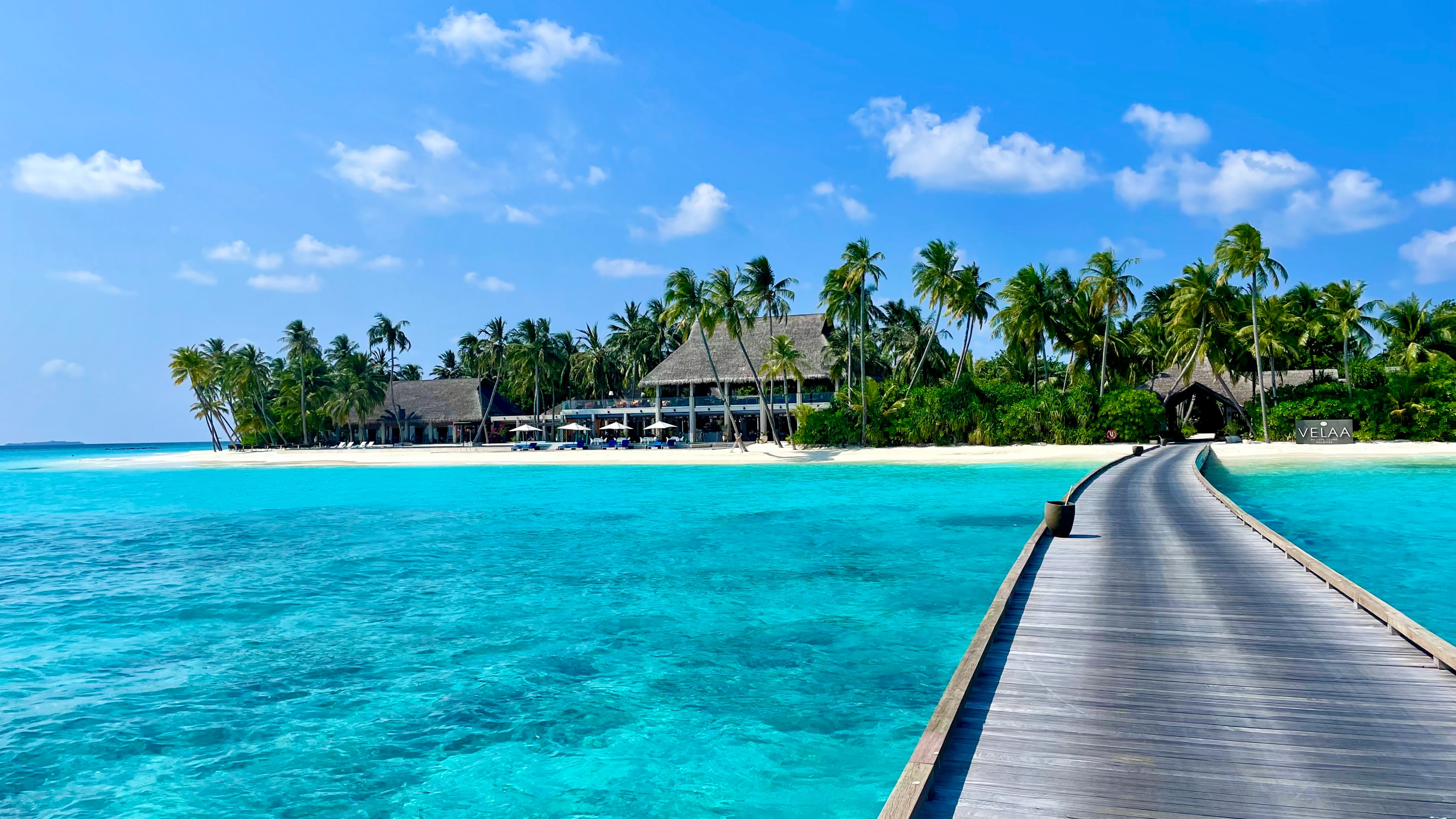
(Bloomberg) -- In the new world of work, there's a new type of employee: The business-leisure traveler.
It's the latest attempt to find a happy medium between working arrangements like Airbnb Inc.'s — where staff can work anywhere, anytime — and those at companies like Tesla Inc., whose chief executive officer Elon Musk tweeted that unless employees turn up in the office, “we will assume you have resigned.”
Business-leisure travelers are a subset of digital nomads, living and working abroad for longer than a typical holiday without taking up permanent residence. They usually spend weeks or months overseas before returning home, while other nomads may spend years on the road.
David Abraham realized there was a market for this type of ultra-remote working while at his laptop in a Tokyo Starbucks. When he noticed the customers around him were working too, he asked himself “why couldn't they be in an amazing place like Bali?” Abraham now runs Outpost, a company that provides temporary living-working spaces in Indonesia and Sri Lanka.
Employees' growing enthusiasm for business-leisure travel is slowly being met with policy momentum. Governments are trying to work out visa and tax regulations while businesses fret about compliance and corporate culture.
Officials in tourism hotspots Thailand and Indonesia see the longer-term travel trend working in their favor — if everyone can get the rules right.
On the Indonesian island of Bukabuka, a four-hour-plus journey by airplane and boat from the capital city of Jakarta, eco resort Reconnect is seeing a surge in inquiries from foreigners. Now that borders have reopened, overseas visitors with plans to work remotely are booking sojourns of anywhere between a month and half a year.
The resort features large communal spaces and work stations, ready to accommodate the new cohort of business-leisure travelers. Most days, the Internet is stable enough too.
“But the main selling point is really the island itself,” said Reconnect founder Thomas Despin. Between Zoom meetings, guests can go snorkeling, learn the local art of spearfishing, and even enjoy a barbecue in the middle of the sea.
There is one drawback: “Potential guests ask us, how legal is it for me to come and stay and work?” Despin said. “At the moment, we don't have a specific answer.”

Under Indonesian law, anyone who stays in the country for 183 days in a 12-month period is legally considered a tax resident. But paying taxes requires a work permit commonly referred to as a KITAS, which isn't available to those traveling on a tourist visa. That leaves some would-be business-leisure travelers in a legal gray area.
In April 2021, Indonesia floated the idea of a special five-year visa exempting remote workers from paying local taxes if they don't earn an income domestically. But there's no timeline as yet.
“You don't want to just be hoping for the best when it comes to your visa status,” said Despin. “You want to know what the rules are.” Colleagues of his have left Indonesia for Mexico, Portugal and neighboring Thailand, where immigration and tax laws are more supportive and clearer.
Since 2019, more than two dozen countries have introduced “digital nomad” schemes that allow people to live and work remotely for a period of months or even years, according to Migration Policy Institute analyst Kate Hooper, who analyzed data from law firm Fragomen.

Thailand began experimenting early in the pandemic with programs designed to attract longer-term travelers, such as golf-course quarantines and “sandbox” arrangements. The country got about one-fifth of its economic juice from tourism before Covid-19 arrived.
Now, in the spirit of targeting more digital nomads and business-leisure travelers, the government has approved tax incentives for long-term visa holders and will lift all remaining Covid-related entry restrictions from July 1.
The country has several plus points for longer-term visitors who also plan to work, according to tourism minister Phipat Ratchakitprakarn. “The Internet in Bangkok and in many big cities is fast,” he said, while Thailand also offers “service and atmosphere” and a relatively low cost of living.
And, he added, “we don't tax digital nomads. Their income is generated overseas.”
The next round of tax changes can't come soon enough for the country's still-struggling hospitality industry.
“I am sure we can compete in terms of fundamentals but the problem is policy implementation,” said Bhummikitti Ruktaengam, president of the Phuket Tourist Association. He argues that a simple visa application process is needed to attract working travelers.
“They won't come if they need to fill up a pile of paperwork,” he said.
Longer-term visitors may bring economic benefits, but they can also create problems for the local population, a Migration Policy Institute report points out. Wealthy visitors bring with them rising costs of living, increasing competition for resources and associated tensions “as evidenced in existing hotspots such as Goa and Bali.”
While governments face a hefty set of challenges in marrying a tourism revival with ease of doing business, companies have their own list of concerns.
At established firms, chief financial officers often have little appetite for Airbnb-style worker freedom because of tax issues and other liabilities, according to Simon Hayes, director of the Asia CFO Network.
Yet many business leaders are accepting what their human resources departments already know: Most employers will be forced to keep up with the times.
Business-leisure travelers aside, tight labor markets around the world are giving workers the power to demand more flexibility. Over the next three to six months, Hayes expects more companies to set up remote-work options for those employees who are trusted to get their jobs done on the beach or elsewhere.
There's a clear willingness to at least consider looser policies around remote work, according to an Asia CFO Network survey of 31 multinational companies across the Asia-Pacific region. But there are also significant concerns, with tax issues and “corporate culture dilution” at the top of the list.
“One issue is navigating the tax, social security, and employment and labor provisions of both countries to ensure compliance in both locations,” said MPI's Hooper. Another is the risk of triggering permanent establishment rules that may incur corporate tax obligations, she said.
While business-leisure travel isn't about to overtake other types of travel, it's still an opportunity for tourism-heavy economies.
“It's a growing segment but will remain a ‘niche' segment,” said Margaux Constantin, a partner at McKinsey & Co. who leads the firm's work in tourism. The potential for high spending on longer-than-average trips makes business-leisure travelers an attractive market, she said.
“It's not surprising to see that some destinations are actively prioritizing this segment as part of their tourism strategy.”
More stories like this are available on bloomberg.com
©2022 Bloomberg L.P.

-
A New Samvat Wishlist: Inclusive Prosperity And Human Development

India has strengthened its economic foundations through infrastructure, digital access and enterprise. Its next growth chapter must deepen productivity, create better livelihoods and widen participation in prosperity.
-
Love, Sex Aur Dhokha: The Audacious Plot To Spy On Jensen Huang
A Taipei dinner, a Singapore chip buyer and a suspected Chinese asset: inside the alleged spy operation that got close to NVIDIA's Jensen Huang.
-
Ten Things I Learnt This Samvat
Patience can be a trap. Cheap stocks can stay cheap. Leverage can wipe you out. What did Samvat 2082 teach us? Niraj Shah writes on 10 lessons from the year gone by.
-
Talking Points This Week: Tech Nerves, FII Buying, And A Faraway Banking Shock
The global markets are not shining this Diwali. The exception in the large markets is, India.
-
Midterm Rally Lasted A Day. The Hard Reality Of A Divided US May Last Two Years | Opinion
Between a contested AI boom, a debt ceiling that arrives in 2027 and a president with every incentive to act alone, the next two years may prove more volatile than the first day's rally suggests.
-
Blue Wave Will Derail the AI Trade but Won't Dismantle the AI Era | Unhedged Position
The Democrats' sweep of the US Congress will see politics collide with economic forces both over the long and short term.
-
It's Time To Take The GST Council's Bet On Trust Global
Payment records can prove India's services exports, and clear, proportionate rules can bring foreign digital sellers into the tax net.
-
Opinion | India at 38: From Innovation Overperformer to Innovation Powerhouse
India now has 453 VC-backed deep science startups, 18 of them late-stage, after 117 percent growth since 2020. Laurus Labs, at USD 9.3 billion, is the most valuable deep science company in any middle-income economy outside China.
-
Navigating Energy Crossroads: S Jaishankar's Call For Diversified Supply Chains At G20 Ministerial Meeting
As geopolitical fault lines continue to test maritime trade routes and commodity flows, Jaishankar's message remains pertinent: true economic resilience requires open markets, protected transit lines, and a genuine commitment to multilateral cooperation rather than coercion.









