Trade Pact With Australia Will Boost India's Textile Exports: Report
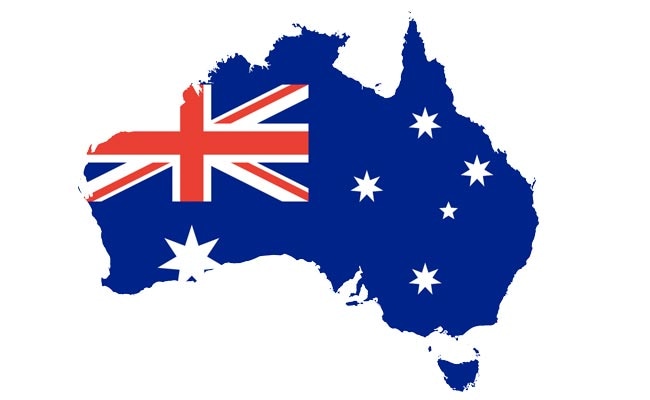
India's free trade agreement (FTA) signed with Australia, which comes into effect from December 29 this year, will be beneficial for Indian garment and home textile exporters, according to India Ratings and Research (Ind-Ra).
Australia's zero import duty access to India, which was earlier 5 per cent, will provide a level-playing field with exports from China, Vietnam and Bangladesh, the Ratings agency said on today.
Given that China accounts for almost 60 per cent of textile imports into Australia with India at 5-6 per cent, Ind-Ra expects the volume of exports to gradually increase in 2023 and thereafter may increase further based on producer capacities. A long-term shift for meaningful volume increases, which encourages incremental capital expenditure, would necessitate improving the cost competitiveness and availability of a pool of skilled labour, it added.
The agency said the availability of domestic sources of cotton and long-term visibility of demand could encourage domestic entities to diversify exports and manage demand cyclicality better.
FTA with Australia eliminates the import duty on textile exports from India bringing them at par with China, Vietnam and Bangladesh, according to the agency. India's exports to Australia contribute 5-6 per cent to the total Australian requirement and at a value of $500-600 million, they remained at 1-2 per cent of total textile exports from India in 2020.
Given the economic challenges being faced by some exporting nations and the increasing need to diversify supply chains, Indian home textile/garment producers are likely to benefit.
The ratings agency opined that given the slowdown being experienced by the US and Europe, this could provide partial relief along with other FTAs likely to be signed with UAE, UK, Canada and Israel.
According to the agency, these markets have an aggregate textile import of $60 billion and even an incremental gain of 5 per cent for India would be a 50 per cent gain on the existing exports of $6 billion. The total textile export from India to the world aggregated $43 billion in FY22.
India exports a significant proportion of its low value-added products 25-30 per cent in FY22 such as yarn and fabrics to China, Bangladesh and Vietnam which use them to value add and export to countries such as Australia and other potential FTA partners, it said.
Ind-Ra expects the removal of these tariff barriers through FTAs to increase the incentive to create value addition within the country and increase the proportion of such products in the overall export basket. This will aid the process of diversification and limit the inherent cyclicality associated with the industry.
The textile industry, especially lower down the value chain, remains susceptible to booms and busts, and it is likely that with a less cyclical demand, the risk of defaults and restructuring is reduced significantly over a period of time, it said.
The removal of duties under the FTA would need to be complemented with improved cost competitiveness with other Asian exporters, the agency said.
According to the ratings agency, China, Vietnam and Bangladesh continue to hold major market shares in the import basket of Australia and a meaningful shift in volumes would necessitate looking at addressing tax anomalies, shortage of skilled labour and increasing the focus on sustainable practices including the use of green energy.
As wage costs in China continue to rise, the ratings agency said India would stand to benefit, although, our costs are still higher in relation to Vietnam, Bangladesh and Pakistan.
(Except for the headline, this story has not been edited by NDTV staff and is published from a syndicated feed.)

-
Talking Points This Week: Tech Nerves, FII Buying, And A Faraway Banking Shock

The global markets are not shining this Diwali. The exception in the large markets is, India.
-
Midterm Rally Lasted A Day. The Hard Reality Of A Divided US May Last Two Years | Opinion
Between a contested AI boom, a debt ceiling that arrives in 2027 and a president with every incentive to act alone, the next two years may prove more volatile than the first day's rally suggests.
-
Blue Wave Will Derail the AI Trade but Won't Dismantle the AI Era | Unhedged Position
The Democrats' sweep of the US Congress will see politics collide with economic forces both over the long and short term.
-
It's Time To Take The GST Council's Bet On Trust Global
Payment records can prove India's services exports, and clear, proportionate rules can bring foreign digital sellers into the tax net.
-
Opinion | India at 38: From Innovation Overperformer to Innovation Powerhouse
India now has 453 VC-backed deep science startups, 18 of them late-stage, after 117 percent growth since 2020. Laurus Labs, at USD 9.3 billion, is the most valuable deep science company in any middle-income economy outside China.
-
Navigating Energy Crossroads: S Jaishankar's Call For Diversified Supply Chains At G20 Ministerial Meeting
As geopolitical fault lines continue to test maritime trade routes and commodity flows, Jaishankar's message remains pertinent: true economic resilience requires open markets, protected transit lines, and a genuine commitment to multilateral cooperation rather than coercion.
-
Indians Are Travelling, But Not Every Journey Is A Holiday | The Week In Whys
Pilgrims, patients and working women are the real travellers, and the system hasn't quite caught up with them.
-
Getting To Work Costs Women More | The Reason Why
It is not just about women paying more than men. It is about women paying much more in cities than in villages.
-
AI Bias In Investing Cannot Be Eliminated, But It Can Be Governed
Framing is a particularly important example as identical financial information presented in terms of gains rather than losses can lead an LLM to reach a different assessment.