Top Currency Forecaster Says Yen Weakness Isn’t Over Yet
(Bloomberg) -- The slide in the yen isn't over, despite expectations the dollar may not be quite so strong in coming months, said the top forecaster for the currency.
The yen will probably weaken to 152 against the dollar this year, and 155 in 2024, Tohru Sasaki, JPMorgan Chase & Co.'s head of Japan markets research, said in an interview. Even a potential abandonment of the Bank of Japan's yield curve control policy this year will not provide much hope in the long-term, he said.
It remains difficult for the BOJ to hike policy rates or bring inflation down, which is undermining the yen, said Sasaki, the most-accurate forecaster in a Bloomberg survey for the dollar-yen rate last quarter. The yen this week touched a fresh 10-month low, prompting a warning from currency official Masato Kanda, who said Wednesday that authorities are prepared to take action if unstable moves continue.
“The yen is likely to be one of the weakest currencies even next year,” said Sasaki, a former trader at the BOJ who was involved in foreign-exchange intervention in the 1990s. “I'm not sure how we can get out of this situation,” he said.
Japan's currency traded at around 147.60 against the dollar early in Tokyo on Thursday. It had inched toward 148 in recent days as dollar strength persists amid robust economic data that bolsters the case for the Federal Reserve maintaining a high policy rate.
Sasaki's forecast for dollar-yen is higher than the median of analysts surveyed by Bloomberg, who see the yen at 140 in the fourth quarter and 129 next year. He recommends shorting the yen against some major currencies, including the dollar, predicting that multiple cross-yen pairs will see even higher levels next year.
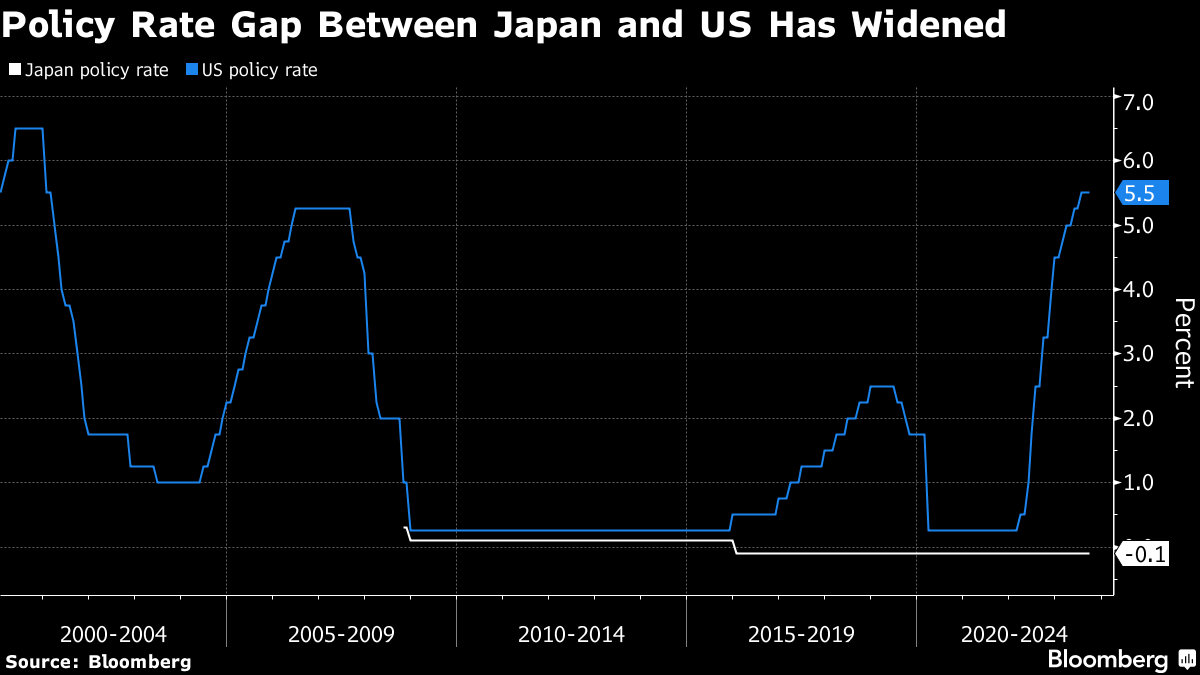
The yen has weakened against all of its Group-of-10 counterparts this year, as the BOJ stuck with its dovish stance while other central banks ramped up their rate hikes. Japan's policy rate has been at -0.1% since 2016, while its US counterpart currently stands at 5.5%.
“Japan's negative policy rate is likely to remain relatively deep for a long time,” Sasaki said. “Maybe the BOJ needs to hike the policy rate without thinking of the other negative impacts on the economy. But that will cause the unpopularity of the Kishida cabinet, so it's politically difficult.”
The Japanese government may not jump in and buy yen until it reaches 155, said Sasaki, noting that the currency has already gone through levels that prompted intervention last year.
“With a yen purchase intervention, they cannot fail. They need to use foreign reserves which are limited,” he said. “So I don't think that they will do the yen purchase intervention so frequently.”
More stories like this are available on bloomberg.com
©2023 Bloomberg L.P.

-
Navigating Energy Crossroads: S Jaishankar's Call For Diversified Supply Chains At G20 Ministerial Meeting

As geopolitical fault lines continue to test maritime trade routes and commodity flows, Jaishankar's message remains pertinent: true economic resilience requires open markets, protected transit lines, and a genuine commitment to multilateral cooperation rather than coercion.
-
Indians Are Travelling, But Not Every Journey Is A Holiday | The Week In Whys
Pilgrims, patients and working women are the real travellers, and the system hasn't quite caught up with them.
-
Getting To Work Costs Women More | The Reason Why
It is not just about women paying more than men. It is about women paying much more in cities than in villages.
-
AI Bias In Investing Cannot Be Eliminated, But It Can Be Governed
Framing is a particularly important example as identical financial information presented in terms of gains rather than losses can lead an LLM to reach a different assessment.
-
Joining The Dots | Dark Skies, Steady Diya: Why Hope Holds This Diwali
With war, a weak rupee and foreign outflows weighing on sentiment, policymakers at the NDTV World Summit and market veterans at NDTV Profit Ignite: Diwali Edition offered the same advice: stay invested and filter out the noise.
-
The Curious Case of Equitas Small Finance Bank And A CEO Who Quit For Stock
PN Vasudevan believes persistent investor concerns over a perceived conflict of interest had become a governance overhang on Equitas Small Finance Bank's stock, even as the lender improved profitability and asset quality.
-
Talking Points This Week: AI Cash Burn, A Tiger Comeback And An India That Still Finds Its Own Path
India is not immune to higher oil or tighter global liquidity, yet its earnings base is broader, its domestic policy levers are still available.
-
Foreign Investors Own Half Of HDFC Bank and ICICI Bank. An LTCG Cut Could Matter Most Here
Foreign portfolio investors have US$115 billion parked in HDFC Bank, ICICI Bank. If the government cuts long-term capital gains tax, Jefferies says returning foreign money could land here first.
-
'Never Seen This Level Of Negativity': Sandeep Tandon Says The Next Rally May Be Closer Than You Think
Veteran investor Sandeep Tandon says foreign selling is easing, large-caps are due a comeback and mid-caps are crowded, while he turns positive on gold, power and pharma this Diwali.
-
Indians Stay With Family, Not In Hotels | The Reason Why
India still lacks enough clean, reliable and affordable hotels for budget-conscious travellers.










