Too Many Products Can't be Kept Out of GST: Arun Jaitley
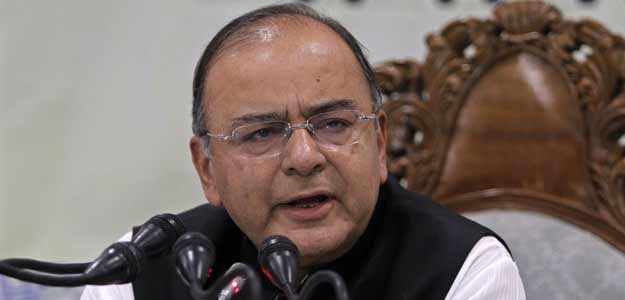
The centre on Saturday asserted that too many products cannot be kept out of the ambit of Goods and Services Tax (GST) even as states are clamouring for more products including liquor, tobacco and petroleum to be excluded.
"The Empowered Committee has with regard to certain items expressed an opinion that they be kept out. Now too many items cannot be kept out because the larger object itself could get defeated," Finance Minister Arun Jaitley told reporters here.
"This is the issue on which we are in discussion with some of the states," he said.
The state FMs are also in the process of harmonising the exemption lists of states and the centre which have 96 and 243 items, respectively.
The GST will subsume indirect taxes like excise duty and service tax at the central level and VAT on the states front, besides local levies.
Different states have different concern on GST. While Madhya Pradesh has a different issue, Punjab has an issue with regard to mandi tax. Besides, Gujarat has raised the matter with regard to some other tax.
"I discussed with the Finance Minister and Chief Minister of West Bengal. I discussed with Finance Minister of Gujarat and with one or two other states which have issues in mind, I do intend to discuss with them (again)," he said.
"I am individually discussing with CMs and FMs (of states) which has raised some issues with regard to GST. An early development of constitutional framework is top in the government's agenda," he said.
The rollout of new indirect tax regime has missed several deadlines because of lack of consensus among states over certain crucial issues on the new tax regime.
The Finance Minister expressed hope that the government will be able to move towards some kind of a larger consensus on the legislation.
The GST Constitutional Amendment Bill, which was introduced in the Lok Sabha in 2011, has lapsed and the NDA government will be required to come up with a fresh Bill.
Earlier Mr Jaitley had said that the government will try to bring in the new GST Bill in the winter session of Parliament.
On the Central Sales Tax issue, Mr Jaitley said the states unanimously expect that CST compensation must be paid to them.
"The same has not been provided for. We are also clear that we will have to start the process of paying them CST compensation....I am conscious that we will try and take some steps as soon as our affordability itself increase," he said.
CST, a tax imposed on the inter-state movement of goods, was reduced from 4 per cent to 3 per cent in 2007-08 and further to 2 per cent in 2008-09 after the introduction of Value-Added Tax (VAT). The centre had then promised to the states that it would bear their losses due to reduction of CST.
As per the compensation mechanism, the centre would bear 100 per cent of the loss accrued to states in 2010-11 fiscal on account of lowering of CST. However, for 2011-12 and 2012-13 fiscal, the centre would give 75 per cent and 50 per cent of the losses, respectively, to the states.

-
High US Salaries, No Green Card Certainty: The Financial Calculation Facing Indian H-1B Families

The suspension of PERM processing at eight technology employers does not cancel existing H-1B visas. What it does is force a question many Indian families have been avoiding: is the US salary worth tying your career and family plans to one employer?
-
Unhedged Position: Can India See An Indonesia-Style Time Correction?
The Nifty is trading below levels it first clocked in 2024. Is there, then, as I have suggested in the headline, potential that the current time correction drags on painfully for the next three-five, even ten years?
-
Navigating Friction And Energy Realities: An Analysis Of Marco Rubio's October Visit To India
Occurring at a critical juncture marked by stalled trade negotiations and escalating geopolitical pressures over global energy supplies, the visit offers a profound window into modern US-India relations.
-
India Exports Capital. Why Not Export Trusteeship?
The big question, then, is whether India can build an institution that global borrowers, investors, banks, and lawyers can trust, even without an Indian connection.
-
France's Economy & Politics Are In Crisis | The Reason Why
Let's look at how the French economy and politics evolved under Nicolas Sarkozy, Franois Hollande and Emmanuel Macron.
-
You May Inherit The Business. You Must Earn Its Credibility.
Succession tests the founder's ability to share authority as much as it tests the next generation's readiness to assume it.
-
Signing Deals Is One Thing; Making Them Work Is Another | The Week In Whys
Sometimes, things don't turn out as planned. Indian companies have lost some bids to rivals, some projects won't produce until 2030.
-
FOMC Wall, PERM Suspension, Hospital Stocks | Talking Points This Week
A PERM suspension would directly affect green-card sponsorship rather than H-1B visas, so the near-term earnings impact could remain relatively limited. The key question is whether this marks a new phase in US scrutiny of Indian IT.
-
Everything, Everywhere, All At Once: Dalal Street's Week To Forget | Joining The Dots
Visa curbs, a Starlink spat and cancer drug caps: what connects this week's shocks for Indian markets
-
India Is Going Abroad For Critical Minerals. But It May Take Years To Pay Off | The Reason Why
Although India's steps are in the right direction, they remain modest compared with India's growing dependence.









