Time To Focus On Continuing Journey, Says Snapdeal CEO
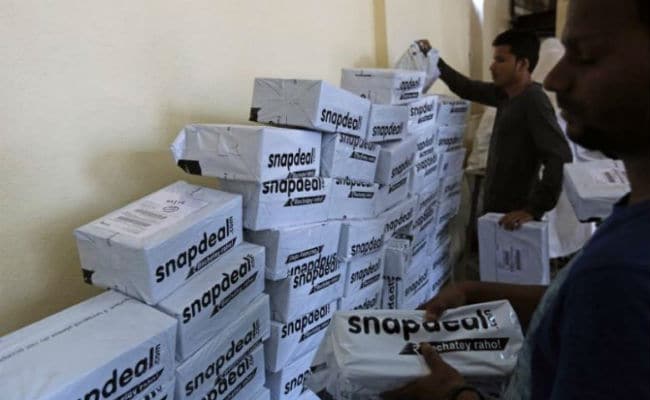
New Delhi: The sale of Freecharge to Axis Bank will provide Snapdeal the "necessary boost in resources" to continue its e-commerce journey, Snapdeal CEO Kunal Bahl said.
Just hours after the deal was announced, Bahl wrote to employees seeking to assuage concerns saying Axis Bank intends to not just retain all Freecharge employees but also "invest significantly" in the team and brand.
"Every new beginning comes from some other beginning's end. Building Freecharge has been a tremendously enriching experience for us. And now, it is time for us to focus our energy and passion on continuing the Snapdeal journey," Bahl said.
His comments also assume significance amid reports that the Snapdeal board is leaning towards selling the e-commerce company to Flipkart.
Snapdeal has announced the sale of the mobile payment wallet to Axis Bank for Rs 385 crore (about $60 million), which is seen to be about 80 per cent lower than the $400 million it had reportedly paid to buy Freecharge in 2015.
Bahl said the transaction with Axis Bank was "a great outcome".
"They intend to retain entire team (and build on it), invest behind the brand and leverage the world class technology platform to the fullest," he said.
He added that the leadership team of Axis Bank is committed to the digital payments space, and is willing to invest significantly behind it.
Bahl said with factors like availability of affordable smartphones and data prices as well as better infrastructure, Snapdeal has "an opportunity of a lifetime", which it "must seize".
"With the massive revolution happening in our country in the realms of very cost effective data, affordable smartphones, a unified GST tax regime, better infrastructure and rising income levels, there is no better time to be in this business," he said.
There have been reports that suggest that Bahl and co-founder Rohit Bansal are trying to convince the Snapdeal Board to go for an alternate plan, instead of selling the company to Flipkart.
The alternate plan, as per reports, is to trim Snapdeal further and continue operations on a lighter scale.
The discussions for sale with Flipkart have been on for five months now, driven proactively by Snapdeal's largest shareholder and Japanese conglomerate, SoftBank.
In another mail, Jason Kothari, the current CEO of FreeCharge, sought to assure employees that the mobile wallet would continue to operate as a standalone business.
"I'm thrilled to say, in the case of Axis Bank, FreeCharge will continue to operate as an entrepreneurially run standalone business, and the business will retain the 'FreeCharge' brand, technology and full team," he wrote.
(This story has not been edited by NDTV staff and is auto-generated from a syndicated feed.)

-
High US Salaries, No Green Card Certainty: The Financial Calculation Facing Indian H-1B Families

The suspension of PERM processing at eight technology employers does not cancel existing H-1B visas. What it does is force a question many Indian families have been avoiding: is the US salary worth tying your career and family plans to one employer?
-
Swiggy vs Eternal: Food Delivery's Two Rivals Are No Longer In The Same Race
Eternal is building a private AI assistant, dark.ai. Swiggy is still working out how to make Instamart pay, with an operating loss of Rs 895 crore in the July-September quarter while Blinkit stayed profitable.
-
Where You Live Shapes How You Get To Work | The Reason Why
Two-wheelers are the most popular way to get to work in India, accounting for nearly 43% of workplace commutes.
-
Unhedged Position: Can India See An Indonesia-Style Time Correction?
The Nifty is trading below levels it first clocked in 2024. Is there, then, as I have suggested in the headline, potential that the current time correction drags on painfully for the next three-five, even ten years?
-
Navigating Friction And Energy Realities: An Analysis Of Marco Rubio's October Visit To India
Occurring at a critical juncture marked by stalled trade negotiations and escalating geopolitical pressures over global energy supplies, the visit offers a profound window into modern US-India relations.
-
India Exports Capital. Why Not Export Trusteeship?
The big question, then, is whether India can build an institution that global borrowers, investors, banks, and lawyers can trust, even without an Indian connection.
-
France's Economy & Politics Are In Crisis | The Reason Why
Let's look at how the French economy and politics evolved under Nicolas Sarkozy, Franois Hollande and Emmanuel Macron.
-
You May Inherit The Business. You Must Earn Its Credibility.
Succession tests the founder's ability to share authority as much as it tests the next generation's readiness to assume it.
-
Signing Deals Is One Thing; Making Them Work Is Another | The Week In Whys
Sometimes, things don't turn out as planned. Indian companies have lost some bids to rivals, some projects won't produce until 2030.
-
FOMC Wall, PERM Suspension, Hospital Stocks | Talking Points This Week
A PERM suspension would directly affect green-card sponsorship rather than H-1B visas, so the near-term earnings impact could remain relatively limited. The key question is whether this marks a new phase in US scrutiny of Indian IT.









